Ohio lawmakers approve ‘success sequence’ curriculum requirement for public schools
Ohio lawmakers have approved legislation requiring public schools to teach students about the “success sequence,” which teaches that people who graduate from high school, obtain a full-time job, and marry before having children are less likely to live in poverty.
Senate Bill 276 passed the General Assembly on June 10 and now awaits the signature of Republican Gov. Mike DeWine.
Public school districts would be required to provide instruction aligned with the success sequence for students in grades six through 12, beginning with the 2026-27 school year.
According to the bill, the Department of Education and Workforce would maintain a list of curriculum materials and resources for districts. Those materials must include research describing the personal and societal outcomes associated with the success sequence.
Districts could use state-approved curriculum, develop their own materials aligned with the framework, or integrate the instruction into existing coursework.
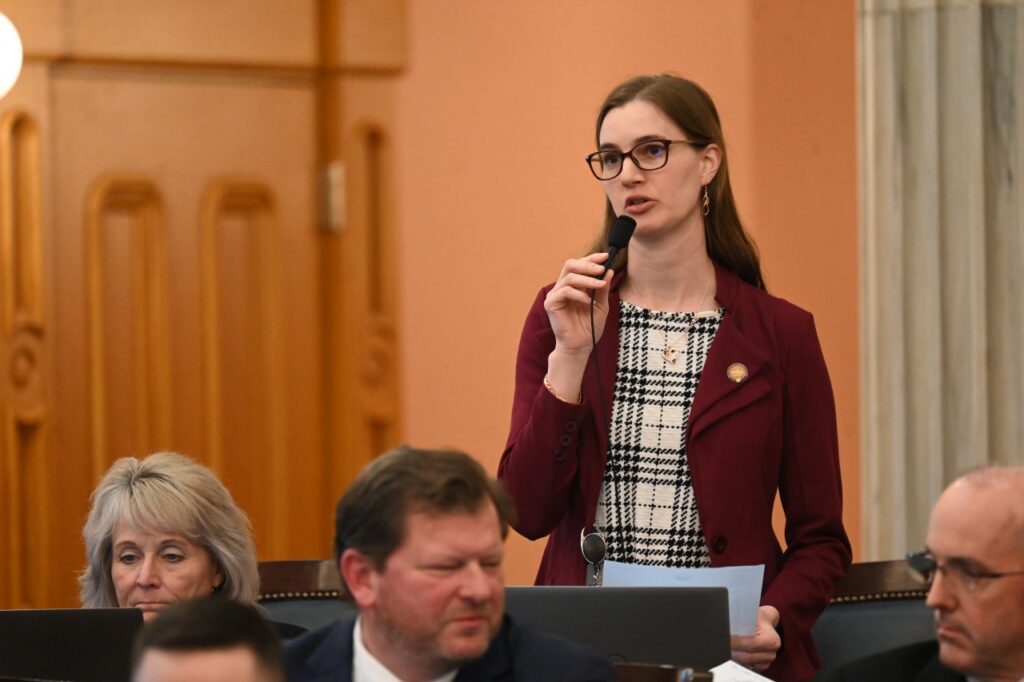
State Rep. Sarah Fowler Arthur, R-Ashtabula, said the curriculum is intended to provide students with information about factors associated with long-term economic outcomes.
“Young people are statistically far less likely to live in poverty when they complete high school, work full time, and marry before having children,” Fowler-Arthur said.
“This gives young people tools to make informed decisions about their education, work, family, and their future stability.”
The success sequence language was originally introduced in Senate Bill 156 and was folded into Senate Bill 276 during the final weeks of the legislative session. SB 276 initially focused on school psychologist licensing and other education-related issues.
The bill also includes provisions aimed at expanding access to extracurricular activities for students whose schools do not offer certain programs.
Beginning in the 2026-27 school year, districts that participate in interscholastic athletics would be required to adopt policies allowing students from neighboring schools to petition to participate in extracurricular activities unavailable at their own schools.
Students seeking to participate would need to receive approval from school administrators in both districts and would first have to pursue participation opportunities within their own districts if available.
In addition, Senate Bill 276 would enter Ohio into the Interstate Compact for School Psychologists, allowing qualified school psychologists licensed in participating states to obtain equivalent licensure in Ohio more easily.
State education groups have said the compact could help schools recruit psychologists by recognizing equivalent licenses from other states.
The bill also directs the Department of Education and Workforce to study potential statewide hybrid assessment systems that could combine Ohio Achievement testing with nationally norm-referenced measures.
State Rep. Sean Brennan, D-Parma, criticized the requirement, arguing it places additional demands on educators.
“They’re already stretched thin, and this part of this bill adds another requirement,” Brennan said.
Opponents of the success sequence, which includes some teachers, professors and other groups, have argued the requirement presents a narrow view of family formation and could leave students from single-parent, blended or same-sex households feeling excluded.
Supporters, including the Center for Christian Virtue, have argued the framework is based on long-standing research examining factors associated with lower poverty rates and is intended to provide students with information about decisions that can affect future financial outcomes.
Senate Bill 276 passed both chambers of the General Assembly before lawmakers adjourned for their summer break. If signed by DeWine, most education-related provisions in the bill would take effect for the 2026-27 school year.