Undisclosed data center developer hires Veolia to operate gas-powered microgrid
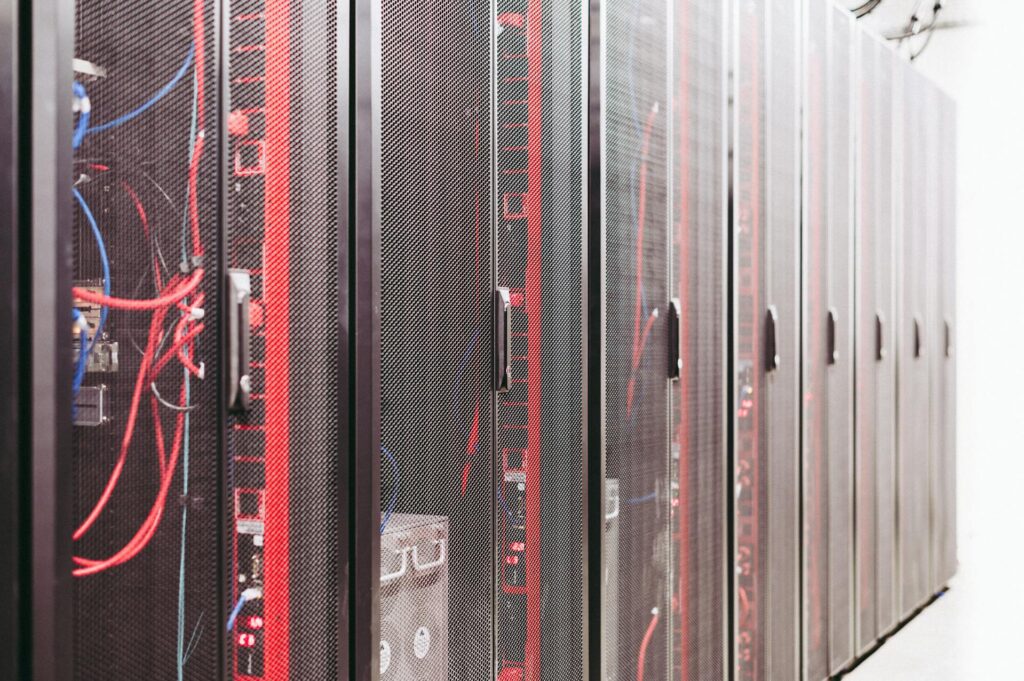
Photo by Brett Sayles: https://www.pexels.com/photo/server-racks-on-data-center-5480781/
The international utilities company Veolia announced plans to operate a 350-megawatt microgrid for an undisclosed AI data center campus in New Albany.
The microgrid will provide 100% of the site’s power without relying on the traditional grid, according to a company news release. Due to power constraints on the grid and local community pushback, many data center developers are starting to seek out off-grid solutions such as microgrids.
The alternative energy sources also allow data centers to accelerate opening and avoid long wait times associated with joining Ohio’s grid. AEP Ohio said adding new large-scale data centers to the grid could take three to five years, NBC4 News reported.
Company officials did not disclose who the contract was for, but said Veolia was selected by a “major project developer to operate and maintain a 350-megawatt microgrid to power an AI data center campus.”
“Our work on this project shows how Veolia can help developers accelerate speed-to-power while maintaining the reliability required for mission-critical AI operations, all while protecting the community,” Karin Hamel, CEO of Veolia Energy, North America and Chief Growth Officer for Veolia in North America, said in a statement.
Data Center Dynamics said the campus site remained “undisclosed,” while NBC4 said the new power grid was coming to New Albany.
Ohio’s public utilities commission approved Veolia to operate in Ohio in late June, but it did not disclose who the data center’s customer would be. State environmental records and city council records also did not reveal who will use Veolia’s energy, according to NBC4.
However, Facebook, Instagram and AI-technology owner Meta is planning to build its Prometheus computing complex in New Albany, with some phase of construction expected to be completed as early as 2027, according to previous news reports.
The microgrid will be powered by gas engines and linear generators, plus 430 MWh of battery energy storage capacity to be available instantly and deal with the transient load challenges of AI factories, Veolia officials said.
The facility can be connected to the electrical grid but also powered fully “behind the meter” using on-site fossil fuel energy solutions. The multiple energy sources will allow the campus to stay online even during a power outage, Microgrid Knowledge reported.
According to Veolia, the company was brought on before construction to support startup readiness. Veolia will oversee operations integration, commissioning support and long-term plant operations under a performance-based model, the company said.
“As developers deploy microgrids and other advanced energy systems to meet the growing demand for AI infrastructure, they need trusted partners with the expertise to operate these assets safely, reliably and at scale,” Hamel said.
The microgrid means the data center won’t have to rely on Ohio’s existing energy resources, which can drive up costs for consumers.
According to the company website, Veolia is a global leader in environmental services, focused on water, waste and energy management services. Based in France, Veolia Group has 215,000 employees across five continents.
The contract builds on Veolia’s Data Center Resource 360 offer launched earlier this year. The all-in-one operational solution helps data center developers create “carbon-neutral, water-positive, circular hubs, boasting up to 20 percent more energy reuse, a 75 percent smaller water footprint, and 95 percent waste recycling and reuse,” according to the website.
“Veolia helps reduce operational risk, improve performance and provide environmental security for customers and the communities they serve, supporting the responsible growth of AI while delivering reliable and sustainable infrastructure solutions,” Hamel said.
Statewide, Ohio has nearly 200 data centers, each of which puts a huge strain on the electrical grid. New Albany is home to 40 data centers. The power they require creates a supply-and-demand imbalance and can drive up electric bills for consumers if ratepayer protections are not in place, NBC4 reported.
Veolia previously collaborated with AECOM on an $8.2 million microgrid to back up and power a wastewater treatment plant in Rialto, Calif., as well as microgrids and CHP projects at commercial real estate and educational sites in New York.