Judge excludes gun as evidence against man alleged of panicking Acton tent at Fair
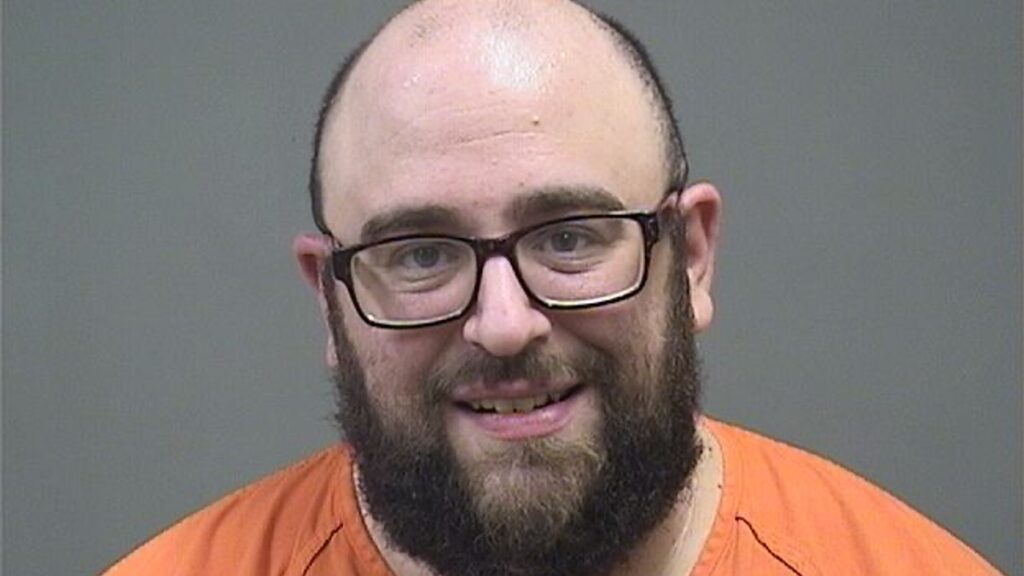
Prosecutors cannot introduce evidence that a man who allegedly walked toward Democratic gubernatorial candidate Amy Acton at the Canfield Fair on Sept. 6 was lawfully open-carrying two small-caliber handguns, a judge has ruled.
Many initial media accounts and the Acton campaign alleged that the man — subsequently identified as Patrick Havas, 38, of Canfield — “induced a panic,” “lunged at” Acton and injured multiple people. However, Havas did not brandish any weapons, and no clear clips of Havas’ approach or the confrontation appear online, as Acton’s campaign asked people to stop recording her events shortly before the incident.
According to court records and law enforcement accounts, Havas entered the Mahoning County Democratic tent around 2:30 p.m., recording on his cellphone and calling Acton’s name as she spoke with attendees. Witnesses and officers said he moved forward through the crowd, leading two Ohio State Highway Patrol officers to confront him.
Two people — described in accounts as two older attendees on mobility scooters — were knocked to the ground. They reportedly received treatment from nurses on site but were not hospitalized.
In a motion, defense attorney J. Gerald Ingram noted that discovery showed no bystanders were even aware that Havas possessed a firearm while inside the tent. While 12 witnesses plus officers provided statements, only one witness claimed to have seen a holstered gun after troopers had already taken him into custody; Havas also reportedly had brass knuckles and a taser on him at the time.
Havas faces four misdemeanor charges: two counts of alleged assault, first-degree misdemeanors; one count of allegedly inducing panic, a first-degree misdemeanor; and one count of alleged disorderly conduct.
While Havas has pleaded not guilty, under Ohio State law, a conviction for a “misdemeanor offense of violence” — which includes inducing panic — typically creates a three-year disqualification from concealed and permitless carry. If convicted of all four charges, Havas also faces up to 18 months in jail and thousands in fines.
Through his defense attorney, Havas filed a motion asking the court to bar prosecutors from referring to the weapons as evidence that he had induced panic. Separately, last year, then-Attorney General Dave Yost issued an opinion finding that county agricultural societies could not restrict guns at county fairs.
In her ruling, granting Havas’ motion, Mahoning County Area Court Judge Molly K. Johnson said the mere sight of the holstered weapons was irrelevant and inadmissible. Adding that Ohio is an open-carry state, Johnson ruled that “the mere sight of a small, holstered handgun — particularly at a rural agricultural function — does not automatically induce panic.”
She found that any sighting after Havas was already in custody could not have caused greater alarm. Moreover, Johnson wrote that the state had made no connection between the weapons and the assault or disorderly conduct charges.
In a post to X, attorney Mark R. Weaver highlighted the court’s “jostling” characterization of the event and contrasted it with the legacy media’s false reports of a violent attack, echoing concerns over jury bias and a fair trial.
Strong judicial writing (reaching the proper legal and common sense conclusion) from Ohio Judge Molly Johnson. She's presiding over the county fair "jostling" case (the Court's words) that many in legacy media falsely reported as a violent attack against candidate Amy Acton. pic.twitter.com/yTk5Z5BBm7
— Mark R. Weaver (@MarkRWeaver) October 26, 2026
Mahoning County Prosecutor Lynn Maro told The Vindicator that no Ohio law fit simple lawful possession, as the weapons were never unholstered or used, and added the inducing-panic count at the arraignment. That inducing-panic count requires a finding of guilt on one of the other charges to result in a conviction.
Maro, who has also said that Havas never made contact with Acton, told The Vindicator that the prosecution was unable to substantiate a motive — either from the video filmed on Havas’ phone or from the contents of his searched cellphone – to support felony charges.
“There was a search for critical terms that law enforcement typically use and they typically search for when they’re conducting that risk assessment. None of those terms were found,” Maro said.
A pretrial is set for Nov. 6. The ruling does not dismiss any of the four charges, but prevents prosecutors from referencing any weapons at trial unless the issue is raised outside the jury’s presence.
Republican gubernatorial candidate Vivek Ramaswamy’s campaign and other national figures condemned the incident immediately afterward.
Related Stories
Sherrod Brown’s lack of outreach to African-American voters raises concerns, undercover video shows
Democratic Party chair claims to be a long-time Republican in OH-15 campaign ad