AG Dave Yost supports the Ohio Supreme Court’s decision to allow judges to endorse political candidates
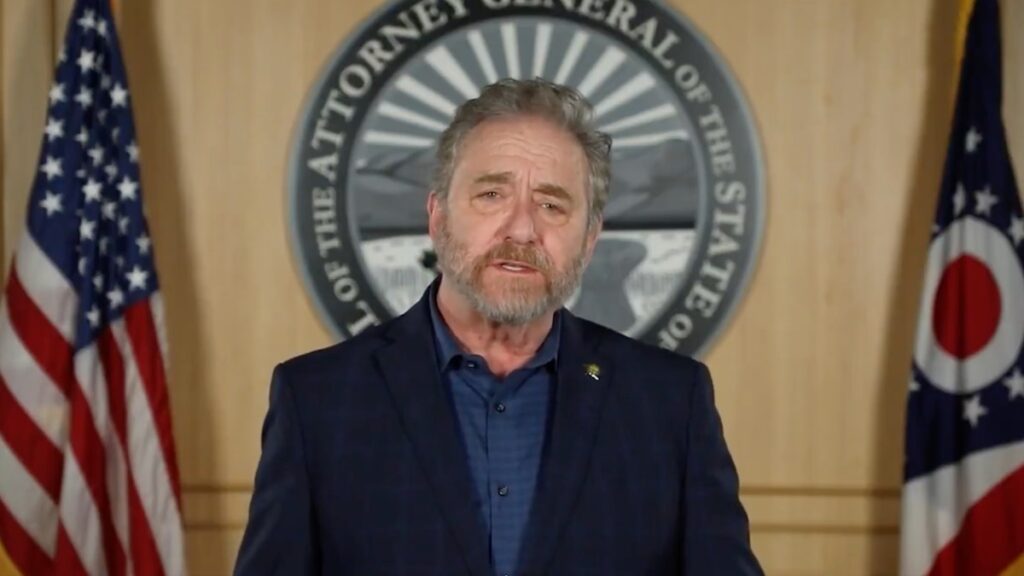
Ohio Attorney General Dave Yost supported the Ohio Supreme Court’s recent decision on Monday to allow judges to publicly endorse political candidates, saying the ruling restores First Amendment rights.
“This is overdue. While it is extraordinarily unwise for any judge to make political endorsements, the First Amendment was not —and cannot be—repealed by the Rules of Judicial Conduct,” he wrote on X. “If judges can be gagged, what other important professions could be prohibited from speaking?”
This is overdue. While it is extraordinarily unwise for any judge to make political endorsements, the First Amendment was not —and cannot be—repealed by the Rules of Judicial Conduct.
If judges can be gagged, what other important professions could be prohibited from speaking? https://t.co/HWk7MkVmEN
— Dave Yost (@DaveYostOH) April 13, 2026
The Ohio Supreme Court overturned the decades-long ban in a 5-1 ruling issued last week. The decision made Ohio the only state to explicitly allow judges to make partisan political endorsements, Cleveland.com reported.
The court’s ruling came in a case over whether Clinton County Common Pleas Judge John “Tim” Ruddick, who retired in 2024, should be disciplined for endorsing his son, Brett, on his personal Facebook page while he was running for Clinton Municipal Court judge in 2023, the race that he ultimately lost.
A state disciplinary panel determined that the elder Ruddick’s endorsement violated the Ohio Code of Judicial Conduct’s ban on judges endorsing or opposing political candidates, recommending that he receive a public reprimand, which is the least severe penalty the court could impose, and delete the endorsement from his Facebook page, according to Cleveland.com.
Even though the elder Ruddick didn’t argue during the disciplinary proceedings that his constitutional rights were being violated, Ohio Supreme Court Chief Justice Sharon Kennedy wrote in the majority decision that Ruddick’s right to free speech, guaranteed by the First Amendment to the U.S. Constitution, was violated by the state, adding that the ban “burdens core political speech” and sweeps far more broadly than necessary to protect judicial independence or impartiality.
“Judges do not give up their First Amendment right to engage in political speech simply by assuming office,” she wrote.
Kennedy wrote that other parts of the state judicial code require judges to recuse or disqualify themselves if their impartiality is questioned over an endorsement.
However, Kennedy wrote that even though the elder Ruddick and other judges are now constitutionally allowed to endorse candidates, that doesn’t necessarily mean that they should.
“Judges must be cognizant of how their actions appear to the public,” she wrote. “That may mean that a judge should forgo making some public statements even if those statements would constitute protected free speech.”
The ruling was opposed by Ohio Supreme Court Justice Pat Fischer, who accused the majority of judicial activism in his dissent opinion, writing that the ruling “could have an immobilizing effect on the judicial system in Ohio.”
According to Fischer, the decision to allow judges to endorse candidates — especially prosecutors, sheriffs, or other frequent litigants — would undermine public confidence in judicial neutrality and call into question other judicial ethics rules.
“Endorsements, by their very nature, are often the result of political back-scratching exchanged between political actors on a quid pro quo basis,” Fischer wrote. “A judicial anti-endorsement rule is narrowly tailored to a state’s compelling interest in preventing judges from becoming (or being perceived as becoming) part of partisan political machines.”
Related Stories

Sherrod Brown’s 2019 comments make him sound like a liberal, not a moderate
Does liberal Rep. Ismail Mohamed live in Delaware County? Franklin County elections board dismisses challenge