Big Tech giants testify before the Ohio data centers committee, only Microsoft vows no NDAs, tax abatements
State Sen. Brian Chavez, R-Marietta, via Facebook
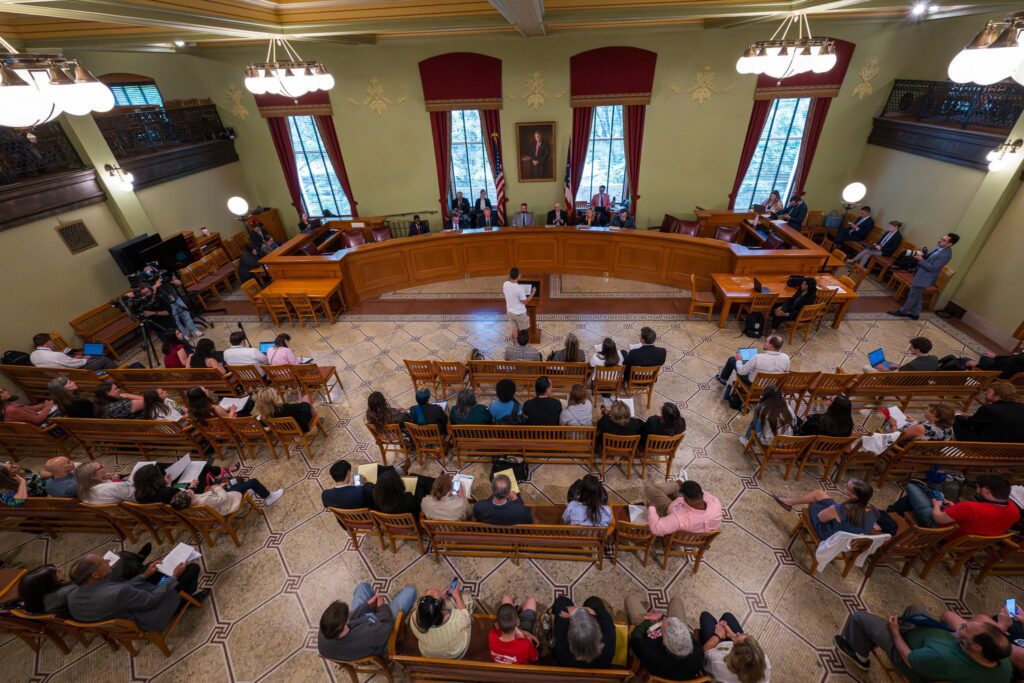
Representatives from Big Tech companies Google, Meta, and Microsoft testified before the Joint Data Center Committee at the Ohio Statehouse on Thursday, with only the representative from the company founded by Bill Gates saying that it will not force Ohio government employees to sign nondisclosure agreements and won’t ask for tax abatements.
State Rep. Heidi Workman, R-Rootstown, told the representatives that local residents do not want the companies’ data centers in Ohio because of the negative effects on their environment, health, and bills, according to NBC 4.
“Over 90% of the responses I received last night are basically telling me we do not want this, no matter what you say,” she said, according to the news source. “They say that they do not believe anything that the data centers are telling them.”
According to Cleveland.com, Daniel Brown, senior director for state government affairs at Microsoft, acknowledged that “it’s paramount to prioritize transparency and engagement to build trust in communities,” saying this is why the company will no longer require local government officials to sign NDAs.
“Getting rid of the nondisclosure agreements brings us closer to the community so they can learn from us firsthand what we want to do in their communities,” Brown said, per NBC, adding that while NDAs are common, the development plans of the data centers should be shared with Ohioans.
Microsoft, which plans to build data centers in New Albany, Heath, Hebron, and Pataskala, is allegedly committed to ensuring that people living in those places will see the improved infrastructure, schools, public safety, emergency services, libraries, and parks in their communities as a result of the Big Tech company paying property taxes to the state, according to The Columbus Dispatch.
“Once fully operational, we anticipate that our property tax revenue from our first data center building at each campus will place Microsoft among the top ten property taxpayers in Licking County,” Brown said.
The recent comments by Brown came after Microsoft discovered that it is cheaper to keep people working for it than to replace them with artificial intelligence, per Fortune.
Members of the committee supported Microsoft’s decision, with the committee co-chair and state Sen. Brian Chavez, R-Marietta, saying that he thinks “that was a positive step forward.”
“There are enough examples around the state where those NDAs have been counterproductive to local communities,” the committee co-chair and state Rep. Adam Holmes, R-Nashport, said, according to The Dispatch.
However, unlike Microsoft, officials from Amazon, Google, and Meta told the committee they won’t waive their NDAs.
“I think many of the constituent concerns can also be addressed just by more information sharing: having project websites, having fact sheets, working closely with local water utilities or city economic development staff to just get as many facts as we can out there so they know what their local leaders are sort of discussing, debating, and deciding for their communities,” Liz Schwab, market development and policy manager for Google Data Centers, said, according to The Dispatch.