Bill intends to improve information sharing in cases of child abuse
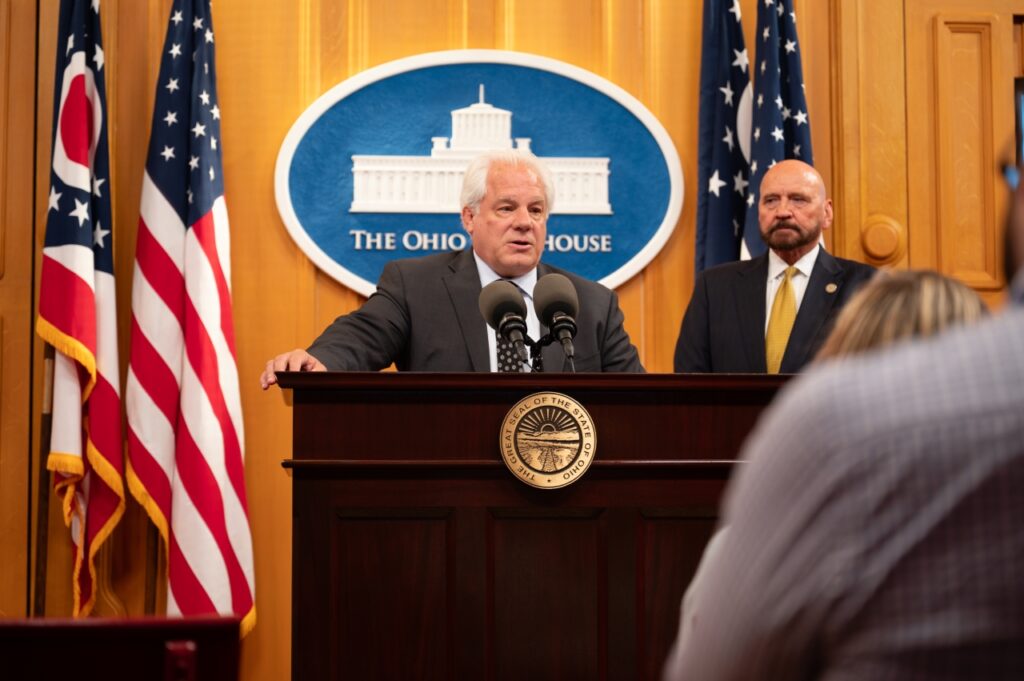
Ohio Republican state lawmakers introduced a bill to ensure there would not be any child abuse cases in the state, citing the death of Hershall Creachbaum, a Dayton, wheelchair-bound, seven-year-old autistic boy, as the inspiration for the measure.
The state of Ohio filed charges last month against the boy’s mother and her boyfriend, according to the Statehouse News Bureau.
State Reps. Tom Young, R-Washington Twp., and Phil Plummer, R-Dayton, said that Creachbaum’s death could have been easily avoided if House Bill 635 were law at that time, the news source reported.
According to the lawmakers, the Child Protection Reform Act would improve communication and coordination between courts, law enforcement, and child services, as well as ensure that there will be accountability for people responsible for similar cases and the escalation of cases that involve violence and abuse against children.
“It aligns child welfare procedures with criminal enforcement where appropriate, and improves coordination between courts, prosecutors, and children’s services,” Young said, according to the Statehouse News Bureau. “Breakdowns in communication and unclear statutory direction delay intervention. When this happens, a child pays the price. The bill closes procedural gaps, strengthens reporting and follow-through, and ensures dangerous conduct involving minors is treated to the seriousness it warrants.”
Plummer, a former Montgomery County sheriff, also said that “if there’s a continual domestic violence situation at that house, the police departments will have to share that report with children’s services because, as we know, there’s smoke, there’s fire.”
Plummer also said that the Creachbaum case is a clear example of the system not working properly, adding that the government agencies have a coordination problem since the information about the Creachbaum’s case wasn’t shared by Clark County with Montgomery County, even though the case had been moved to Montgomery.
“We all understand that we have to protect medical information, but there are situations where we can share intelligence that we don’t. And it’s always people hiding behind HIPAA. And most of the people say, I can’t share that because they don’t understand HIPAA,” Plummer said, according to the Statehouse News Bureau, referring to the Health Insurance Portability and Accountability Act. “So we get this, we get this, blaming each other. We just want you guys to share information, plain and simple. Do your job right.”
Young and Plummer also said that the state and local organizations need to understand the scope of the problem, which means they need access to more data on cases involving child welfare and abuse incidents, according to the news source.
“The number of cases that I can count where we would need to intercede would be at least 300,000 cases. Even bad data shows a hundred thousand cases in just one section of abuse,” Plummer said. “So we really need to get our numbers right.”
The bill by the lawmakers already had two hearings, with a third scheduled for Wednesday.
Among the interested parties that presented testimony during the May 12 hearing were Mary Wachtel of the Public Children Services Association of Ohio, Rachel Reedy of the County Commissions Association of Ohio, Lynanne Gutierrez of Groundwork Ohio, and Kate Rossman of NECCO.
Wachtel supported some parts of the bill, such as disclosure and information sharing, but also offered suggestions for improving other parts, such as caseworker training requirements. She also said that her organization is concerned about the impact of the visitation provisions.
Reedy’s organization also supported the lawmakers’ effort, adding, however, that the bill does not go far enough to fix the problems in the system, urging the lawmakers to introduce additional reforms.
“If the state moves forward with expanded visitation mandates, additional and sustainable state support through the State Child Protection Allocation and capacity building measures will be necessary to ensure counties can meet these requirements without negatively impacting other critical child welfare services,” Reedy said in prepared testimony.
Gutierrez pointed out that the state must ensure that children are raised in stable, calm families so that they will grow up to be well-adjusted members of society.
“Investments in programs and services that intervene early and strengthen families before crises escalate can help prevent early childhood trauma, promote healthy development, improve family stability, and reduce deeper involvement with the child welfare system over time,” she said in prepared testimony.
Rossman also suggested two amendments for the Children and Human Services Committee to consider: narrowing the weekly visit and mandatory placement review requirements to group homes and reconsidering the weekly visit requirement for foster children under five and children with developmental disabilities.
Related Stories

Don’t know whether the Democrat is anti-war? Just ‘spitball and improvise,’ Dem organizer says in undercover video

Rep. Michelle Teska urges legislative action to require English proficiency rules amid public safety concerns