Columbus Flock camera debate raises questions over growing Ohio surveillance network
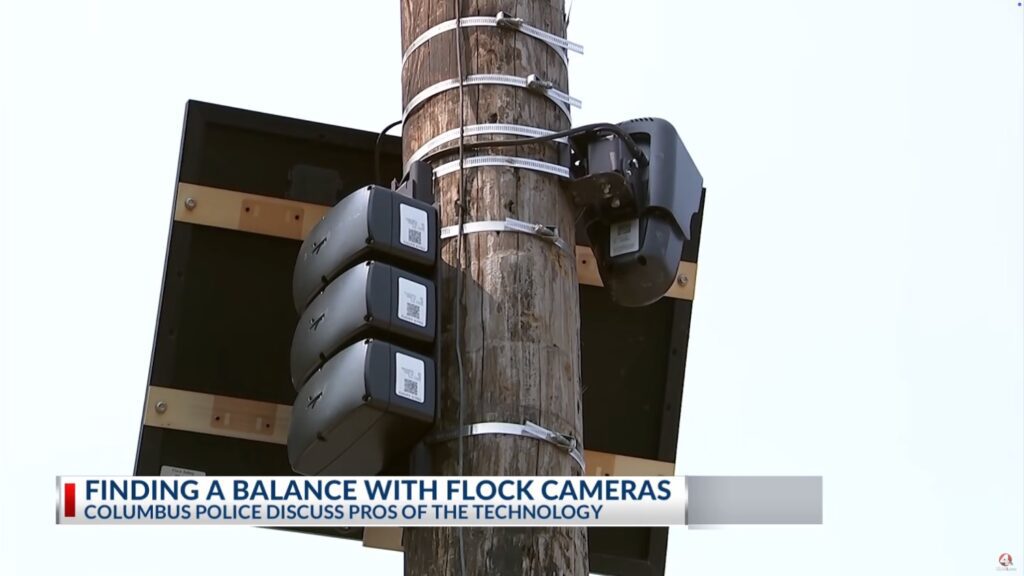
Columbus officials are weighing the future of the city’s Flock license plate reader network after an audit found more than 15,000 searches potentially related to immigration enforcement, adding to concerns across Ohio over how a crime-fighting tool used by police has also been misused to track individuals.
The Columbus City Council held a public hearing Monday on the city’s use of Flock Safety cameras, which automatically scan passing vehicles and record information including license plates, vehicle characteristics, location and time. The information is uploaded to a searchable database accessible to law enforcement.
Columbus police currently operate 65 Flock cameras, with another 11 planned, according to WOSU.
Police officials have defended the cameras as an effective investigative tool, pointing to their use in homicide investigations, locating missing children and recovering stolen vehicles. But questions over who can search the data and for what purpose have increased following an audit of Columbus’ system.
The audit found the city’s Flock network had been searched more than 15,000 times for reasons potentially related to immigration enforcement. None of those searches came directly from U.S. Immigration and Customs Enforcement, but Flock’s data-sharing system can allow outside law enforcement agencies to search information collected by participating departments.
Columbus police disabled nationwide sharing in June and statewide sharing in July, shifting toward individually approving agencies that can access the city’s data.
Columbus Police Chief Elaine Bryant defended the technology during Monday’s hearing, saying the cameras have assisted police with criminal investigations and finding missing people.
“It’s the tool for us to be able to utilize and be able to not just address crime, but to address other situations where we have missing persons, people with dementia, autistic children that wander away from their homes,” Bryant said, according to WSYX-TV/ABC 6.
Columbus police data presented during the hearing showed Flock technology was involved in 49% of homicide arrests during the first half of 2026.
Similar concerns about how the technology is used have surfaced elsewhere in the Buckeye State.
Akron has 146 Flock cameras connected to the larger network, according to an investigation by Signal Akron. Records covering a five-month period in 2025 showed more than 37,000 searches by Akron officers without a discernible reason documented, despite department policy requiring officers to record why the system was being used.
The records also showed Akron officers used the system to search for a vehicle belonging to Autumn Riddle, a critic of the Akron Police Department. One search listed “activist recording” as its reason.
An internal police investigation determined the searches were not retaliation or harassment but found the documentation violated department policy. Akron Independent Police Auditor Anthony Finnell similarly found the searches failed to establish a crime, public safety concern or investigative connection.
Akron officials said the department changed its procedures after receiving the complaint and now requires officers to select a reason for searches and provide case numbers when applicable.
The concerns extend beyond Ohio.
A Washington Post investigation found that at least 50 law enforcement officers nationwide had been charged with or accused of misusing automated license plate reader systems, including 46 cases involving Flock. In several cases, authorities accused officers of using the technology to monitor current or former romantic partners for personal purposes.
Flock has said misuse represents a small fraction of its users and has introduced optional auditing tools intended to identify suspicious searches. According to reports, CEO Garrett Langley has acknowledged that officers can misuse the system but argues audit logs allow departments to identify and punish misconduct.
Some central Ohio departments have imposed tighter restrictions on the technology.
According to WCMH-TV/NBC4, Dublin officials said their department individually approves agencies before establishing data-sharing relationships and does not have reciprocal agreements with ICE or the Department of Homeland Security. The city also said its system cannot be used for immigration-related searches and regular audits have found no misuse.
Dublin has reported at least 135 investigative successes since implementing Flock in 2024, including locating a missing juvenile and identifying vehicles connected to robbery and arson investigations.
Columbus currently has no ordinance specifically regulating automated license plate reader technology. ACLU of Ohio Legislative Director Gary Daniels argued that internal police policies are insufficient because departments can change them without legislative approval.
“We need statutory laws on the books governing this, because a police policy can be abandoned the next day, and it holds no force of law,” Daniels said, according to WOSU.
Columbus’ contract with Flock expires in December as city officials consider what restrictions, if any, should govern the technology going forward.
Related Stories

Don’t know whether the Democrat is anti-war? Just ‘spitball and improvise,’ Dem organizer says in undercover video

Rep. Michelle Teska urges legislative action to require English proficiency rules amid public safety concerns