DeWine signs executive order allowing emergency Medicaid fraud measures
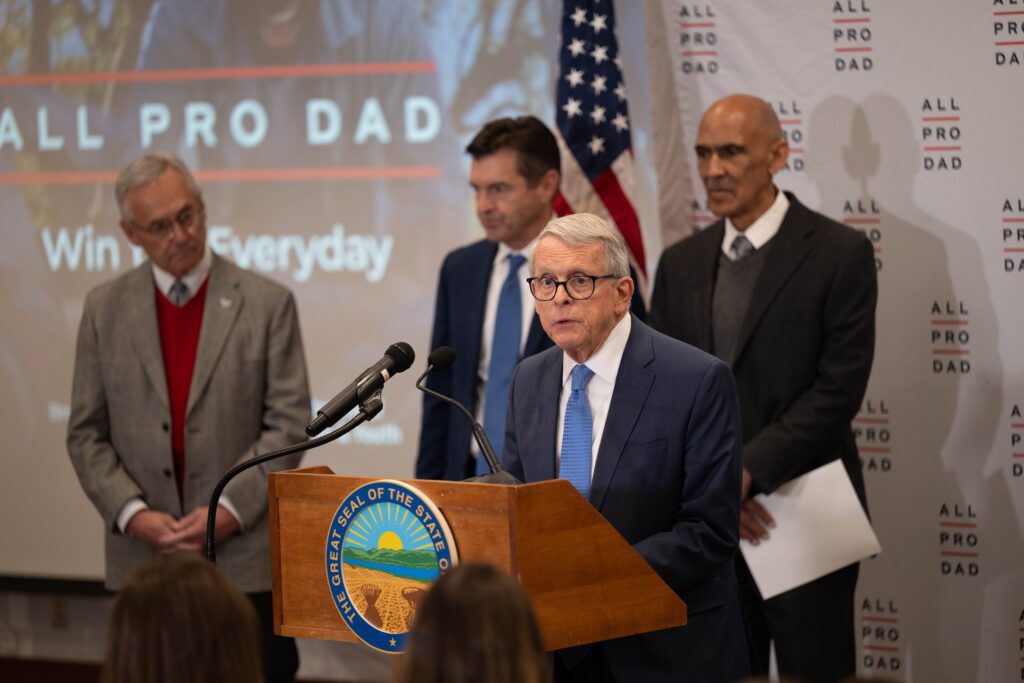
In March 2026, Gov. Mike DeWine and Lt. Governor Jim Tressel were joined by former NFL Head Coach Tony Dungy to announce a new partnership between the Ohio Department of Children and Youth and All Pro Dad.
Amid growing concerns about Medicaid fraud in Ohio, Republican Gov. Mike DeWine on Monday signed an executive order allowing the Ohio Department of Medicaid to enforce emergency rules announced last week.
The new rules, which were not announced during Fraud Prevention Month in April, require more frequent revalidation of providers identified as higher risk of fraud.
DeWine’s office is trying to spin his efforts to date, including as governor and attorney general, as tough on Medicaid fraud, which, according to one estimate, could top $1 billion. Since referrals began in 2011, Ohio has handed down more than 2,300 Medicaid fraud indictments, secured 2,200 criminal convictions, and recovered more than $644 million in fraudulent Medicaid payments.
DeWine announced new fraud-prevention initiatives last week following a string of reports by The Daily Wire. The governor’s office was quick to dismiss concerns about the reporting once it hit, then tried to back off its initial assessment as more reports were published.
With the change, ODM will amend the Ohio Administrative Code rules to permit Ohio Medicaid to terminate providers who have not furnished Medicaid services or billed the program for more than one year. It will also require higher-risk Medicaid providers to revalidate enrollment more frequently.
Under the order, Ohio Medicaid is empowered to mandate that certain Medicaid providers, as determined by the Medicaid director, recredential and to deny a provider enrollment application when a federally approved moratorium is in effect, even if the application was received before the moratorium started.
DeWine sent a letter to the Centers for Medicare and Medicaid Services on May 1, committing Ohio to partnering with the Trump Administration to fight fraud.
But critics say the governor is not entirely without blame. Last week, Senate President Rob McColley, R-Napoleon, expressed frustration that DeWine has vetoed measures to increase oversight of Medicaid, saying the latest changes are a “little bit late, quite frankly.”
“It appears that the State of Ohio is being systematically bankrupted by bad actors who have come here with zero intention of working hard but rather have figured out how to exploit the goodness of the American people to drain our country dry,” state Rep. Mike Dovilla, R-Berea, said in a recent statement.
“The residents of our state expect Medicaid dollars to go to those who truly need it, not fraudsters abusing loopholes,” Dovilla added. “Ohioans deserve action, not strongly worded letters.”
On Monday, the state’s Medicaid department announced the addition of a cutting‑edge fraud detection and analytics platform to enhance program integrity and protect taxpayer dollars.
“Ohio taxpayers deserve a program that is protected, accountable, and aggressively defended against fraud, and this tool helps us deliver exactly that,” Ohio Department of Medicaid Director Scott Partika said in a release.