DeWine vetoes utility submetering bill, calls model ‘fundamentally flawed’
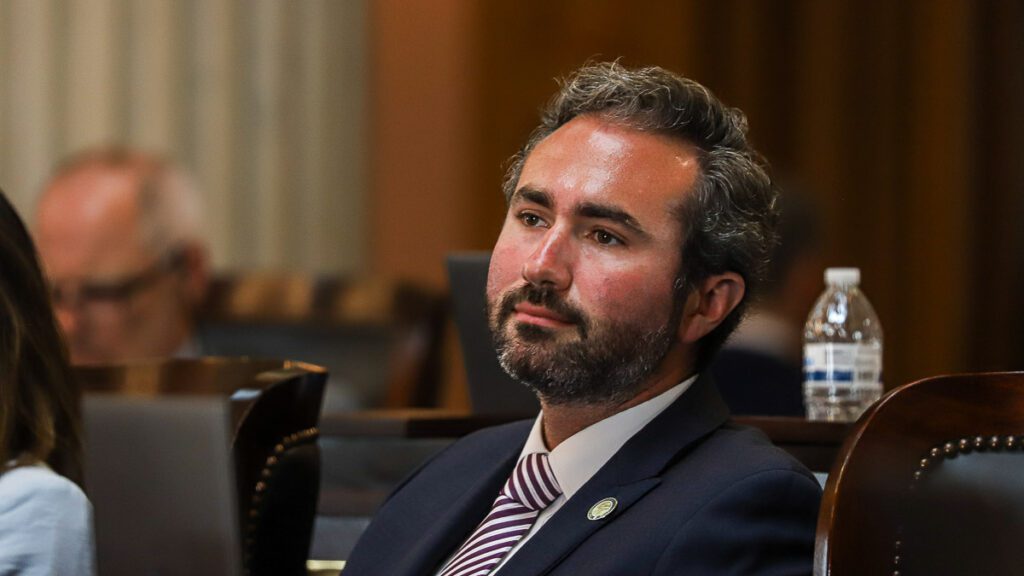
Ohio Rep. David Thomas, R-Jefferson, during session on Tuesday, June 9, 2026. (Photo by T.A. DeFeo)
Republican Gov. Mike DeWine vetoed legislation that would have established a new regulatory framework for utility submetering companies, arguing the bill would legitimize a system that leaves some Ohio consumers with fewer protections than customers served directly by electric utilities.
House Bill 173, sponsored by Rep. David Thomas, R-Jefferson, would have exempted certain submetering companies from Ohio’s definition of a public utility while establishing new rules for their operation.
In a veto message issued Tuesday, DeWine said lawmakers included several consumer-protection provisions in the legislation but failed to address what he described as fundamental problems with the submetering model itself.
“I commend the Legislature on the work done on this bill. They included provisions to protect consumers,” DeWine wrote. “However, the submetering model, itself, is fundamentally flawed.”
Submetering generally involves a property owner or third-party company purchasing electricity through a master meter and then billing individual tenants based on their usage.
Under House Bill 173, tenants served by submetering companies would not have been able to choose their own electricity generation supplier, DeWine wrote. By contrast, Ohio utility customers have been able to shop for generation suppliers since electric deregulation took effect more than two decades ago.
“These Ohioans who are in submetering situations should have the right to choose their own electricity generation supplier,” DeWine wrote.
DeWine also argued that the bill would leave some low-income Ohioans without access to existing utility assistance programs.
According to the veto message, customers served by submetering companies would not have been eligible to participate in the Percentage of Income Payment Plan, commonly known as PIPP, which helps low-income Ohioans maintain electric service.
“The PIPP programs offer critical financial support for the neediest Ohioans to maintain their electric service,” DeWine wrote.
DeWine also objected to provisions that would have allowed submetering companies to charge tenants for electricity used in hallways, community rooms and outdoor lighting.
“As a consumer protection principle, tenants should only be individually billed for the electric service usage for which they are individually responsible,” DeWine wrote.
The governor argued those costs should remain part of a property’s advertised rent rather than appearing as separate utility charges.
Despite his veto, DeWine said traditional submetering arrangements could continue under existing law.
He distinguished those systems from companies that purchase electricity and resell it at a profit. Under the traditional model, property owners or billing companies calculate charges based on utility rates and actual consumption, without acting as electricity resellers.
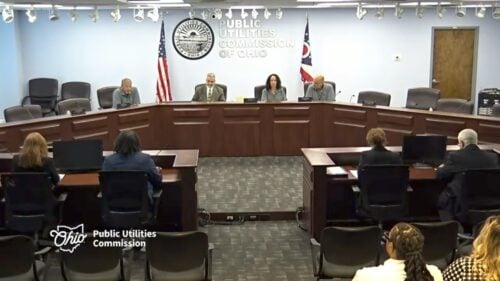
House Bill 173 also included a variety of consumer-protection requirements for submetering providers. The legislation would have required registration with the Public Utilities Commission of Ohio, established billing disclosure requirements, required alternative payment plans, created penalties for violations and imposed oversight requirements on providers.
Supporters argued the legislation would provide clarity following a recent Ohio Supreme Court ruling that found companies purchasing electricity and reselling it for profit qualify as public utilities.
Thomas criticized the veto, arguing it leaves renters without clear statutory protections.
“The utilities won today; renters lost,” Thomas said in a statement. “This veto does not give renters anything except more legal gray area and no actual law to protect them.”
Thomas said lawmakers spent more than a year developing the legislation and argued concerns raised by the administration should have surfaced earlier in the process.
“If this bill became law, Ohio, for the first time, would be legitimizing and legalizing this flawed submetering model,” DeWine wrote. “Therefore, this veto is in the public interest.”
The veto leaves current law in place, meaning companies that purchase and resell electricity at a profit will continue to be treated as public utilities and remain subject to Ohio utility regulations.