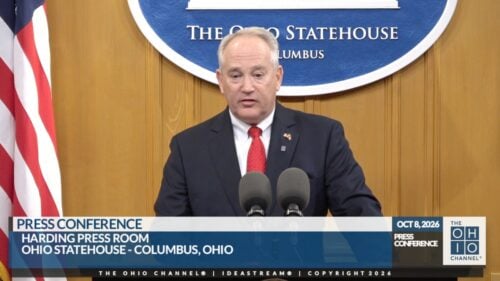
DeWine’s expedited pardon project has exceeded 300 pardons

Gov. Mike DeWine visits the new Butler County I-75 southbound rest area in Monroe on Oct. 5, 2026.
The Ohio Governor’s Expedited Pardon Project has now pardoned more than 300 people, nearly seven years after he launched the program for individuals with older, relatively low-level convictions who stay out of trouble.
According to Gov. Mike DeWine’s office, DeWine has signed 323 expedited pardons so far, with more than 340 people still working toward a pardon through the project.
“A criminal record comes with a lifetime of restrictions, but I believe those who’ve truly reformed their lives deserve a second chance to live up to their full potential — and that second chance starts with a pardon,” DeWine said. “It has been great to hear about the transformational impacts these expedited pardons have had on recipients’ lives and how doors are finally opening to allow them to achieve their dreams.”
DeWine created the project in December 2019, aimed at helping people with low-level criminal records who have led what the governor’s office describes as “exemplary, law-abiding lives in the decades since their convictions.”
The project has grown steadily since inception. DeWine’s office reported 108 expedited pardons by December 2023 and 182 by the fifth anniversary in December 2024. The project website says it had received more than 1,600 applications from 84 Ohio counties and 33 states as of Feb. 2, 2026.
Since the program began, state law has also changed, allowing the governor to automatically seal records for people who receive a pardon. Common reasons applicants seek a pardon include jobs, education, restoration of rights, volunteering and removal of the stigma of a record.
The project, which operates through agreements with Ohio’s top Law Schools and the Ohio Parole Board, pairs applicants with free legal help and a fast-track to the Governor’s office. Once a case is approved, the governor signs the pardon, effectively sealing the individual’s case to give them a second chance in society.
To be considered, an applicant generally must have finished the sentence on the Ohio conviction at least 10 years ago and must not have committed another crime in at least the past 10 years.
DeWine leaves office in January 2027. The project says it does not know whether the next governor will keep the expedited process, but it plans to keep helping applicants at least through June 30, 2027.