Group proposes ways to expand Ohio’s workforce pipeline as governor takes business success victory lap
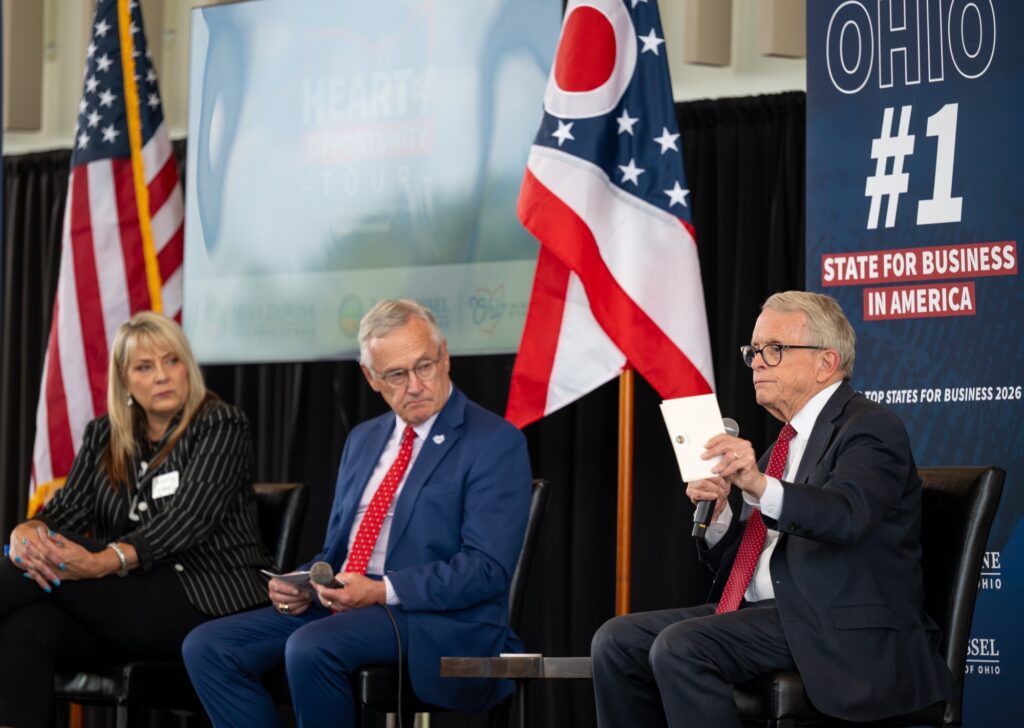
Republican Gov. Mike DeWine and Lt. Governor Jim Tressel have been on a victory tour of sorts.
Branded the Heart of Opportunity Tour, the statewide tour is described as a celebration of CNBC’s decision to rank Ohio as the No. 1 State for Business. The tour features conversations in different regions of the state that ostensibly showcase the partnerships and strategies that officials contend have resulted in the Buckeye State’s continued success.
“All across the state, we’ve seen what happens when businesses, educators, workforce leaders, and communities work together,” Tressel said in a release. “The Heart of Opportunity Tour has been about celebrating that teamwork and making sure every Ohioan knows that there are opportunities right here in Ohio to build a great future.”
However, beneath the positive ranking, there are some concerning signs in the latest jobs numbers. Chief among them is the Buckeye State’s labor force participation rate, which fell to 61.4% in July, even as its unemployment rate dropped to 3.4%.
Now, in advance of Labor Day, a Columbus-based think tank says Ohio could lose its economic gains if it doesn’t build a 21st-century labor force. To prepare workers for the in-demand, high-skilled jobs, The Buckeye Institute has released its new policy brief, Expanding Ohio’s Workforce Pipeline.
To start, the group says Ohio officials should increase the state’s share of the higher-education funding formula. The funding formula, the group said, has long rewarded enrollment and graduation rates at public universities and colleges, but it should instead reward schools for job placement, low loan default rates, and healthy debt-to-income ratios for their graduates.
“As new, specialized employers like Anduril and others expand in Ohio, they will require workers with highly technical skills, and an education funding formula not tied to employment outcomes will lead to greater labor force mismatches for post-graduation employment prospects and ultimately hamstring the state’s economy,” the group said in its report.
The state should also develop public-private partnerships to expand opportunities. Under Ohio Senate Bill 462, the group noted that Ohio has proposed creating a “qualified education partnership” program that allows colleges and universities to work with private employers to develop degrees and certificate programs aligned with specific employer needs.
Lastly, the state should use Workforce Pell Grants: The Workforce Pell Grant program ties federal dollars to developing employable skills and helping more ready-to-work employees enter the job market faster and with less debt.
“Ohio has made remarkable strides toward prosperity and economic advancement in recent years; however, it still struggles to train and retain a ready-to-hire workforce,” Greg R. Lawson, a senior research fellow at The Buckeye Institute and the author of Expanding Ohio’s Workforce Pipeline, said in a release. “By adopting the commonsense reforms outlined by The Buckeye Institute, Ohio will enhance skills training, attract qualified workers, and help Ohio remain atop national business rankings.”