House considers bill that would create new standards to prevent scams involving virtual currency kiosks
The Ohio House of Representatives is considering legislation that would create new standards and requirements for virtual currency kiosks to prevent scams.
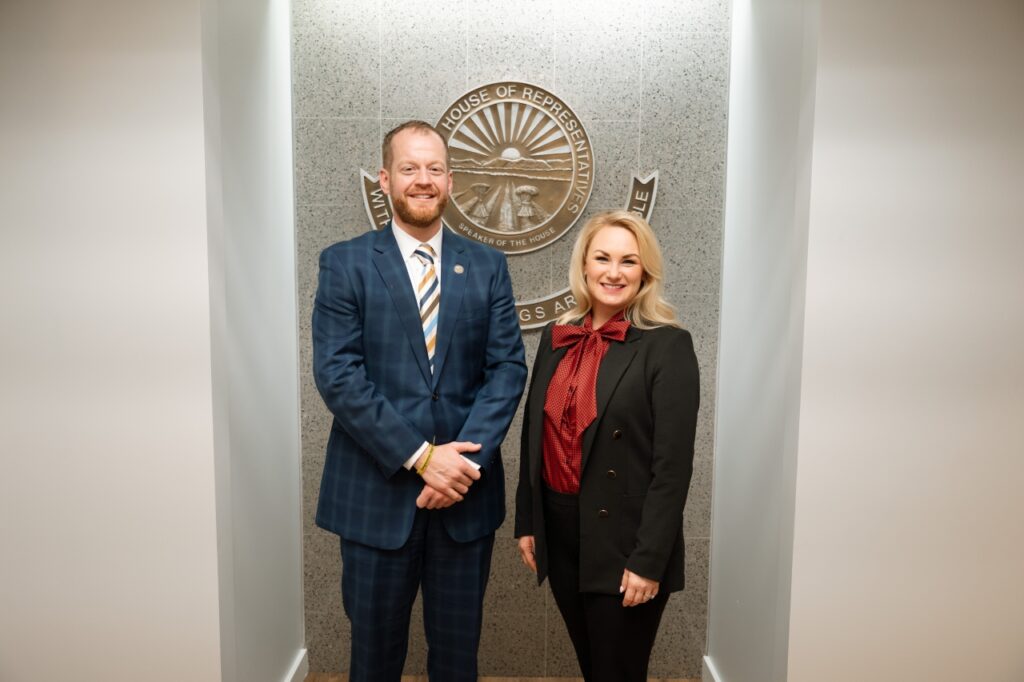
Reps. Matthew Kishman, R-Minerva, and Melanie Miller, R-Ashland, introduced House Bill 648, entitled the Ending Losses and Deception in Electronic Resources Act.
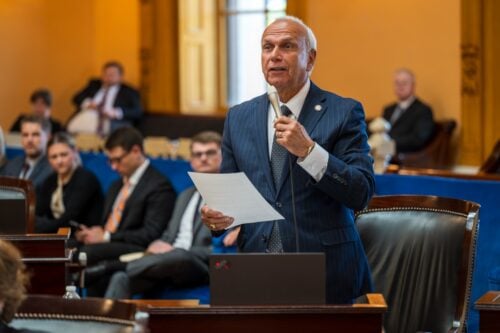
“Too many Ohioans are being targeted by criminals who exploit confusion around cryptocurrency and new technology,” Miller said in a release. “By establishing clear rules and accountability for crypto kiosk operators, we are giving Ohioans confidence that these services can operate fairly, transparently, and safely.”
In the release, Kishman said that the legislation would seek to prevent scams that often target older adults.
“These scams are despicable – destructive to society,” Kishman said in a release. “I’ve seen countless videos and reports of our elderly being coerced into putting tens of thousands of dollars into these machines in just a few minutes. After that, in most cases, it’s just gone. It’s just intolerable.
“You have unscrupulous foreign fraudsters circling like vultures over the American people every day. We’re taking steps to stop it,” Kishman added.
The legislation would require virtual currency kiosks to be licensed as money lenders and to be subject to the same oversight and requirements as other entities that handle consumer funds.
The changes the bill would require include warnings to customers that transactions are irreversible, fee disclosures, transaction limits, receipt requirements, and refund rights for some customers who are victims of fraud.
The ELDER Act would also require anti-fraud safeguards such as telephone verification for large or high-risk transactions, full-time compliance officers for each kiosk, and the use of blockchain analysis to detect and block transactions linked to high-risk or sanctioned wallets.
Jenny Carlson, the state director of AARP Ohio, also praised the legislation.
“Cryptocurrency kiosks are increasingly being used to target Ohio consumers, particularly older adults, through sophisticated scams,” Carlson said in a release. “This legislation adds critical guardrails—such as limits on withdrawals—that can stop fraud in its tracks and protect people’s hard-earned savings.”
“AARP Ohio appreciates the leadership of Representative Kishman and Representative Miller who are taking meaningful action to put consumer safety first.”
Crimes involving virtual currency scams have increased over the past several years.
The Ohio Bureau of Criminal Investigation recovered more than $35,000 for a 73-year-old Delhi Township woman in June 2025 after a scammer stole $41,750 from her through a Bitcoin ATM.
Multiple states adopted similar legislation to regulate virtual currency kiosks in 2025 after the Federal Bureau of Investigation reported receiving nearly 11,000 complaints of crypto ATM fraud in 2024.
The bill has been assigned to the House Financial Institutions Committee for further consideration.