House passes a bill to improve the criminal justice and background check systems
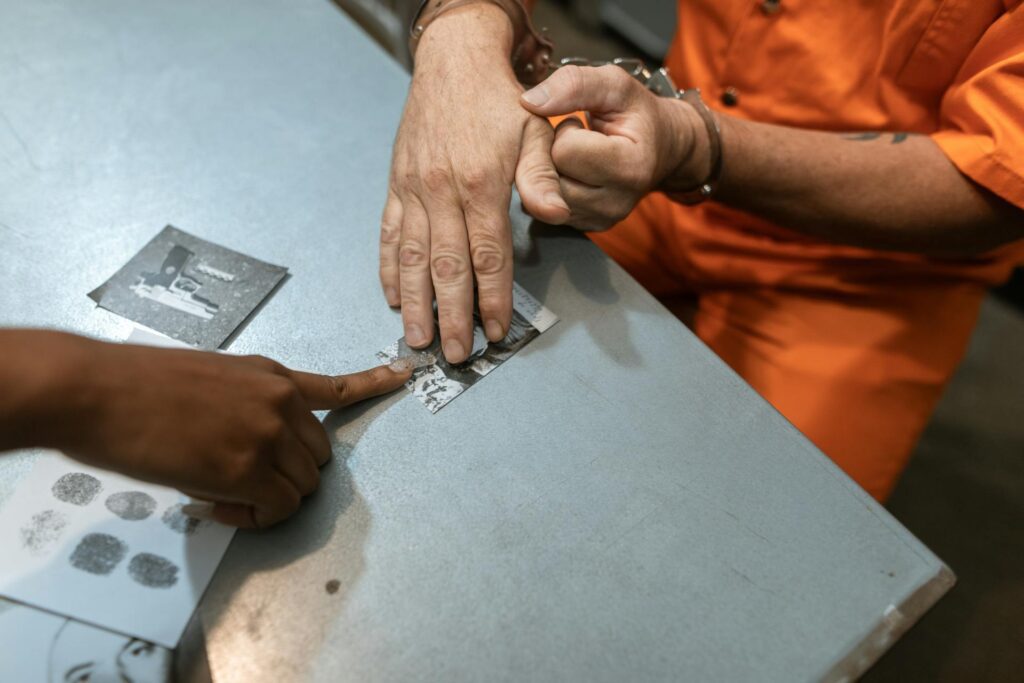
The Ohio House has passed a bill that proponents argue would strengthen the integrity of Ohio’s criminal history and background check system.
House Bill 689 “is about public safety and jobs,” state Rep. Andrea White, R-Kettering, the bill’s sponsor, said in a release.
“House Bill 689 will strengthen, modernize, and improve the integrity of Ohio’s criminal identification system – the highway on which all of our background checks for jobs, professional licenses, criminal investigations, and firearms purchases run,” the lawmaker said, adding that the criminal identification system must “evolve” so that law enforcement will “have the best tools, processes, and information to fight crime and keep our communities safe.”
“At the same time, we need a background check system that provides employers and job seekers quicker access to up-to-date,” White said. “By partnering together across the criminal justice system, we are closing the gaps, making critical improvements, and leveraging technology to improve the safety and security of our communities.”
According to the release, professionals from courts, clerks of court, law enforcement, prosecutors, and detention facilities, who are responsible for providing criminal background records related to an individual’s offense, fingerprints, and case disposition to the Ohio Attorney General’s Bureau of Criminal Investigation, helped White write the bill.
In prepared testimony to the Public Safety Committee, White said that “all of these improvements are designed to close loopholes and speed the process and accuracy by which background checks are done – checks that greatly impact people’s lives.”
“The integrity of the state’s criminal history system rides on the integrity of the data being submitted to BCI from all parts of the justice system,” she said in her testimony.
“That’s why ensuring we have the most reliable, accurate, complete information in the Computerized Criminal History System is everyone’s responsibility and everyone’s problem to solve and be held accountable for,” White added. “By partnering together across the criminal justice system, we are making critical improvements and leveraging technology to improve the safety and security of our communities.”
In prepared testimony to the committee, Independence Police Chief Robert Butler, president of the Ohio Association of Chiefs of Police, said that “information is our most valuable asset for ensuring officer safety” and that fingerprinting “is not merely a clerical step; it is the bedrock of a reliable criminal history.”
“We urge this committee to pass this legislation to ensure that Ohio remains at the forefront of national standards and that our officers are never forced to work without the full picture of who they are encountering in the field,” Butler said in his testimony.
In prepared testimony to the committee, Fairborn Municipal Court Judge Beth Cappelli said there are two stages during a case at which courts are currently statutorily required to determine whether fingerprints have been taken: the initial appearance or arraignment and the sentencing.
“Unfortunately, if a person has not been fingerprinted and is already at the sentencing stage, ensuring fingerprinting at this point becomes harder,” Cappelli said. “Sentencing should not be delayed but if the judge orders fingerprinting and sentences the person, the judge will not see the person again to ensure the fingerprinting has been completed.”
Cappelli said that HB 689 closes the gap in three ways.
“First, if a person is sentenced to probation – or community control – and has not yet been fingerprinted, then getting fingerprinted is one of the terms of probation,” Cappelli said. “Second, if a person is not being sentenced to probation, the court is required to verify, not just inquire, whether the person has been fingerprinted. Third, current law allows the court to ask the sheriff or the chief of police to fingerprint the person at arraignment or at sentencing; the bill would expand people who are authorized to fingerprint under these two statutory provisions to other personnel, so that courts with LiveScan fingerprinting devices can utilize them for this specific purpose.”
The bill is now heading to the state Senate for consideration.