House passes bill to create new offense targeting people who profit from human trafficking
The Ohio House of Representatives passed legislation that would target people profiting from the prostitution and human trafficking of other people.
House Bill 507 would make receiving money made through prostitution a third-degree felony offense. Proponents say that the bill will help law enforcement and the judiciary system combat human trafficking.
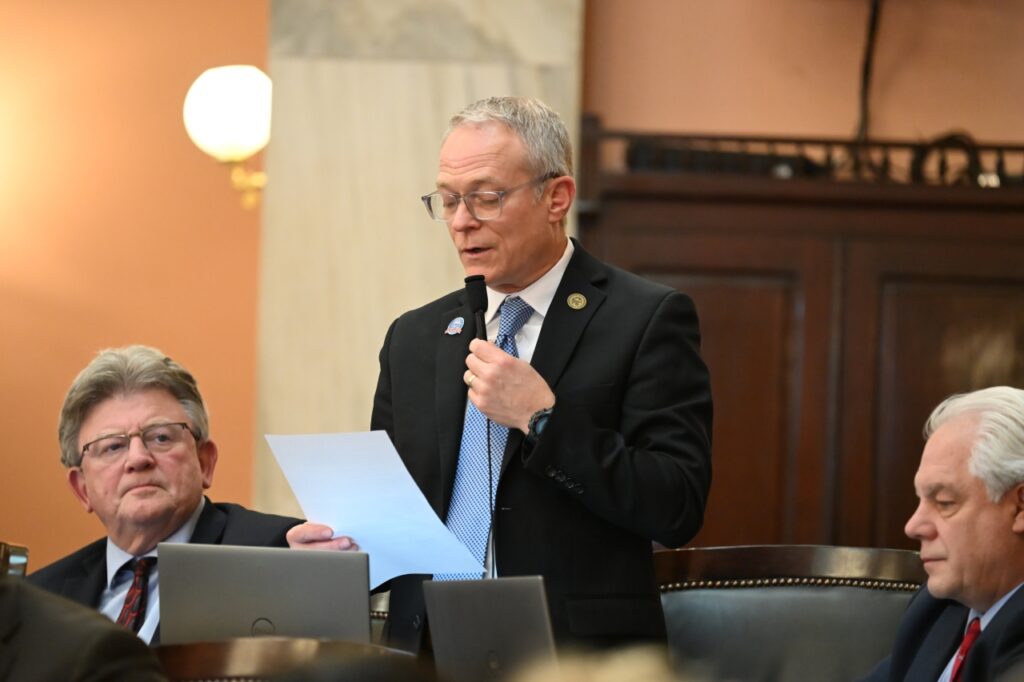
The legislation was sponsored by Reps. Marilyn John, R-Richland, and Johnathan Newman, R-Troy, who announced that the measure passed in a joint press release.
“House Bill 507 closes loopholes that have allowed bad actors to profit from exploitation,” Newman said in a release. “By strengthening our laws, we are sending a clear message that those who benefit from prostitution and human trafficking will be held accountable.”
The bill would make it illegal to receive money or anything of value knowing that those proceeds were earned through sexual activity for hire or as a result of human trafficking.
The legislation would classify offenses as third-degree felonies, with enhanced second-degree felony penalties when the proceeds involve a minor under the age of 18.
The offense would not apply to a prostitute receiving proceeds from their own activity.
“This legislation targets the individuals who profit from exploitation while preserving protections for victims,” John said. “By closing gaps in current law, Ohio is reinforcing its commitment to combat human trafficking and organized criminal activity.”
The bill would also add the offense to Ohio’s Corrupt Activities Law, a statute that addresses criminal enterprises that operate through corrupt activity.
Heinz von Eckartsberg, a legislative committee chair for the Ohio Association of Chiefs of Police, testified as a proponent of the bill.
“From a law enforcement perspective, this distinction is essential. House Bill 507 allows officers
and prosecutors to focus on those who financially exploit prostitution and human trafficking,
rather than on individuals who are themselves often victims of coercion, exploitation, or
Trafficking,” von Eckartsberg said. “By criminalizing the knowing receipt of proceeds derived from these activities, the bill strengthens Ohio’s ability to disrupt the economic incentives that sustain prostitution networks and trafficking enterprises.”
Michael Weinman, the director of government affairs for the Fraternal Order of Police of Ohio, also testified in support of the bill.
“Receiving proceeds from prostitution refers to financially benefiting from sexual services through traditional exploitation, where individuals manage sex workers,” Weinman said. “HB 507 aims to dismantle the economic foundations of prostitution, reducing exploitation for those who face significant vulnerabilities.”
“The bill will be a valuable tool for law enforcement in the fight against human trafficking. The penalty is such that officers and the judicial system will be able to make a significant impact.”
Zach Miller, a legislative officer for the office of the Ohio Public Defender, testified as an opponent of the bill.
“We appreciate the bill’s aim to target persons who are knowingly engaging in conduct that condones, while also profiting from, prostitution,” Miller said. “However, language also catches others who do not necessarily condone the conduct but do in fact know a person is engaged in prostitution. This can include a landlord, convenience store owner, or even a health care provider.”
Corey Jordan, the Director of Policy and Legislation for Ohio Attorney General Dave Yost, said that the offense would only apply to individuals who knowingly receive money made through prostitution in a proponent testimony.
“Notably, possession alone would not be enough,” Jordan said. “This means that the cashier at the fast food restaurant, the taxi driver, or even a landlord could not be convicted under this offense unless they both possessed the proceeds and knew the illegal conduct from which they came.”
House Bill 507 will now be sent to the state Senate for further consideration.
The House previously passed the Human Trafficking Prevention Act in 2025. The Senate has assigned the Act to a committee.