Ohio Board of Pharmacy bans most kratom products for 180 days after DeWine’s push
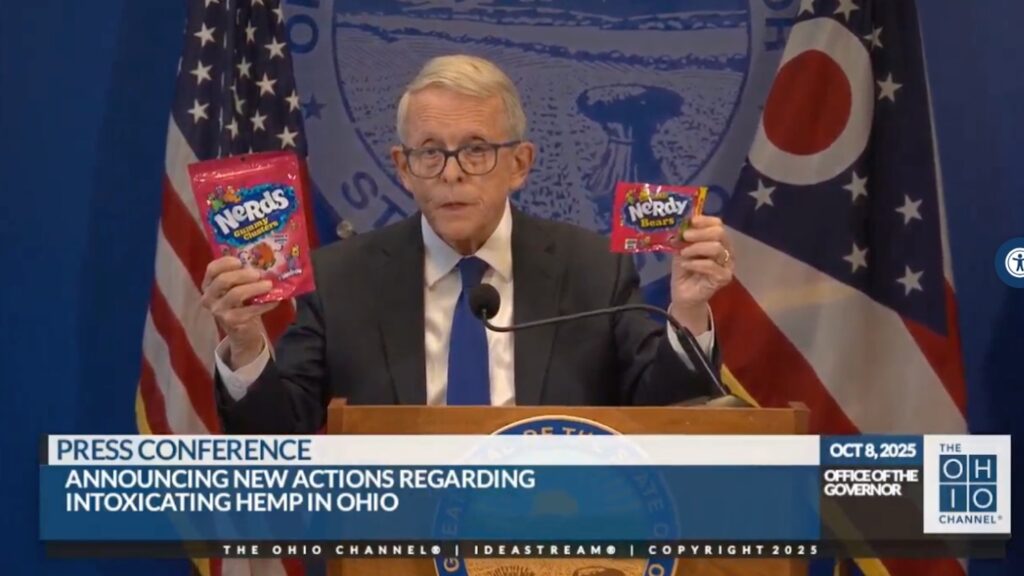
The Ohio Board of Pharmacy temporarily banned most kratom products on Dec. 12 after Gov. Mike DeWine asked the board to designate all natural and synthetic kratom compounds as illegal drugs last week.
The board’s emergency rule made it illegal to sell, possess, or distribute any kratom-related products, such as synthetic 7-hydroxymitragynine, which is also known as 7-OH.
The only products that include natural kratom in its vegetation form and were not temporarily banned were products composed solely of mitragynine. However, any other product that contains mitragynine and another form of kratom would be considered illegal to sell, possess, or distribute.
The emergency ruling is in effect for 180 days and will expire on June 10, 2026. The board said it will propose a permanent rule to ban all kratom-related products during this time.
Ohio.News reported in August on DeWine attempting to ban kratom products. After talking with Health and Human Services Secretary Robert F. Kennedy Jr., DeWine stopped trying to ban the kratom products until last week.
“In reviewing this issue over the past few weeks, national experts, including the (Food and Drug Administration), agree that synthetic kratom compounds should be scheduled as illegal,” DeWine said.
He also said that “while there is a clear path to take action on synthetic kratom,” he still has “deep concerns about natural kratom, given the harms, including fatalities, attributed to it.”
“Pursuing the regular rule process for a ban on natural kratom will allow for hearings, testimony, and a deliberative process,” DeWine said.
Unlike DeWine, state Reps. Mike Odioso, R-Green Twp., and Brian Lorenz, R-Powell, proposed an alternative, House Bill 587, which could be considered a compromise between a complete ban and full legalization of kratom. The Kratom Consumer Protection Act aims to protect Ohioans from hazardous synthetic variants while allowing them to use kratom.
“Ohioans from my district and across the state who consume kratom deserve to know the products they purchase are safe and sold in regulated venues,” Odioso said.
Kratom, a natural botanical native to the coffee family and found in Southeast Asia, became very popular in the United States, leading to it being sold as powders, gummies, and drinks.
Proponents of kratom argue that the product aids chronic pain, opioid dependence, anxiety, energy boosts, focus, and overall well-being.
However, opponents of kratom say that the normalization and legalization of the product were the wrong things to do, citing preliminary Ohio Department of Health data that indicate that kratom is responsible for over 200 accidental overdose deaths from 2019 to 2024, with national poison control centers logging 1,690 exposure cases in the first seven months of 2025 alone, surpassing all of 2024.
Related Stories

Don’t know whether the Democrat is anti-war? Just ‘spitball and improvise,’ Dem organizer says in undercover video

Rep. Michelle Teska urges legislative action to require English proficiency rules amid public safety concerns