Ohio lawmakers allocate $25 million to Ohio communities

State Rep. Adam Mathews, R-Lebanon, a member of the Ohio House Pro-Life Caucus, joined thousands of fellow Ohioans at the Statehouse for the annual Ohio March for Life.
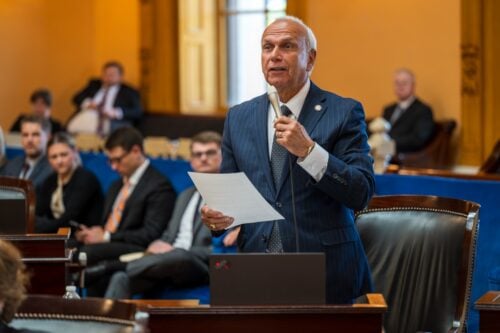
State Rep. Adam Mathews, R-Lebanon, announced this week that the Ohio Department of Development has released guidelines for the Residential Economic Development District Program.
House Bill 96 directs Ohio’s State Operating Budget to allocate $25 million in grant funding to communities near major economic development projects that adopt specific pro-housing policies, according to the news release.
A provision Matthews introduced will help more Ohioans find affordable, high-quality homes near their workplaces.
The application period opens at 10 a.m. on December 16, 2025, and will close at 5 p.m. on January 16, 2026.
According to Matthews, to grow the state’s economy and support Ohio families, it is crucial to “encourage housing growth throughout our state.”
“This program is crafted to give local communities the flexibility to adopt the pro-housing policies that suit their needs, and the grant funding available will assist them in promoting new housing construction,” he said. “I encourage all eligible communities to consider applying.”
On Nov. 14, Ohio Gov. Mike DeWine, Lt. Gov. Jim Tressel, and Ohio Department of Development Director Lydia Mihalik announced that more than two dozen communities will receive almost $13.8 million from Neighborhood Revitalization and Critical Infrastructure grants.
Funding will be used to complete critical infrastructure and neighborhood improvement projects, including upgrading water and sewer infrastructure, improving flood and drainage systems, reconstructing roads and sidewalks, and enhancing parks in 26 Ohio communities.
“With this funding, we’re strengthening the foundations of our communities,” DeWine said. “These projects will improve water and sewer systems, upgrade local parks and streets, and help ensure every Ohioan — and every family — can live in a safer, stronger neighborhood.”
Tressel said that “investments made in our infrastructure are investments made in our people.”
“By helping communities replace these aging systems and facilities, we’re improving the daily lives of our hard-working residents and supporting the long-term growth of local economies,” he said.
Mihalik added that these investments would “build the kind of resilience that allows our communities to thrive.”
“By fixing what’s failing and investing in the long-term growth of our neighborhoods today, we’re empowering our local partners to prepare their communities for the opportunities of tomorrow,” she said.
State Representative Monica Robb Blasdel, R-New Waterford, also previously tried to help redevelop the Buckeye State’s communities by encouraging eligible communities across Eastern Ohio to apply for newly available Technical Assistance Grants (TAGs) that were designed to support local brownfield redevelopment efforts.
“This funding is a valuable opportunity for smaller and rural communities to move forward with long-needed redevelopment projects,” Blasdel said. “I encourage local leaders to consider applying and take advantage of the technical support available through this program.”