Ohio must address Medicaid spending oversight as part of addressing long-term care
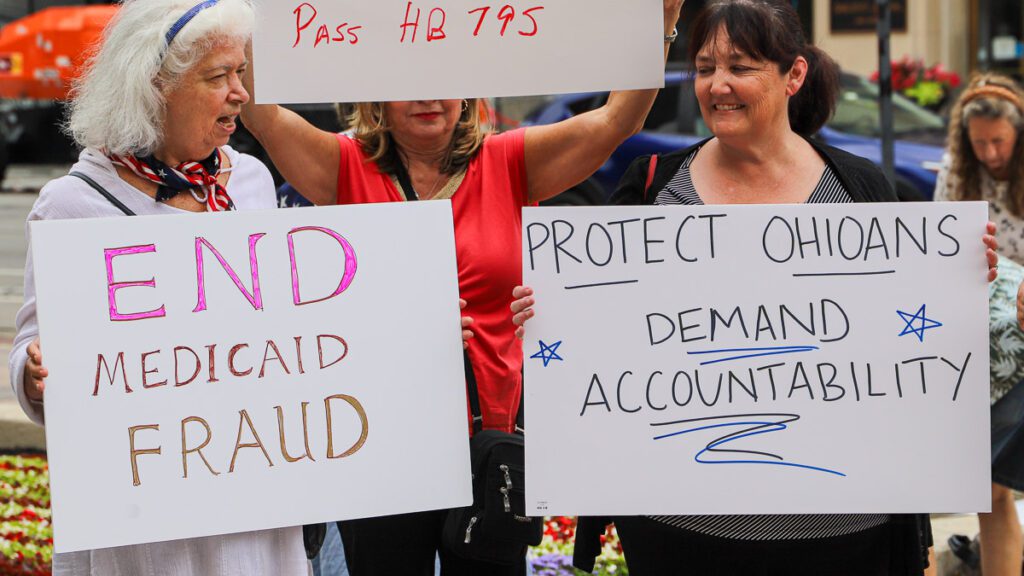
Ohioans participate in an Americans For Prosperity-Ohio rally at the Ohio Statehouse against Medicaid fraud. (Photo by Todd DeFeo)
An Ohio think tank is doubling down on its call for lawmakers to face what it says is a long-term care crisis, and part of the fix includes improved oversight of Medicaid spending.
Last month, The Buckeye Institute released The Cost of Aging. This policy report offered what it said were “durable and cost-effective solutions” to providing long-term care for Ohio’s aging population.
The report found that Ohio’s Medicaid spending grew from $18.4 billion in 2012 to $43.2 billion in 2025, an increase of 135%. But the increase likely isn’t done, as program spending is projected to nearly triple to $118 billion by 2040.
“The rising costs of long-term care — the kind many will eventually need— are most often shouldered by Medicaid, a joint state-federal program that covers nursing homes, assisted living arrangements, and home-based care services for eligible seniors,” Rea S. Hederman Jr., vice president of policy at The Buckeye Institute, wrote in an op-ed for Crain’s Cleveland Business.
“Medicaid already is the largest single payer for long-term care and services, spending more than $250 billion nationally each year and accounting for almost 40% of Ohio’s state-share budget,” Hederman added. “Long-term care expenditures rise by almost 5% per year, and their overall cost will only increase as the senior population grows—giving lawmakers the uncomfortable choice between raising taxes, taking money from other priorities, or reducing healthcare services.”
Among the think tank’s recommendations are broadening technology to help patients and support caregivers and strengthening private long-term care insurance options. The group said the state should make aging in place safer, more common and more affordable by promoting remote patient monitoring and telehealth visits to expand medical care.
The call comes as the state reckons with allegations of widespread fraud within its social services programs, including Medicaid.
“Finally, Ohio must improve oversight of Medicaid spending to reduce wasteful and fraudulent payments for ineligible patients and services that go unrendered,” Hederman wrote.
“Millionaires should not be receiving publicly subsidized healthcare, so the state should conduct strict asset tests and tighten eligibility determinations before care is provided,” Hederman added. “Chasing after misspent dollars that have already been paid to ineligible recipients or disreputable caregivers is a fool’s errand. The state’s due diligence should precede payment, not follow it.”