Ohio officials acknowledge fraud is real. The question is, what’s the breadth of the con?
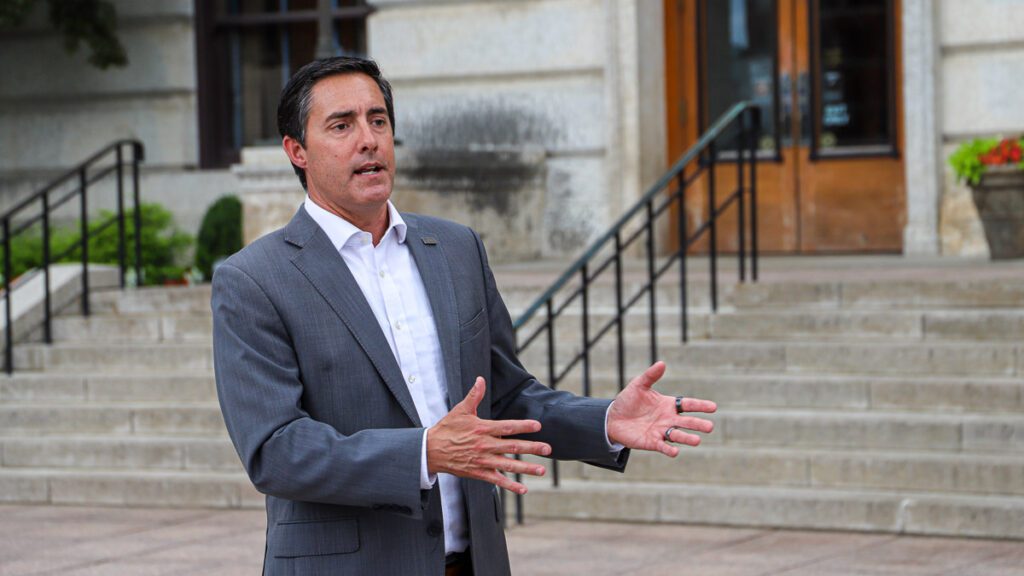
Secretary of State Frank LaRose (Photo by Todd DeFeo)
Ohio officials acknowledge fraud is real. The question is, what’s the breadth of the con?
Ohio officials have, perhaps reluctantly, acknowledged they are investigating allegations of widespread fraud — and quietly acknowledge that reports are, in fact, true — but there is no consensus on how large the fraud might be.
At issue is how the state balances what most seem to agree are necessary payments as part of the Medicaid program with bad actors who take advantage of what is, in effect, a multi-billion-dollar industry. Insiders say the fraudsters are operating like an organized crime syndicate.
When lawmakers this week considered one bill, an amended version of House Bill 795, that included a provision to ban caregivers from caring for their family members, it drew widespread criticism. It was removed amid backlash, and backers of the bill acknowledged they had gone too far with that provision.
But what they said didn’t go too far, and what no one seems to oppose, at least publicly, is that the state should crack down on fraud.
“It’s a problem that permeates all throughout the state and all throughout the country, really,” Secretary of State Frank LaRose said after speaking at an AFP-Ohio rally at the state capital.
“When you’re talking about a multi-billion dollar enterprise, which is collectively what local, state, and federal government is passing out … there are people that are going to try to get things that they shouldn’t be getting,” LaRose, who is running for state auditor, added. “I don’t think that the safeguards have been in place that need to be in place, and I think that that’s evident by … some of the fraud that has been uncovered, and the real shame of this is, this is not a victimless crime.”
Fraud on Multiple Fronts
Ohio is facing allegations of fraud on multiple fronts, including in child care and the Supplemental Nutrition Assistance Program. But the fraud that has captured the most headlines and public attention centers on Medicaid fraud, with many reports suggesting it centers on Columbus’ Somali community.
“These dollars need to go to people that truly need them,” LaRose added. “We’re a generous society that believes that people in need should get that …safety net … that they deserve. But when somebody is just enriching themselves on those dollars, that’s an ugly, ugly form of crime. And we need to go after them.”
LaRose cautioned that “we need to be clear-eyed about this” and not “paint with too broad of a brush.”
“When it happens, there needs to be severe consequences for it, and we need to put in place the safeguards to make sure that they can’t,” LaRose said.
Auditor of State Keith Faber has previously suggested that the fraud could total somewhere between $800 million and $4.4 billion. Faber’s office did not respond to a request for an interview.
One question that is hampering lawmakers’ ability to pinpoint a more precise dollar amount is how much is truly fraud, which would be unequivocally breaking the law, versus abuse, which may be inappropriate use of claims, but not necessarily rising to criminal charges or civil action.
More Than Fraud
Ohio faces a bevy of issues as voters prepare to head to the polls in November, not the least of which is concerns over rising property taxes.
Medicaid represents a significant portion of the state’s annual budget. In fiscal 2024, for example, Medicaid accounted for 47.6% of the state’s total General Revenue Fund spending.
“There are a lot of issues affecting Ohioans that we feel more immediately — property taxes, income tax, things like that,” Americans for Prosperity-Ohio’s Legislative Director Hannah Kubbins told Ohio.News. “But people … should care about Medicaid, because for every dollar that’s lost to fraud is not being given to someone who truly needs it.”
Lawmakers Pass a Fraud Crackdown
On Wednesday, lawmakers passed an amended version of Senate Bill 315, which aims to crack down on Medicaid fraud. Despite the seeming partisanship that emerged earlier in the week as lawmakers debated how to address fraud, House members voted by the overwhelming bipartisan margin of 85-10 to approve the measure.
“Transparency is not partisan; accountability is not partisan,” Kubbins said in an interview before the vote. “This should not be a partisan issue, and I’d be saying this regardless of who had control of the state. …We need to make sure we are stewarding taxpayer dollars effectively and responsibly.”
What became apparent as the week unfolded at the Ohio Statehouse is that the fraud is so real that even Democrats couldn’t mount a fight against legislation attempting to crack down on ne’er-do-wells, only on what approach to take.
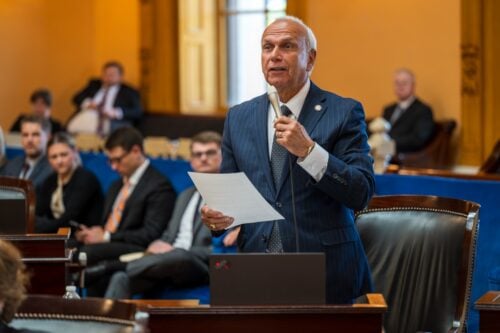
“While the biggest concerns that we’ve seen as this bill has changed over time, the thing that we have focused on, which I believe that was always the goal of everyone, was to find a way to tighten up our system and to go after real fraudsters without harming those who need the services and are deserving of dignity and respect,” state Rep. Bride Rose Sweeney, D-Westlake, said on the House floor before lawmakers voted on SB 315. “That can be a hard balance.”