Ohio Power Siting Board denies solar project in Morrow County amid strong local opposition
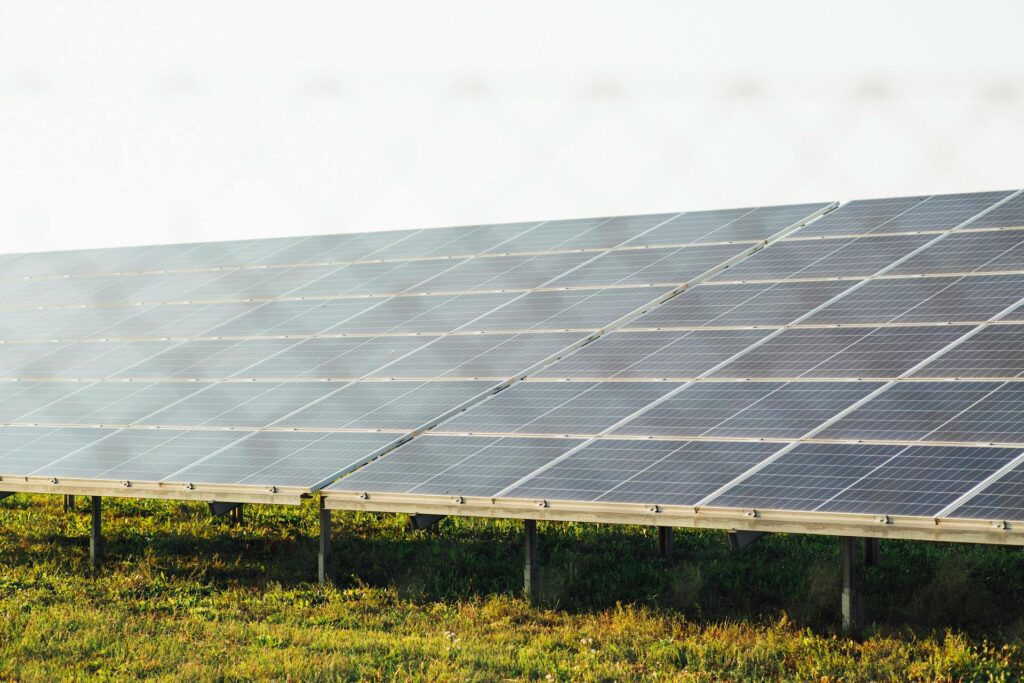
Photo by Markus Spiske: https://www.pexels.com/photo/solar-panels-on-green-grass-field-11145690/
The Ohio Power Siting Board unanimously denied a proposal to build a 94-megawatt solar-powered electric generation facility in Morrow County, citing substantial and consistent opposition from local officials and residents.
The decision halts Crossroads Solar I, LLC’s plan for the Crossroads Solar Grazing Center, which would have spanned approximately 726 acres across Cardington, Lincoln and Westfield townships.
The developer, using Open Road Renewables’ pre-2021 building eligibility, and a coalition of climate activists framed the project as an agrivoltaic operation—promising to combine solar panels with sheep grazing. With an estimated investment of $98 million and time constraints for construction following federal rollbacks of renewable tax credits, the siting process attracted the attention of heavy hitters.
State Sen. Kent Smith, D-Euclid, a non-voting OPSB member, criticized local opponents and OPSB staff for stopping the project amid high energy demands. A sentiment echoed by Columbia University’s Sabin Center for Climate Change Law, in its motion to intervene.
“This case, therefore, presents novel questions about the nature of Staff’s role in these proceedings. The Staff Report is intended to serve as a comprehensive and thorough balancing of public benefits and local opposition,” Sabin’s Feb. 2026 brief alleges. “Staff’s vacillation creates procedural instability, enables local gamesmanship, unfairly disadvantages participating landowners, and threatens the perceived impartiality of the Staff and Board. These consequences could substantially chill desirable energy development and investment when Ohio needs it most.”
While Ohio law grants the OPSB exclusive jurisdiction for facilities 50 MW and larger, the board must weigh community input in its public interest analysis. Even though the application, filed in early 2025 under case 25-0142-EL-BGN, initially received a staff recommendation for approval, that stance was reversed following intense local opposition, and additional township actions—angering out-of-state climate activists.
Yet, as the project’s developers pulled “dirty tricks,” community resistance grew as local trust was eroded by questionable tactics.
That trust was fractured after local officials learned that the developer planned to sell the operational rights to another company before the facility became fully operational, shortly after construction. Opponents grew concerned that the developer’s promises wouldn’t be honored, including the entire agrivoltaic premise of concurrent sheep grazing.
Residents attending public meetings began voicing new concerns over the solar plant’s impact on prime farmland, along with fears over long-term environmental impacts in the wake of Ivanpah. In response, township boards adopted resolutions against the facility—driven by uncertainty over long-term commitments, liability in the event of equipment failures or site abandonment.
Yet, as local opposition mounted, the developers pushed ahead, increasing the pressure campaign.
In its final opinion and order, the Ohio Public Siting Board concluded that the project did not serve the “public interest, convenience, and necessity” as required under Ohio law. The ruling highlighted unanimous opposition from affected local governments and their constituents, which outweighed the proposal’s positive aspects, including renewable energy production and potential economic benefits.
“Consistent and substantial opposition to the project by the local population and as expressed through the local governmental entities” drove the denial, according to the board’s findings.
The denial reflects ongoing tensions in rural Ohio over centralized state control and out-of-state special interests.
“We are so grateful to the Power Siting Board for listening to the unanimous opposition of our elected officials and the overwhelming majority of local residents who rejected this unwanted project,” Concerned Citizens of Morrow County wrote in a Facebook post. “This project was too big, too invasive, and too risky for our community and would put at risk some of the most fertile farm ground in the state.”
While an appeal of the siting board’s decision is still possible, residents and elected officials of Morrow County simultaneously brace for a new battle against eminent domain, following ODOT’s announced proposal of a massive US 23/I-71 bypass project that could seize lands.
Related Stories
Guatemalan pleads guilty to making false statements as part of unaccompanied minor smuggling scheme in Ohio

Migrants who flooded border under Biden dispersed across nation’s heartland, including Ohio