Ohio Senate passes the bill that criminalizes AI-generated child porn
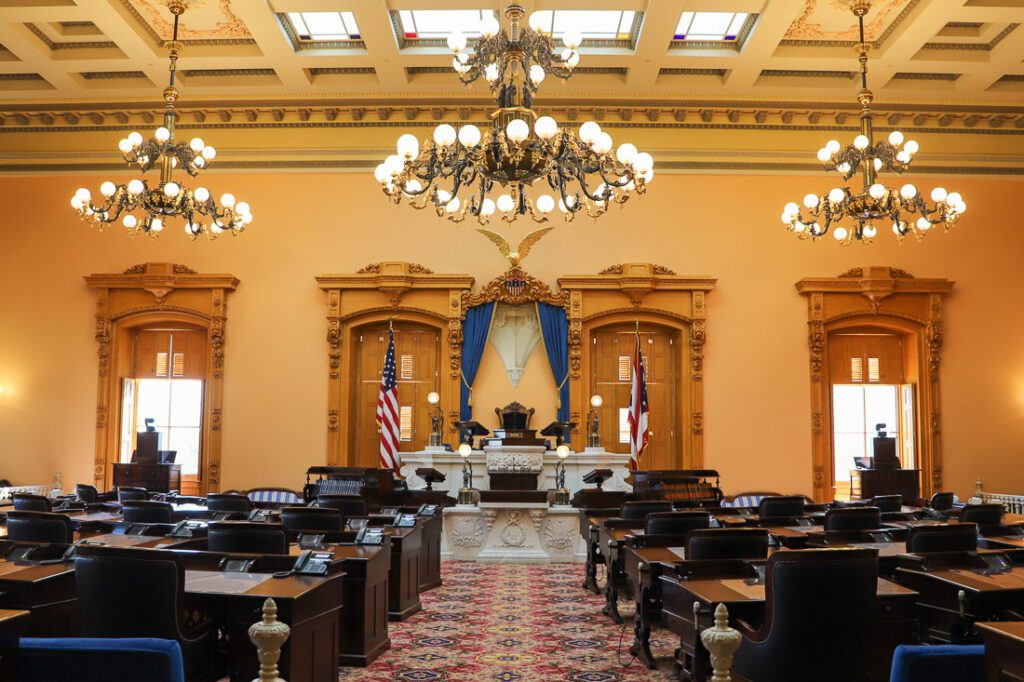
An April 2026 view of the Ohio Senate. (Photo by T.A. DeFeo)
The Ohio Senate unanimously approved a bill that would criminalize AI-generated child pornography and protect Ohioans against deepfakes.
Senate Bill 163 would specifically require AI systems to include a watermark on images generated by AI so that people know the image is not real.
“We have to do something to protect these little children and adults who get caught in this stuff and get scammed,” state Sen. Terry Johnson, R-McDermott, said on Wednesday, according to Cleveland.com.
The bill would add to Ohio’s existing framework for child exploitation crimes, banning the creation, transmission and possession of AI-generated images of minors and impaired people, the news source reported. The legislation would also ensure that people responsible for creating this kind of content would receive the same charges as in traditional cases of non-AI-generated child pornography.
If the bill passes the state House and is signed by Republican Gov. Mike DeWine, Ohio would stop being one of the five states that don’t have explicit laws to criminalize AI-generated child porn, according to the news source.
“Protecting the unprotected is key here. We absolutely must do everything we can to ensure that AI tools are not used for evil, and that our children can be children without the fear of AI manipulated photos appearing online,” Ohio Attorney General Dave Yost wrote in his testimony before the Senate Judiciary Committee. “These are the type of things that keep me up at night.”
SB 163, also sponsored by Sen. Louis Blessing, a Cincinnati-area Republican, would establish protections against deepfakes, identity theft and the distribution of AI-generated child pornography.
“These are the type of things that keep me up at night,” said former Attorney General Dave Yost in prepared written testimony that supported the passage of the bill.
Louis Tobin of the Ohio Prosecuting Attorneys Association, David Mahan of the Center for Christian Virtue, Maria York of the Ohio Domestic Violence Network, and Howard Handler of the National Insurance Crime Bureau also supported the bill in their testimonies.
Even though Tyler Diers of TechNet provided his testimony before the committee as a member of the opposing side, in his written testimony, Diers pointed out that the only reason why he and his company don’t support the bill right now is that the lawmakers should introduce amendments to the bill that would offer “meaningful protections for individuals while avoiding unintended consequences for online services and free expression.”
In addition to this bill, Ohio lawmakers previously introduced other bills to deal with AI child pornography, among which are House Bills 185, 469, 524, and 786, and Senate Bills 164 and 393.
Alaina Hagans, director of the Ohio Internet Crimes Against Children Task Force, previously said that pedophiles combine the photo of a child with the photo of another nude body, which saves them from the Ohio law enforcement agencies and judges.
“Defendants increasingly attempt to evade accountability by claiming that the material is ‘not real,’” she said, per Cleveland.com. “But these artificially generated images are no less obscene. They erode the most basic community standards of decency — standards that unequivocally reject the sexual exploitation of children. A society that tolerates such material, whether AI-generated or real, cannot be accepted.”