Ohio Supreme Court to decide whether to allow AG Yost’s crackdown on vape, e-cigarettes

Artist Andrew Scott's stainless steel, 30-foot-long gavel was installed in 2008 outside the the Thomas J. Moyer Ohio Judicial Center, home of the Ohio Supreme Court in Columbus, Ohio, designed by architect Harry Hake. (Highsmith, Carol M., 1946- Carol M. Highsmith Archive via the Library of Congress)
The Ohio Supreme Court agreed to hear a case on Tuesday that could decide whether state officials, including Attorney General Dave Yost, who filed the lawsuit, can ban flavored vapes and e-cigarettes from being sold in the state.
Conservatives have an overwhelming 6-1 majority in the state Supreme Court, giving Yost a possible advantage in the case, and a victory could help state officials stem tobacco use among high school students tied to vaping and electronic cigarettes. One in five high school students in the Buckeye State use tobacco, according to the American Lung Association and the University of Southern California’s Keck School of Medicine.
The case stems from July 2024 complaints Yost’s office filed against three Ohio businesses, accusing them of violating the state’s consumer protection law. The state’s top lawman alleged that the stores sold flavored vape products, which have not been approved by the FDA, arguing the shops did not disclose that the vapes are illegal.
“Investigations by Yost’s office revealed that Orrville Tobacco and Vape Shop in Orrville (Wayne County), Central Tobacco in Delaware, and Elev8 Smoke Shop in Cincinnati were selling illegal flavored vapes in defiance of a warning letter sent from Yost’s office on April 5, 2024. Notably, the Elev8 Smoke Shop was located less than half a mile from Norwood High School,” the AG’s office said in a July 2024 news release.
“You don’t have any idea what is in those vape cartridges,” Yost said. “This is a consumer protection issue, particularly when it comes to our youngsters that are still developing, the idea these unregulated, unauthorized vapes are on the market is a real danger.”
A panel of judges from the state’s Fifth District pointed out that “only the federal government can enforce” the Food, Drug, and Cosmetics Act, which requires federal approval to market a new vape product.
“The State’s claim that the e-cigarettes are not in compliance with the FDCA is a claim that would not exist in the absence of the FDCA,” the judges wrote. “Therefore, the State is impliedly preempted from bringing this action.”
Yost appealed the case to the high court after both county and appellate courts ruled against him, justifying their decision by saying that the states don’t have the authority to regulate the marketing of tobacco products, unlike the federal government, citing the U.S. Food and Drug Administration.
In the following months, the Supreme Court justices will also rule on a state law that prohibits cities in Ohio from banning the sale of all flavored tobacco products and enforcing the state’s 21-and-up sale requirements for tobacco and nicotine products. The law was passed even though Gov. Mike DeWine vetoed it, according to Signal Ohio.
Related Stories

Undercover videos show Democrats have a disconnect, with some insiders saying the party takes minorities for granted
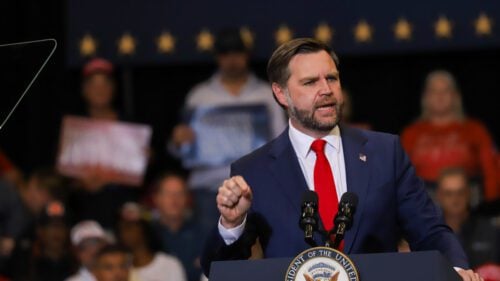
In Ohio press conference, Vance announces $42 million in SNAP fraud, including $30 million in Buckeye State