Reps. Jennifer Gross, Michelle Teska introduce bill to allow local residents to vote on new data centers
Amid a rapid expansion of AI facilities across Ohio and the looming November election, a pair of Republican lawmakers have proposed legislation that would give local residents the final say before massive data center projects are built in their cities or townships.
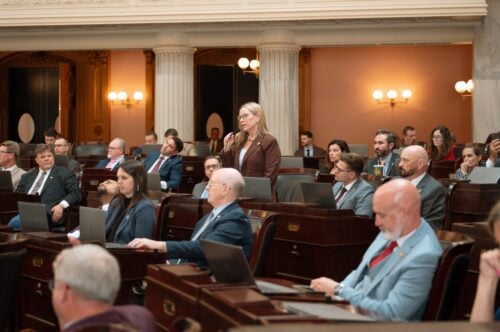
State Reps. Jennifer Gross, R-West Chester, and Michelle Teska, R-Clearcreek Township, recently introduced House Bill 983, also known as the Data Center Accountability and Citizen Protection Act.
The bill would require voter approval before local officials could approve permits or development agreements for new or expanded data centers or their associated power generation facilities. Critics allege that local officials are acting in secrecy and approving data centers without public input or overriding the will of voters and property owners.
“Ohio should absolutely welcome innovation and economic growth,” Gross said in a statement. “But economic development should never come at the expense of the people who already live here. Ohioans deserve transparency, accountability, and the right to decide whether projects of this magnitude belong in their communities.”
Both Gross, who represents District 45, and Teska, who represents District 55, are running for re-election in November to the Ohio House.
The bill also adds protections for taxpayers, ratepayers, private property owners and Ohio’s natural resources.
Other key provisions include barring future property tax abatements for data centers and ensuring the facilities can generate their own electricity rather than shifting infrastructure costs onto Ohio families and businesses.
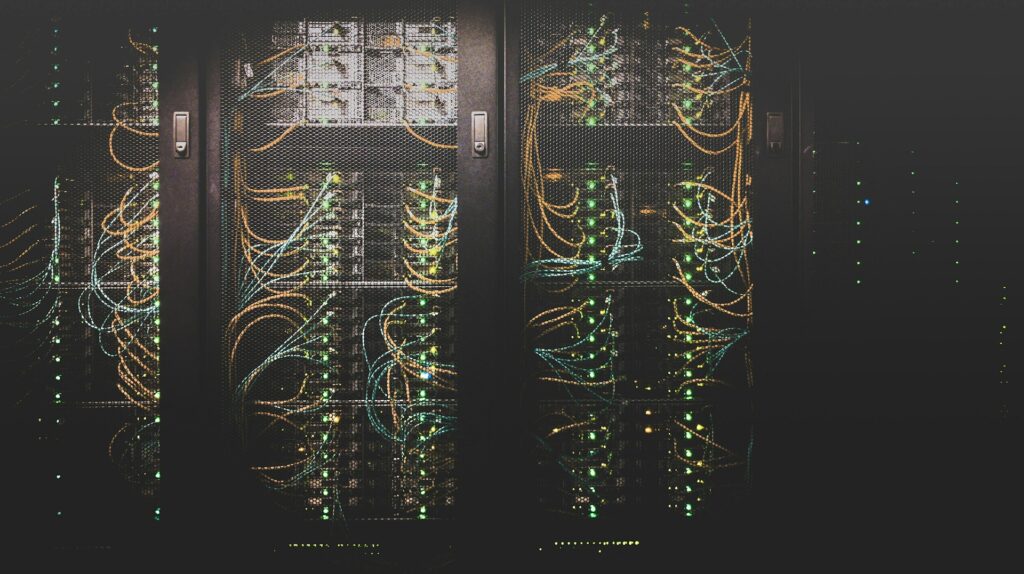
Statewide, Ohio has nearly 200 data centers, each of which puts a huge strain on the electrical grid. New Albany alone is home to 40 data centers, and the pace of construction is rapidly accelerating across Ohio’s rural communities.
The power data centers require creates a supply and demand imbalance and can drive up electric bills for consumers if ratepayer protections are not in place, NBC4 News previously reported.
According to a news release from Gross and Teska, “the General Assembly has a responsibility to ensure that local communities, not unelected bureaucrats or powerful corporations, have a meaningful voice in decisions that could permanently reshape their neighborhoods and strain critical public infrastructure.”
The lawmakers added measures to establish stronger environmental protections through enhanced standards for air emissions and wastewater discharges, independent testing and public reporting.
House Bill 983 includes several regulations for data center developers, including full disclosure of chemicals used in cooling systems and wastewater treatment. AI center operators also would be financially responsible for impacts to local water supplies and infrastructure.
In addition, the law calls for greater transparency by making development and supply agreements related to data centers public records.
The legislation is about restoring trust in government and improving transparency, Teska said. House Bill 983 gives local residents the final authority over land-use decisions and major developments in their communities.
“For too long, Ohioans have watched enormous projects move forward with little transparency and limited input from the people whose lives will be most affected,” Teska said in a statement. “House Bill 983…ensures that corporations benefiting from doing business in Ohio are accountable to the communities they seek to serve.”
Republican gubernatorial candidate Vivek Ramaswamy announced his own Data Center Policy Pledge, which he shared on his social media platforms on Thursday.
Ramaswamy said “companies that want to invest in Ohio should invest in Ohioans first.” Data center projects should improve the lives of the people who live nearby, not just generate profits for large corporations.
“While I had no part in these past projects, I am committed to ensuring our policies catch up to current realities,” he shared in the message. “Despite my opponents’ claims, I’m not ‘pro-data center.’ I’m pro-Ohio, and I have a plan to fix the problem.”
His “Three Non-Negotiable Requirements” mirror key provisions in House Bill 983:
- Reduce or eliminate electricity bills for nearby residents by creating “benefit zones.” Data centers would have to ensure nearby Ohio families receive free electricity by providing power or compensation that directly lowers residential electric bills.
- Cut property taxes for homeowners by ending property tax abatements for future data centers. Data center developers must pay their full property taxes, with those revenues used to provide property tax relief for Ohio homeowners.
- Protect Ohio’s environment and farmland by prohibiting special exemptions on air and water quality standards. Data centers must comply with strict air and water quality standards, minimize and recycle water use, and prioritize brownfield and industrial sites to protect Ohio’s fertile farmland.
If elected, Ramaswamy said he would work with Ohio’s state legislature to codify the requirements into law and issue an executive order on his first day in office to “immediately halt the approval of any new data center project announcements in Ohio, until the above-mentioned data center legislation takes effect.”