Resolution urging Congress to cut red tape on energy grid expansion advances on party-line vote
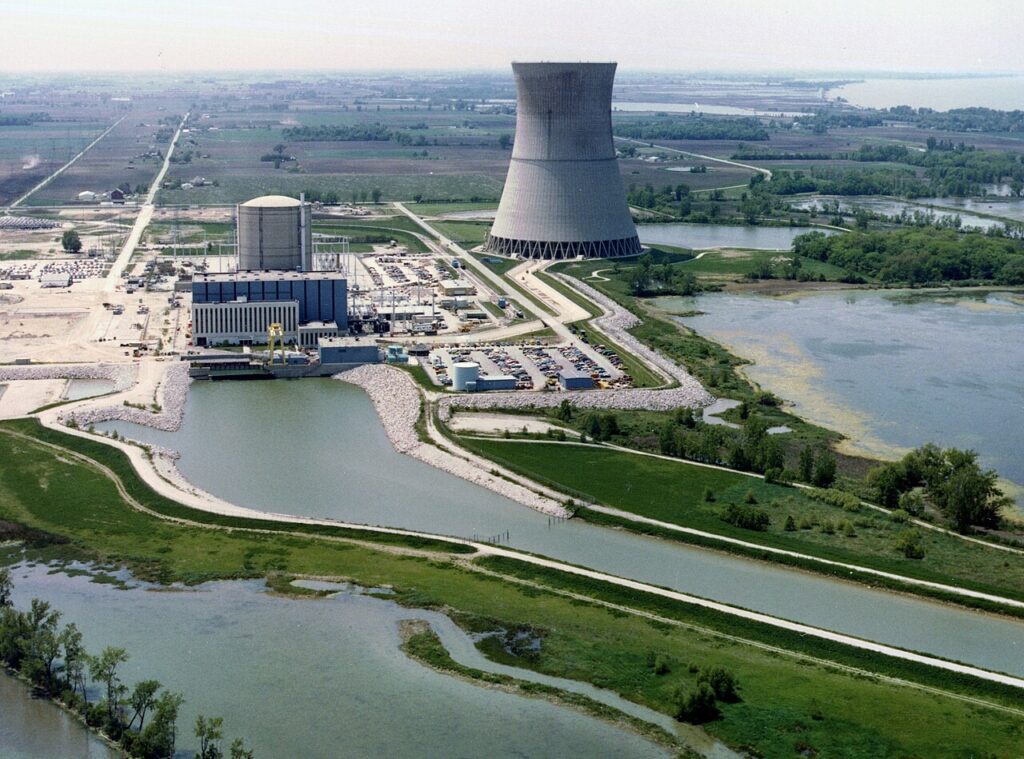
Davis-Besse Nuclear Power Station
The Ohio Senate Energy Committee advanced Senate Concurrent Resolution 20 this week, a measure that would send a clear message to Congress that bureaucratic delays in federal permitting are stifling energy infrastructure and threatening national security and economic growth.
PJM's capacity prices jumped from $28 to $270. All 13 governors met at the White House. The decision: data centres must pay their own way.
New Energy Gang with Asim Haque from @pjminterconnect and @AmyJaffeenergy breaks down what happens next: https://t.co/8J3cQvCzRg 🧵👇 pic.twitter.com/wF0CaLCeUc
— Energy Gang (@TheEnergyGang) April 14, 2026
Following four disastrous years of energy plant closures without replacements, pressure is mounting as the race for AI hits critical mass—some even calling it a cold war. However, as major U.S. tech firms have agreed to pay for energy grid expansions, it’s now up to D.C. lawmakers to deliver reforms that actually allow energy projects to be built.
Sponsored by Sen. Shane Wilkin, R-Hillsboro, SCR 20 urges members of Congress to enact those reforms and deliver federal permitting policies that enable the construction of new energy projects, power plants, transmission lines, and critical infrastructure.
“WE ARE IN A NEW COLD WAR WITH CHINA”@marcthiessen sounds off on the AI arms race, warning that Senator Elizabeth Warren’s plans to tax AI data centers and billionaires will crush American innovation before we can win. Is the left costing us the next space race? pic.twitter.com/mV05jwvngW
— The Big Weekend Show (@BigWeekendShow) June 1, 2026
“The United States is in a technological cold war with China in a fight to lead the world’s advanced computing and artificial intelligence revolution,” Greg Lawson of the Buckeye Institute testified before the committee. “The country that most effectively deploys computing power—and the massive data infrastructure behind it—will shape the global future of innovation, economic growth, and national security.”
The proof is in the numbers. PJM’s interconnection process is clearing the way for generation development quicker than ever before. Why are projects slow to come online? Developers cite permitting challenges as their greatest obstacle. Get the facts at https://t.co/iUChfjhWJO pic.twitter.com/pZKAMV8XjI
— PJM Interconnection (@pjminterconnect) March 23, 2026
According to lawmakers, supporters, and the regional grid operator PJM, lengthy environmental reviews and red tape often take years to navigate. Years that are driving up costs, jeopardizing grid reliability, and weakening America’s national security.
To meet rising industrial demand, proponents argue that energy policy must adapt to economic and strategic realities.
#Energy price spikes are real. Currently, data centers are getting a lot of the blame, but much of the blame should really fall on slow government action in permitting new electricity generation.https://t.co/UOrGPmOziJ
— Greg R. Lawson (@BuckeyeInstGreg) January 30, 2026
As The Buckeye Institute and Americans for Prosperity explained in their joint report, Better Energy Policy for Ohio, “reliable and affordable energy is the backbone of a thriving modern economy,” and state and federal energy policies should therefore ease the regulatory burdens that put undue stress on that economic spine.”
The resolution has received widespread support, with proponents emphasizing how permitting delays harm Ohio families through higher energy costs and lost economic opportunities.
Supporters like Hannah Kubbins of Americans for Prosperity-Ohio called the measure essential for “creating a stronger, more affordable future for Ohioans” by tackling government inefficiency head-on.
Ohio is trying to expand its energy grid to meet rising demand, but federal permitting delays are slowing major projects.
A new report says Washington holdups tied to environmental reviews have stalled $1.5B in Ohio energy investment, costing jobs and risking power shortages as…
— Ohio.news (@RealOhioNews) January 21, 2026
Testifying before the U.S. House Committee on Energy and Commerce, Asim Haque of PJM echoed that critique, while telling members of Congress that permitting issues have delayed construction on 50 GW of new energy projects.
.@RepRussellFry is right, America's nuclear renaissance has arrived.
Supporting a faster timeline and greater predictability for the development of nuclear power will lower costs and help bring reliable power online for American communities. pic.twitter.com/tJGfiYvRbX
— Energy and Commerce Committee (@HouseCommerce) June 9, 2026
While members of the U.S. House Energy and Commerce Committee have worked to deliver a broad set of reforms, including a focus on returning to nuclear energy production, efforts in Congress continue to lag along partisan lines.
That partisanship carried over into Ohio Tuesday, as the Senate held the third hearing on SCR 20. While no opponent testimony was given or submitted, the bill ultimately advanced on a party-line vote.
Sacks is right that AI Doomerism has replaced Climate Doomerism in many circles.
Like Climate Doomerism, AI Doomerism is an eschatological narrative centering on how human technological advance will bring destruction in XYZ years – per [credentialed] expert.
However, unlike… https://t.co/rdlavYrZ1j pic.twitter.com/dYsrTGZG3V
— Nathan Halberstadt 🧊 (@NatHalberstadt) June 8, 2026
“This resolution does not weaken environmental protections — it demands efficiency so projects that power our homes, businesses, and future can move forward without unnecessary bureaucratic bloat,” Wilkin has argued in sponsor testimony.
SCR 20 now moves to the Senate Rules and Reference Committee before potential consideration by the full Senate. It serves as the Senate companion to House Concurrent Resolution 35, sponsored by Rep. Beth Lear, R-Galena, which advanced earlier in the House process with similar arguments about streamlining reviews while maintaining safeguards.
If adopted by both chambers, the resolutions will deliver a unified Ohio voice to Washington calling for faster federal action on energy infrastructure.