State plans to appeal ruling that state’s EdChoice Scholarship Program is unconstitutional
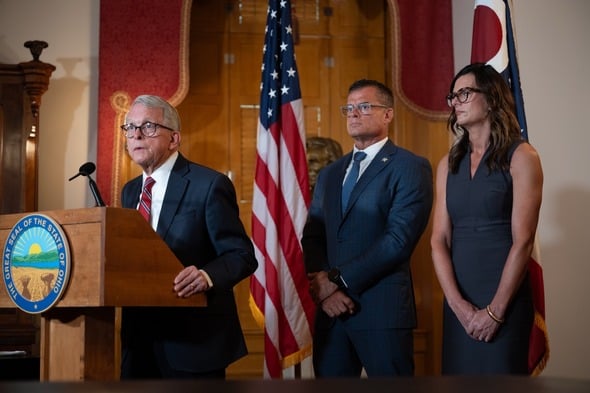
Ohio Attorney General Andy Wilson said the state plans to appeal a 10th District Court of Appeals ruling that upheld a lower court ruling that the state’s EdChoice Scholarship Program is unconstitutional.
“Although we are disappointed in the ruling, we appreciate that the court stayed its decision, so the EdChoice program will continue uninterrupted as we appeal to the Ohio Supreme Court,” Wilson said in a statement. “Families should not worry, as there is no immediate impact from the ruling.”
The court stayed its decision so the program continues uninterrupted.
The appeals court affirmed a June 2025 decision by Franklin County Common Pleas Judge Jaiza Page, which sided with the plaintiff’s definition of “common schools,” and held that EdChoice violates Article VI, Section 2 of the Ohio Constitution that guarantees “a thorough and efficient system of common schools.”
The three-judge panel, consisting of Judges David Leland, Kristin Boggs, and Shawn Dingus, concluded that the “EdChoice and EdChoice Expansion, as presently structured and funded, secures with taxpayer funds a competing system of uncommon schools that is not subject to the same obligations imposed on Ohio’s system of common schools (public schools).”
The ruling stems from a 2022 lawsuit brought by the Vouchers Hurt Ohio coalition. The coalition, which largely consists of union-represented districts, was organized by the Ohio Coalition for Equity and Adequacy of School Funding at $2.00 per pupil.
The case has drawn sustained attention as enrollment in the program has grown significantly following low proficiency ratings in some plaintiff districts, which have now diverted nearly $2 million in public operating funds to support its litigation against the state, a point of contention that’s prompted legislative efforts and pushback from parents.
Wilson, emphasizing parental rights in his response, reaffirmed the legislature’s role in funding appropriations.
“I believe that parents should have the option to send their kids to the school of their choice,” Wilson said. “If the legislature wants to help parents fund that choice, then that is within the authority of the General Assembly to do so.”
The state’s defense builds on arguments advanced by former Attorney General Dave Yost during oral arguments before the same appeals court in May 2026.
At that time, Yost’s office contended that EdChoice is constitutional because funding follows parental choice—a principle previously upheld by the Ohio Supreme Court—and that the program represents a separate investment that does not interfere with the state’s independent duty to fund public schools.
The state has further maintained that voucher spending and public school budgets are not legally linked, meaning an end to the scholarships would not automatically increase funding for traditional districts, as those decisions rest with the legislature alone.
“The current system does not hurt our public schools,” Wilson said. “There are many great public schools across the state that are doing a wonderful job educating students. This is about a family’s choice on how they want to educate their kids.”
Related Stories
Republicans see the election as a choice between common sense and crazy

DOJ finds Ohio State medical school discriminated against white, Asian applicants