The Thomas B. Fordham Institute: Ohio schools should transport private, charter school students
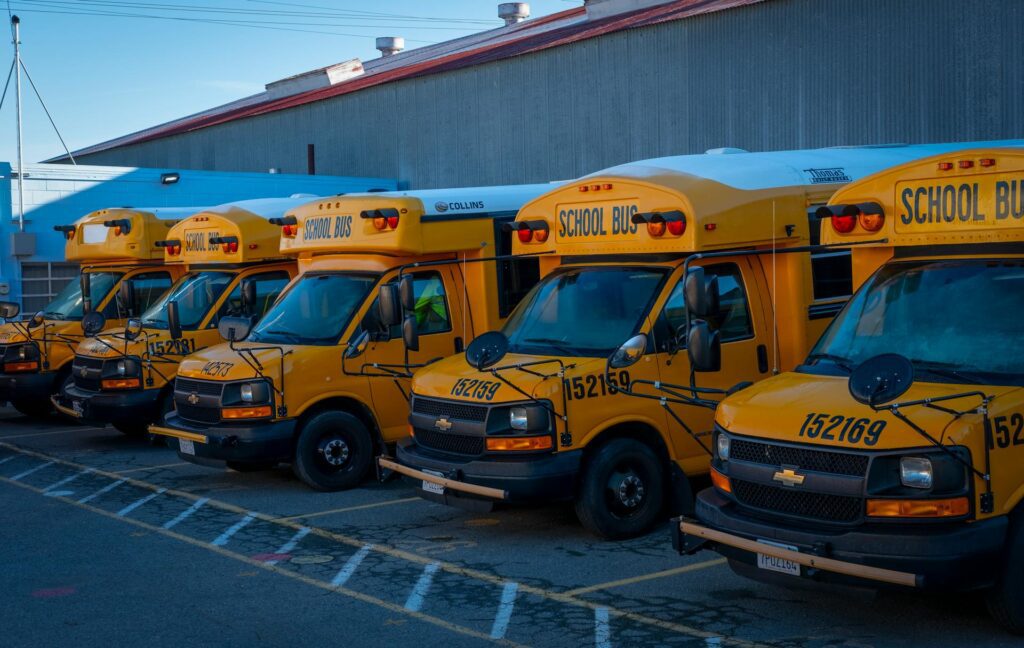
Photo by David McElwee: https://www.pexels.com/photo/a-parked-yellow-school-buses-11142736/
An education think tank that sponsors charter schools in Ohio has called for school districts in the state to provide increased transportation for private and charter school students.
Recommendations from The Thomas B. Fordham Institute include changes to the process for determining which students meet the criteria for receiving transportation, and funding for charter schools and families to provide transportation.
Aaron Churchill, the Ohio research director for the Fordham Institute, said that requiring transportation for private and charter school students benefits families and taxpayers in a post for the Ohio Gadfly Daily.
“This requirement helps working families—all taxpayers—as they can count on the district for morning and afternoon busing, ” Churchill wrote for the Fordham Institute. “It also promotes efficiency and safety. Instead of multiple vehicles passing through, a single, yellow bus—the safest form of transportation—can serve a whole neighborhood.”
“The state provides generous subsidies to support busing, currently amounting to $825 million, up from $602 million just four years ago,” Churchill added. “This is on top of local funds, which include a state-required minimum property tax.”
Private schools have gained 18,372 students, while public school enrollment has fallen by nearly 1.8%, or around 26,895 students, since 2020, according to a report from the Dayton Daily News last month.
There were 75,207 students enrolled in charter schools in 2025, according to the Fordham Institute.
While the number of private and charter school students has increased, Ohio’s EdChoice program has been opposed by some public school districts and organizations in the state.
State Rep. Jamie Callender, R-Concord, introduced legislation that would withhold state foundation funding from school districts that are suing the private school voucher program as part of the Vouchers Hurt Ohio coalition in February.
Attorney General Dave Yost filed an appeal in July 2025 after Franklin County Common Pleas Judge Jaiza Page ruled that the voucher program was unconstitutional.
A Student Transportation Workgroup established by the Ohio Legislative Commission is expected to deliver a report on its findings and recommendations by the end of June.
“With its report due June 30th, it’s worth weighing in with suggestions on how Ohio could make the transportation work better for students attending schools of choice,” Churchill wrote.
While current regulations require school districts to provide transportation to pupils in Kindergarten through eighth grade, Churchill said that some school districts have declined to provide transportation for private and charter school students based on the criteria of “impractical transport.”
“Unfortunately, some districts are making transportation a headache for families choosing public charter and private schools,” Churchill wrote. “Columbus City Schools is the most egregious example. It has used an ‘impractical to transport’ loophole to duck busing responsibilities (provoking lawsuits), and it has provided service so poor to others that the state has imposed millions in fines.”
“Columbus isn’t the only one giving choice students the cold shoulder: Some 23,000 charter and private school students from 342 districts were denied busing last year, while only 600 district students were refused,” Churchill added.
Ohio Code describes the criteria that can be considered for determining what is impractical transport as time and distance, the number of pupils to be transported, the cost of equipment, maintenance, personnel, and administration, whether similar or equivalent service is provided to other pupils, the extent that additional service disrupts current transportation schedules, and wether other reimbursable types of transportation are available.
The Fordham Institute suggests that Ohio lawmakers strengthen language to make the impractical transport loophole so that districts have to prove that at least three of six factors outlined in regulations make a student “impractical” to transport, increase “payment in lieu of transportation” for parents who drive their own children, and increase the state aid charter schools receive when they provide transportation.
The think tank also suggested stripping transportation funding and responsibilities from districts in cases of serious noncompliance and requiring high school districts with chronic absenteeism rates above 40% to provide transportation.