Pam Grier’s MLK Day claims undermine Ohio’s true legacy
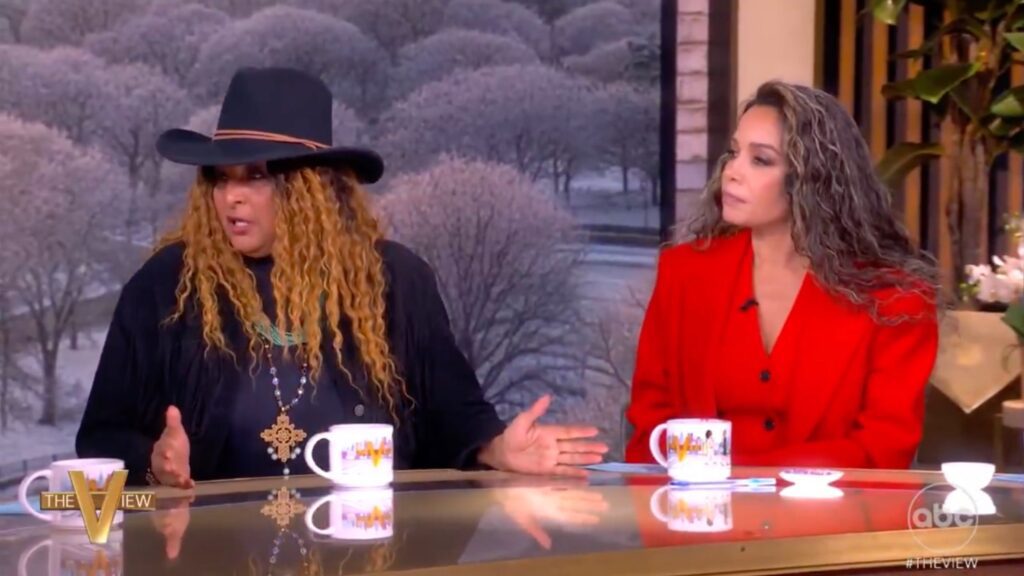
Actress Pam Grier this week tearfully recounted a traumatic childhood memory of witnessing a lynching victim during an appearance on “The View” on Martin Luther King Jr. Day, describing how the experience continues to affect her decades later.
The 76-year-old star, known for her pioneering roles in 1970s blaxploitation films such as “Coffy,” “Foxy Brown,” and Quentin Tarantino’s “Jackie Brown,” appeared on the ABC daytime talk show to discuss her career and efforts to highlight Black cinema through her curated channel, Pam Grier Soul Flix.
Co-host Sunny Hostin prompted Grier to reflect on growing up amid racism in Columbus, Ohio, where her father, an Air Force mechanic, was stationed at a military base.
“Phew! Well, the military wouldn’t allow Black families to live on the base, so you had to live in an apartment,” Grier said. “And you couldn’t take a bus. You couldn’t afford a car. You walked. Your dads walked to the base.”
She continued emotionally, recalling her mother’s protective response to scenes of racial violence.
Film legend Pam Grier looks back on her role in 1974's 'Foxy Brown' and shares how she's spotlighting Black cinema trailblazers through her curated fast channel, Pam Grier Soul Flix. pic.twitter.com/dbHbMZOXyY
— The View (@TheView) January 19, 2026
“And my mom would go, ‘don’t look, don’t look, don’t look.’ She’d pull us away because there’s someone hanging from a tree,” Grier told the panel, including Whoopi Goldberg.
“And they have a memorial for it now where you can see where people were left.”
Grier added that the memory remains painful.
“It triggers me today to see that a voice can be silenced,” she said. “And if a white family supported a Black, they’re going to get burned down or killed or lynched as well.”
The unchallenged remarks, shared amid a discussion of racial injustice, drew attention online, with many questioning the historical timeline.
According to her 2010 memoir, “Foxy: My Life in Three Acts,” Grier was born in 1949 in North Carolina and spent part of her early childhood in Columbus, Ohio, before the family moved to England in 1956 and later settled in Colorado. The memoir does not mention witnessing a lynching.
Ohio Breaks Ground
Moreover, Ohio was the first state in the nation to define a mob at law and then pass the toughest criminal penalties for racial terror of its time.
Spearheaded by Black Republican state representative and newspaper editor Harry C. Smith, Ohio made hanging and lynchings by mobs illegal in 1896 through the passage of what is known as the Smith Act (or “an Act for the Suppression of Mob Violence”).
The law:
- Defined a “mob” as a group assembled for unlawful purposes, intending violence, or pretending to exercise unauthorized correctional power.
- Defined “lynching” as any act of violence by a mob on a person’s body.
- Imposed civil liability on counties, allowing victims — or their families/legal representatives — to recover damages from the county where the lynching occurred, ranging from $500 to $5,000 depending on injury severity or death.
- Allowed counties to recover those costs from mob participants.
- Did not relieve individuals involved from criminal prosecution for homicide, assault, or related crimes.
The law was widely regarded as the toughest and strongest anti-lynching statute in the United States at the time.
The Historical Record
Contrary to Grier’s tearful claims that made it sound as if lynchings were an ordinary occurrence, the Smith Act of 1896 had a near-immediate effect. Reliable tallies from the Tuskegee Institute archives show a surge of lynchings — 26 total: 10 white, 16 black — leading up to the law’s passage.
Historical records indicate the last documented racial terror lynching in Ohio occurred in 1911 in Cleveland. However, the Equal Justice Initiative argues that the 1934 murder of Luke Murray in South Point, Lawrence County, should have been defined as a lynching under the Smith Act.
Both isolated atrocities, predating Grier’s birth by over a decade, serve as a stark warning that individual rights must be guarded against collectivist mob rule.
While Grier’s appearance celebrated her groundbreaking career and remarkable resilience — a powerful embodiment of American exceptionalism and individual tenacity — her personal anecdote belittled the achievements of both Representative Smith and the state of Ohio.
On Monday, a day dedicated to honoring Dr. Martin Luther King Jr.’s vision of progress through nonviolence, moral courage, and unity, the conversation instead painted a picture of a nation forever chained to its painful past — one unable to move forward.
Related Stories

Indian trucker with CDL from California Charged with killing West Union mother in head-on collision

Husted calls for national ban on driver’s licenses for illegal aliens