Ohio universities eliminate low-return degrees as feds won’t give money to unprofitable college majors
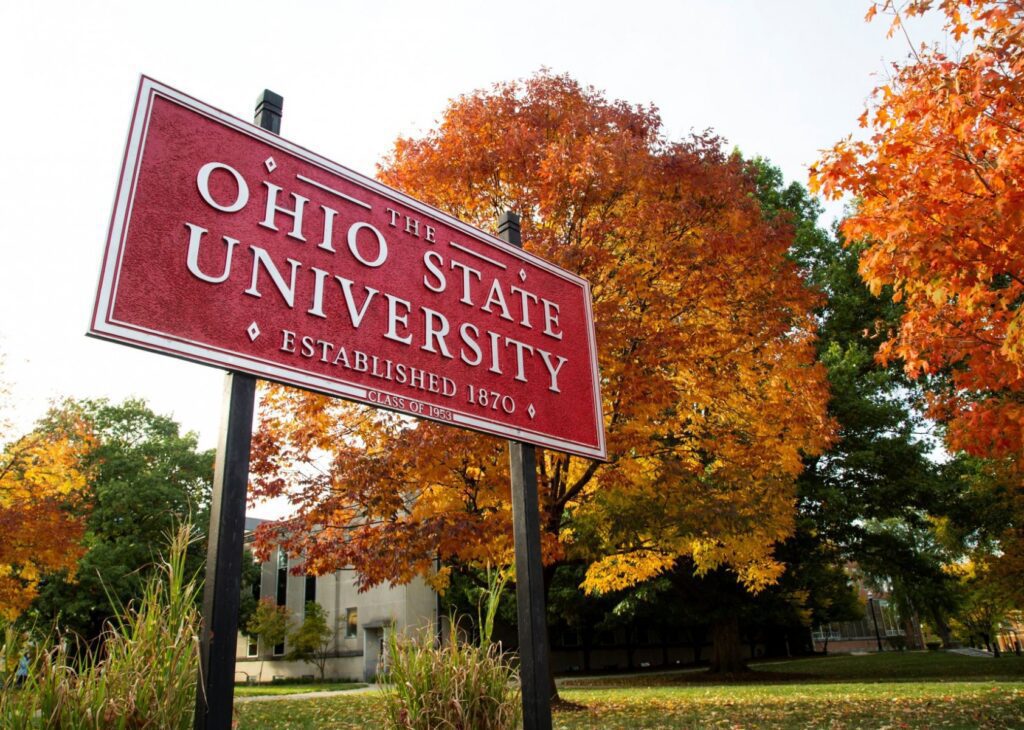
The Ohio State University campus in autumn (Photo: The Ohio State University)
Ohio colleges and universities announced they will eliminate 90 undergraduate degrees to comply with Senate Bill 1, which Republican Gov. Mike DeWine signed last year.
SB 1 requires institutions of higher learning to cut any undergraduate degree programs that produce, on average, fewer than five degrees annually over three years and to ban any diversity, equity, and inclusion efforts.
Among the colleges and universities in Ohio that announced the elimination of degree programs were Bowling Green State University, Kent State University, Ohio University, The Ohio State University, the University of Toledo, and the University of Cincinnati.
Cleveland State University and Miami University have not yet eliminated any degrees, according to the Ohio Capital Journal.
This could become a problem for these two universities because of the U.S. Department of Education’s recent decision not to financially support college majors through student loans if the program’s graduates would earn less than the average high school graduate, according to the department’s press release.
Even though Cleveland State University and Miami University are private universities, they would still be affected by the federal decision, just like public institutions, nonprofit schools, for-profit schools, and certificate, undergraduate, and graduate programs.
“The Trump Administration’s proposed accountability framework is grounded in common sense: if postsecondary education programs do not leave graduates better off, taxpayers should not subsidize them,” Under Secretary of Education Nicholas Kent said in a release. “This consensus-backed framework will drive meaningful change in postsecondary education, ending years of regulatory whiplash and addressing student debt that has left too many students worse off.”
The department’s officials said in the release that they introduced the new rule to help families determine whether it is worth a student and his or her parents borrowing or spending a lot of money on a college program to earn a degree.
The new rule would require the federal government to compare the earnings of college graduates from each academic program with those of people with only a high school diploma. If a typical college graduate with a specific degree earns less than a typical high school graduate without a college degree, that college program would lose access to federal student loan privileges, according to the release.
According to the release, Pell Grants also could be affected by the recent decision.
The Education Department said in the release that the recent rule was proposed after it was allegedly discovered that “the federal student loan portfolio approaches $1.7 trillion and more students are left financially worse off than if they had never attended college.”
“The Act presents a once-in-a-generation opportunity to rein in unsustainable student loan borrowing, better align postsecondary education with workforce needs, and bring uniform accountability across the higher education system,” according to the release.
The department said that it will replace current accountability systems and begin using the “Gainful Employment and the Quality Assurance Authority,” which features a single national standard based on graduates’ earnings.
The move “will better protect students and taxpayers by requiring institutions to sunset programs that do not deliver a strong financial return or to seek funding outside the federal financial aid system,” the department said.
In 2023, Stacker compiled a list of the most lucrative and the least lucrative college majors in Ohio.
Among the most lucrative degrees were Petroleum Engineering ($89,305 per year), Environmental Control Technologies/Technicians ($82,178 per year), Engineering, Other ($79,496 per year), Chemical Engineering ($76,883 per year), and Engineering, General ($76,699 per year).
Among the least lucrative degrees were Music ($23,564 per year), Visual and Performing Arts, General ($26,542 per year), Linguistic, Comparative, and Related Language Studies and Services ($27,584 per year), Drama/Theatre Arts and Stagecraft ($28,196 per year), and Fine and Studio Arts ($28,281 per year).
Related Stories

Undercover video: Marcy Kaptur thinks Aug. 2 hit-and-run may have been ‘a hit,’ friend says

PUCO urges FERC to separate Ohio manufacturers from new JPM data center rules