U.S. Sen. Bernie Moreno supports Ohio bill to ban government officials from using prediction markets
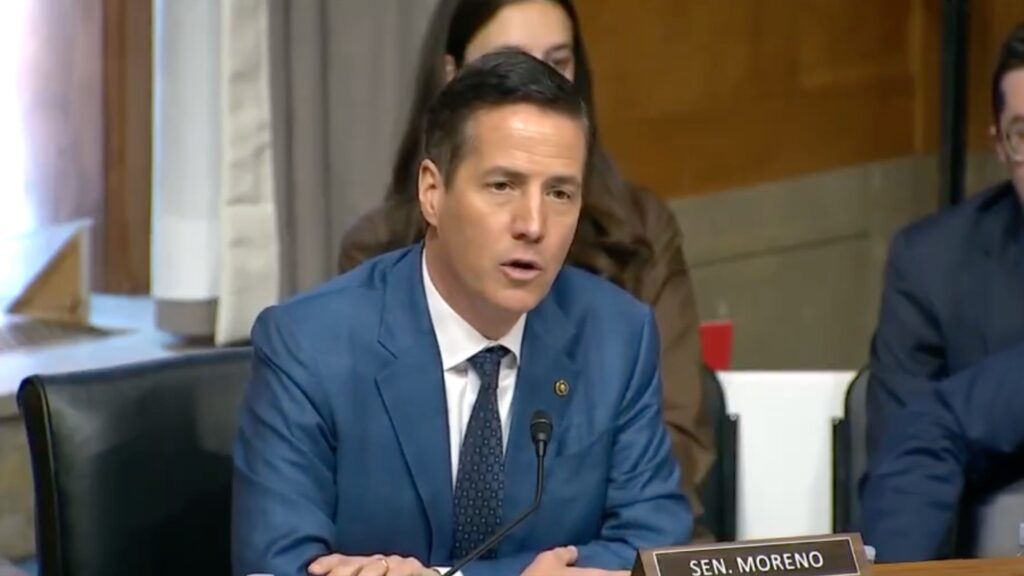
U.S. Sen. Bernie Moreno, R-Ohio, criticized Ohio public officials for using prediction markets and supported a Democratic Ohio lawmaker’s bill that would prevent that from happening.
“There shouldn’t be a side hustle of using the information you get here to monetize,” Moreno said, News 5 Cleveland reported.
State Rep. Sean Brennan, D-Parma, introduced House Bill 887 to ensure that public officials and their employees would not be able to use their positions to earn money dishonestly this way, since they allegedly know more about the background political scene than an average person does.
“To protect people, to protect the integrity of our government, there’s nothing wrong with some guardrails,” Brennan said, according to the Cleveland television station.
Prediction markets became very popular in the state, with News 5 Cleveland reporting that more than 35,000 Ohioans have placed wagers on the platform Kalshi in just one year. According to data from Kalshi, most Ohioans bet on who will win the primary or general election, as well as which sports team will win a game.
“Ohioans deserve confidence that public officials and state employees are acting solely in the public interest,” Brennan said in a release. “As these new wagering platforms rapidly expand, we must ensure that public servants are not placed in situations where access to government information or influence over public policy could create real or perceived conflicts of interest.”
Politicians have been allegedly using their insider knowledge to game the prediction market, with News 5 Cleveland using then-Virginia Democrat Mark Moran as an example, since he allegedly bet he would enter the state’s U.S. Senate race.
In addition to prohibiting public officials from placing bets, the bill would also prohibit them from sharing any confidential information with others for betting purposes.
If convicted, a politician could be sentenced to 180 days in jail, fined $10,000 per violation, and required to repay any money they made.
“This is all so much in the dark that nobody is really protected, except the people that own [the platforms] and the people that have the insider information, and that’s not fair,” Brennan said, according to the news source.
Even though Brennan wants all state employees to follow this law, only statewide executives, House and Senate lawmakers, and Ohio Supreme Court justices will be affected right now, the news source reported. All of their staff members would be forced to follow that law as well.
However, Brennan added that not all betting will be prohibited, saying sports betting would remain legal, according to the press release.
“This legislation is about preserving integrity in government and staying ahead of emerging technologies and financial platforms that create new ethical concerns,” Brennan said. “Ohio’s ethics laws should evolve alongside these rapidly changing markets.”
Even though he supported the idea of preventing public officials from engaging in insider trading, state Sen. Bill DeMora, D-Columbus, said he thinks the bill goes too far, according to News 5 Cleveland.
“If I knew what the weather was going to be three days in advance, I’d be the richest person in America — that’s true,” DeMora said. “But I don’t have that kind of insider information.”
Ohio Attorney General Dave Yost previously opposed prediction markets, News 5 Cleveland reported.
“This is gambling, no matter how they try to dress it up — and that means it belongs under state jurisdiction,” he told the outlet. “States have a longstanding right and responsibility to protect their citizens from the dangers of gambling, whether it’s on a prediction market or a casino floor.”
Related Stories

DeWine issues order allowing Ohio Colleges to offer 2022 athletes a fifth year and access to NIL opportunities

Undercover video shows Ohio Dem canvassers being taught to lie to voters about Flock cameras