Moreno to Cincinnati officials: Stop the ‘illegal and wasteful’ DEI procurement office
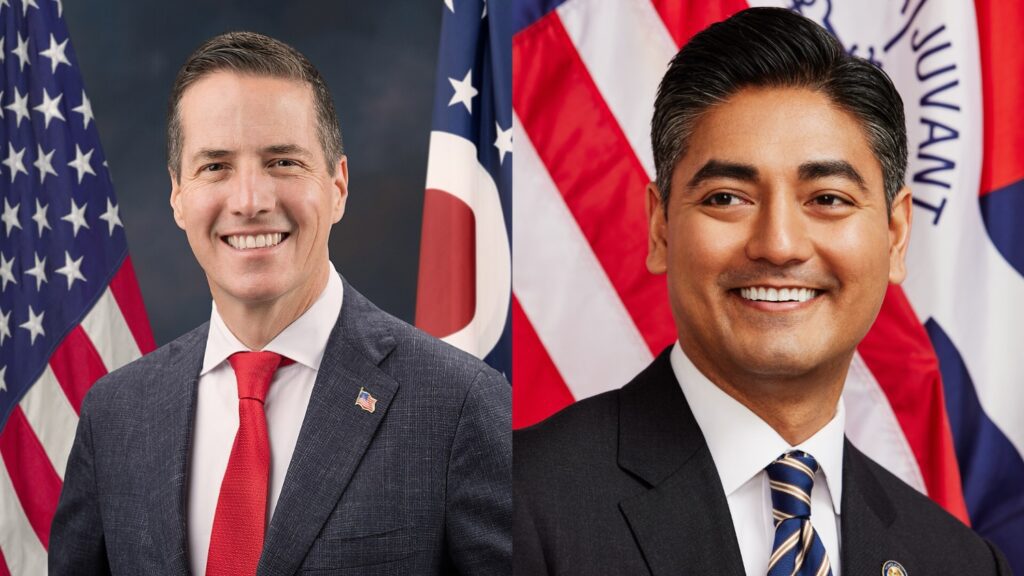
Republican U.S. Sen. Bernie Moreno called on Cincinnati officials to stop what he says could be an “illegal and wasteful” procurement ordinance centered on Diversity, Equity, and Inclusion and warned that federal tax dollars could be at risk.
“Cincinnati’s taxpayers deserve a government that rewards competence and merit, not politically driven quotas or preferences based on race or ethnicity,” Moreno wrote in a letter this month to Cincinnati Mayor Aftab Pureval.
Moreno said the city must stop a plan to create the Department of Economic Inclusion and Procurement, which brings together the Department of Economic Inclusion and the Office of Procurement into a single entity and takes effect on Sept. 1.
“The City spends roughly three to five million dollars annually on DEI initiatives, grants, and departments with DEI policy objectives,” Moreno wrote. “These public dollars should be used to address real problems such as the City’s $30 million budget deficit or to protect citizens and businesses from violent crime.
“Fortunately, the days of choosing public contract winners based on excellence are back,” the lawmaker added. “I agree with President Trump that ‘DEI activities are not only unethical and often illegal, but also cause inefficiencies, waste, and abuse within entities that engage in such practices… [and] also create unnecessary costs by reducing the pool of available labor by artificially limiting companies to hiring or promoting certain individuals, suppliers, or intermediaries based on their race or ethnicity.’ The City of Cincinnati must be a better steward of public funds.”
In a June memo, Cincinnati City Manager Sheryl M.M. Long said the “change reflects the Administration’s continued commitment to Economic Inclusion and builds upon the progress made over the last several years.” Long added that “Economic Inclusion will remain a dedicated division with staff focused on certification, compliance, outreach, business development, and workforce initiatives.”
“The goal of this reorganization is not to change the mission of Economic Inclusion, but to strengthen collaboration between the teams responsible for planning, procuring, and monitoring City contracts,” Long wrote. “By bringing Procurement and Economic Inclusion together under one department, Economic Inclusion will be positioned to engage earlier in project planning and procurement discussions.”
Moreno demanded that city officials provide him with information, including the projected cost to implement the DEI procurement ordinance and how the city’s Department of Economic Inclusion and Procurement will seek applications, review them, and award contracts.
“As an entity that receives significant federal funds, I urge you to review these documents, given that it appears your DEI Procurement Ordinance completely ignores them,” Moreno wrote. “…Additionally, the adoption of this Ordinance represents a gross misallocation of resources at a time when the city faces a surge in violent crime, including multiple recent homicides, a mass shooting, and a persistent law enforcement recruitment crisis that undermines public safety. Instead of fueling divisive social experiments, these public funds should be redirected to protecting Cincinnatians and restoring order to Ohio’s streets.”
Council member Scotty Johnson pushed back on Moreno, telling WXIX-TV/Fox 19 Now that it’s “ridiculous, first and foremost, to think that anything we are doing here in the city of Cincinnati is going to violate any law.”
A July 2025 brawl in downtown Cincinnati that went viral as bystanders opted to record it rather than call the police, prompting widespread criticism of the police chief’s leadership. At least eight people have been charged in connection with the confrontation, generally described as “a group of largely black assailants” targeting a “white man and a woman.”
Earlier this year, a five-month independent investigation by the law firm FBT Gibbons concluded that former Cincinnati police chief Teresa Theetge was “not an effective leader” due to the city’s high crime rates.
Meanwhile, WLWT-TV, citing Cincinnati police data published on June 29, reported that violent crime — which includes homicides, rape, robbery, and aggravated assault — is down 3.6% year-over-year in 2026 compared to last year.
Related Stories

Columbus man pleads guilty to COVID relief fraud as DOJ targets $245 million nationwide
Indian trucker with CDL from California Charged with killing West Union mother in head-on collision