PJM issues hot weather alert as extreme heat, data center demand strain regional power grid
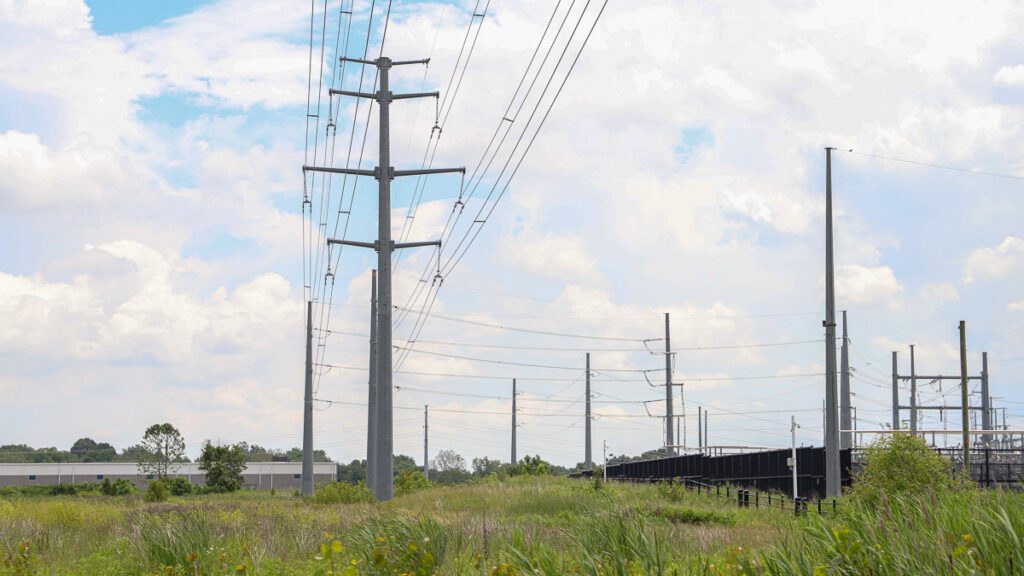
Power lines in New Albany. (Photo by Todd DeFeo)
The power grid serving Ohio and roughly 67 million people is preparing for another surge in electricity demand this week as temperatures climb into the 90s and growing data center demand puts additional pressure on the system.
PJM Interconnection issued a Hot Weather Alert for its entire 13-state region from July 14 through July 17, warning transmission and generation operators to prepare for increased electricity use.
The grid operator expects demand to reach approximately 151,105 megawatts on Tuesday, then climb to 162,699 megawatts on Wednesday and 160,893 megawatts on Thursday.
The alert does not require Ohio residents or other customers to take any action.
PJM issued the alert less than two weeks after electricity demand reached a preliminary all-time peak of 168,158 megawatts on July 2, surpassing the previous record of 165,563 megawatts set in August 2006.
The heat arrives as PJM is already confronting rapidly growing electricity demand from data centers across its territory. Data center demand has outpaced new power supplies, raising concerns about grid reliability and customer costs.
PJM, which operates the wholesale electricity grid across Ohio and parts or all of 12 other states and Washington, D.C., said its operators prepare for multiple scenarios involving extreme weather, equipment failures and other emergency conditions while balancing electricity supply and demand around the clock.
During the earlier July heat wave, federal officials granted PJM emergency authority that could have allowed some data centers and other large electricity users to shift to backup generators if grid conditions deteriorated.
The emergency authority came as PJM prepared for what officials then expected could be record electricity demand. The grid ultimately reached its preliminary record peak July 2.
Data center growth has increasingly become part of the debate over electricity reliability and costs across the PJM region. Capacity prices, which help ensure power plants are available during periods of peak demand and are ultimately reflected in utility bills, have increased by more than 1,000% since 2024 amid the growing imbalance between electricity demand and available supply.
PJM temporarily capped capacity prices in its latest capacity auction at about $325 per megawatt-day after pressure from governors across the region. The same cap was in place during the previous auction, and PJM has said prices are expected to remain roughly unchanged this year.
Results from the latest auction were expected to be released Tuesday afternoon and will take effect in 2028.
The hot weather alert is an established PJM procedure that provides power plant and transmission operators with additional time to prepare for high temperatures and humidity. PJM said its operators can adjust power generation as demand changes and monitor transmission facilities to prevent overloads.
No conservation request for residential customers was included in the latest alert.