Audit: PUCO not fully collecting, leveraging data to benefit Ohioans
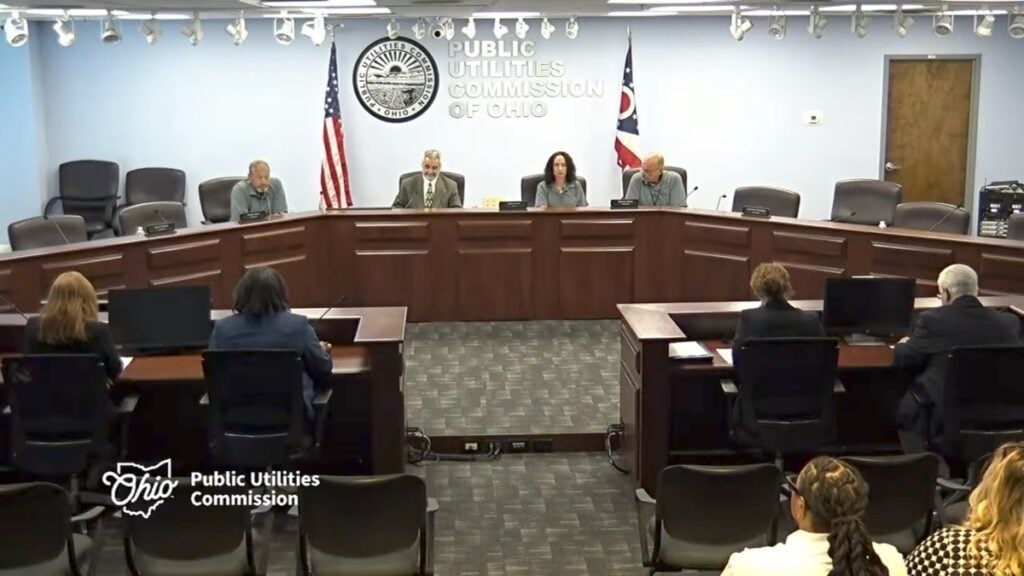
The Public Utilities Commission of Ohio is not fully collecting data on its operations or using that data to benefit Ohioans affected by its decisions.
That’s according to a new audit of the state agency that regulates utilities, which Auditor of State Keith Faber released ahead of the May 2027 deadline. It also found that PUCO lacks formal plans for strategy, finance or staffing, making it harder to ensure its work aligns with its operational goals.
“Once PUCO has implemented an effective data collection and monitoring system, the information could be leveraged to better inform a formal strategic plan and to develop specific staffing plans across PUCO’s various functions that are based on established, data-driven workload metrics,” Faber said in the audit.
The audit, required under the state’s operating budget, received praise from fiscal hawks who say they’ve worked tirelessly to create meaningful reforms and protect ratepayers.
During the 2025 legislative session, Ohio Republicans passed House Bill 15, a comprehensive energy reform bill. However, Republicans also added performance review audits of key agencies, beyond the typical fiscal audits, tying the outcome to funding in House Bill 96, the state’s operating budget.
While the auditor’s office has been reviewing everything from error rates in SNAP benefits to Medicaid payouts, few had expected the PUCO and OPSB report to be released a full seven months early.
“I am greatly appreciative of the Auditor’s office for providing such a thorough, informative, and objective review for the PUCO and OPSB,” Rep. Adam Holmes, R-Nashport, said in a release. “Ohio is on the rise, and the best way we can support Ohioans and the businesses settling here is by setting the bar for fair, safe, reliable utility services during this rapidly changing market environment.”
Ohio lawmakers have time to assess the best ways to support PUCO and introduce evidence-based legislative reforms either before the lame duck sessions after the election or when the next session kicks off in January.
For example, the report highlights that civil penalties for gas pipeline safety violations sit at the federal minimum — $100,000 a day and $1 million in the aggregate — and could fall out of step with federal rules unless the Ohio legislature raises the caps.
Republican lawmakers, who required the review, describe it as confirmation that their current transparency and accountability reforms are taking hold.
“The legislature has worked tirelessly to create meaningful energy reform and protect ratepayers,” Rep. Roy Klopfenstein, R-Haviland, said in a release. “Through House Bill 15 and the State Operating Budget, we have established several requirements of the PUCO, including this audit, to maintain transparency and accountability. We appreciate their support in this effort, and the Auditor’s office for their diligence.”
The report, noting that those tools belong first with the agency itself, argues for building data systems, writing internal plans, setting workload metrics and applying that information in rate cases. Those changes do not require new legislative action.
The same is true of aligning day-to-day procedures with HB 15’s faster rate-case clocks.
Sen. Brian Chavez, R-Marietta, praised the PUCO for having already begun to implement those rule changes.
“This independent audit of the PUCO and its processes validates the faith legislators have in that agency,” Chavez said. “Ohioans should have comfort in the PUCO to have systems and procedures in place to regulate their utilities. I am especially pleased to see the seamless transition of the PUCO into implementing the strong measures established by H.B. 15.”
Auditors also suggested studying whether motor-carrier safety work, now split between PUCO and the Ohio State Highway Patrol, should sit in one agency.
“We should do everything possible to increase safety for motorists,” Faber said. “It’s worth exploring whether a single-agency approach to motor carrier safety and compliance would be an improvement.”
With the performance review audits finalized ahead of the session, Holmes, Klopfenstein, and Chavez emphasized that they will continue to work with the PUCO to oversee Ohio’s public utility system and protect Ohio’s ratepayers.