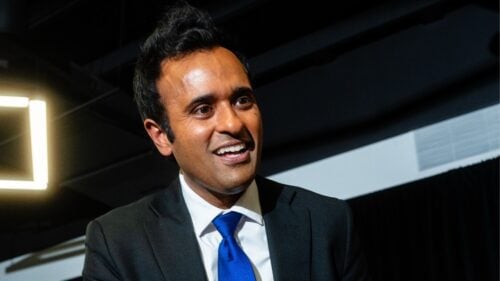
Ohio voters across 18 municipalities will decide 21 separate data center questions this election
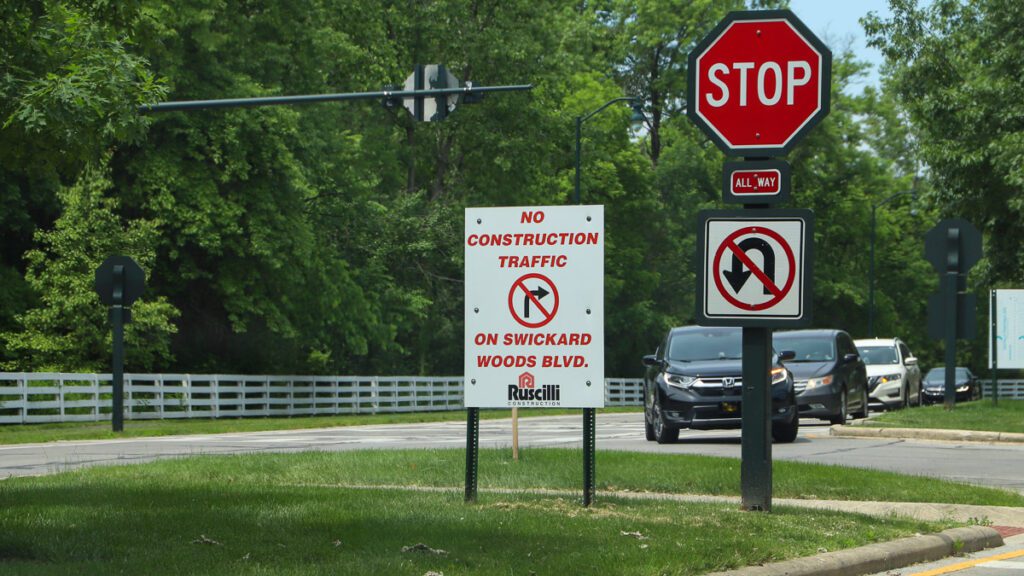
New Albany, Ohio. (Photo by Todd DeFeo)
Voters in 18 Ohio communities will weigh 21 local data center ballot measures Nov. 3, the highest total of any state.
The questions range from bans and voter-approval requirements to zoning changes, project referendums and advisory votes, as opposition mounts in the state, which has more than 200 data centers.
A proposed statewide constitutional amendment to ban centers exceeding 25 megawatts of power demand failed to qualify for this year’s ballot. Conserve Ohio, the bipartisan grassroots group leading that effort, is now targeting 2027 while supporting local charter amendments — many modeled on the same 25-megawatt threshold — and the resident coalitions that have driven the petitions to the ballot.
Communities with measures include Ashville, Conneaut, Defiance, Granville, Grove City, Hubbard, Monroe Township, Monroeville, Oregon, Pataskala, Perry, Piqua, Sprigg Township, Sunbury, Trenton, Upper Sandusky, Urbana and Wilmington.
Among the higher-profile contests is Grove City in Franklin County. Organized by Protect Grove City, following a temporary moratorium, Issue 28 would require voter approval for all future developments involving 50 or more contiguous acres, more than 20 megawatts of peak power or more than 500,000 gallons of water daily.
Citing the city’s analysis, Save Grove City, backed by the Ohio Chamber of Commerce and construction interests, argues the measure is overly broad and will require voter approval for new schools and hospitals.
A proposed Amazon data center in Sunbury, temporarily stalled over a parcel mix-up, could be shot down as voters decide on a charter amendment prohibiting data centers over 25 megawatts. Amazon’s proposed facility is widely characterized as a hyperscale project that would almost certainly exceed the 25-megawatt peak-load threshold.
Though the project received a permit for its own behind-the-meter energy source, the measure defines a “prohibited data center” as a facility with an “aggregate monthly demand or peak load of greater than twenty-five megawatts, however derived from any energy source, or a combination thereof.”
Granville, an affluent Columbus suburb in Licking County near New Albany’s dense cluster of major data centers, will also vote on the model prohibition of data center construction. The measure, part of coordinated local efforts with nearby Pataskala and Sunbury, uses the standard Conserve Ohio model language.
If passed, it would similarly amend the Granville charter to add a section prohibiting construction of data centers with an aggregate monthly demand or peak load greater than 25 megawatts, “however derived.”
Resident organizers collected signatures for similar language across the county, which has seen rapid hyperscale growth.
About two hours away in the Clinton County city of Wilmington, voters will decide on four zoning referendums after the Ohio Supreme Court blocked a broader regulatory ordinance from the ballot. On Nov. 3, voters will be asked to uphold or reject City Council ordinances that rezoned roughly 545 acres, from rural residential to light industrial for a data center project.
Other communities, including Trenton, Oregon, Defiance and Urbana, are considering outright bans on the construction of data centers, all of which are tied to specific nearby proposals.
Urbana, which has the strictest language of the four municipalities, would ban construction of data centers over 7.5 megawatts, allowing only a “dedicated facility that supports the computing needs of a single organization or enterprise…”
According to Politico, the Conserve Ohio PAC has heavily funded the local initiatives and anti-data-center sentiment now shaping races across Ohio, including the U.S. Senate contest between Republican Sen. Jon Husted and Democrat Sherrod Brown and the governor’s race between Democrat Amy Acton and Republican Vivek Ramaswamy.
Related Stories
Ohio could hold the key to national balance in Congress

VIDEOS: Amy Acton slurs speech, gets confused during campaign appearances — ‘He’s flying in a Jeep!’