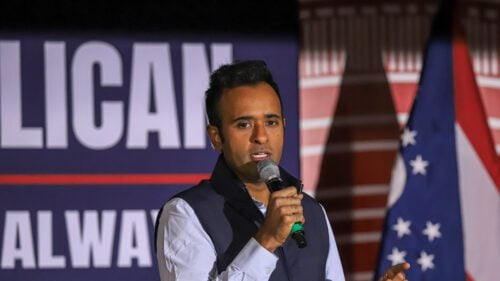
Ramaswamy unveils seven Day One executive orders ahead of Nov. 3 election
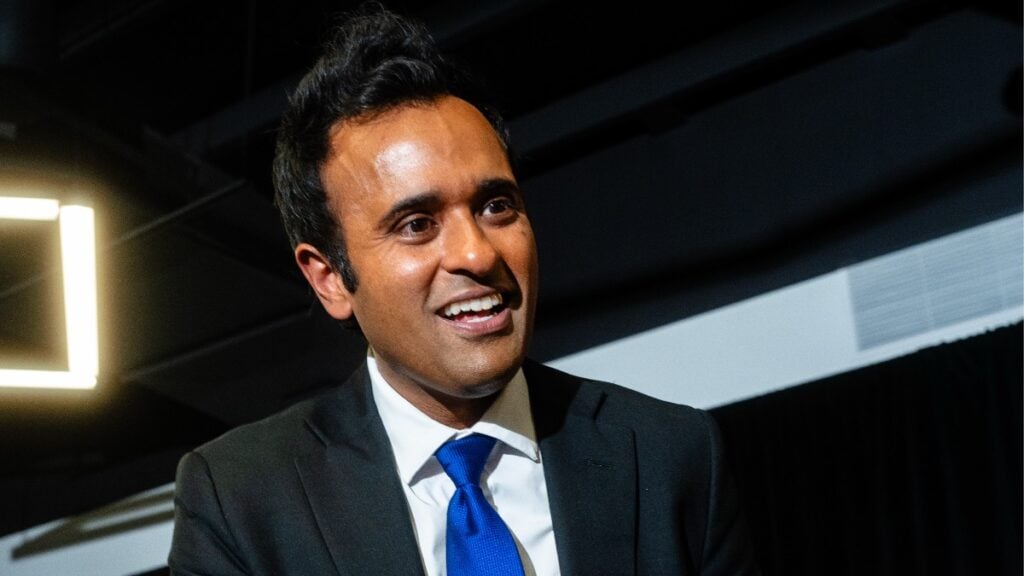
Republican gubernatorial candidate Vivek Ramaswamy has released a list of seven executive orders he said he would sign on his first day in office, Jan. 11, 2027, if elected.
The announcement expands upon and concretizes earlier pledges focused on property taxes, sanctuary cities, and government spending.
Here’s my list of Day 1 Executive Orders. They’ll be signed before midnight on January 11. Buckle up.
E.O. #1: Investigate local property tax spikes.
This executive order will direct the Department of Taxation, in consultation with the Auditor of State, to review changes in…— Vivek Ramaswamy (@VivekGRamaswamy) October 30, 2026
“Here’s my list of Day 1 Executive Orders. They’ll be signed before midnight on January 11. Buckle up,” Ramaswamy wrote in a post on X that accompanied a formal campaign release.
The orders target issues Ramaswamy has highlighted throughout the campaign: rising local property taxes, immigration enforcement, data-center development, Medicaid costs, violent crime clearance rates, state contracting, and fraud.
The first executive order would direct the Department of Taxation, working with the Auditor of State, to review property-tax changes in every county, township, municipality, school district, and special district. Jurisdictions where taxes have risen more than 100% since 2020 would face a full investigation into spending. Ramaswamy has previously cited data showing property-tax collections on Ohio homes and farmland up nearly 45% since 2020.
A second order would bar local governments from acting on policies that prevent or impede cooperation with federal immigration authorities. Jurisdictions that do not honor detainers or share information as federal law allows would lose eligibility for certain state grants, including public-safety and homeland-security funding, until they comply. The order would also refer non-compliant jurisdictions for possible legal action.
The third order Ramaswamy announced would continue Republican Gov. Mike DeWine’s moratorium on data centers, pausing action by every state agency, board, and commission on new data-center applications, permits, incentives, or approvals until the General Assembly passes comprehensive legislation incorporating what Ramaswamy has called his “non-negotiable principles.”
Another order would direct the Department of Medicaid to seek a Section 1115 waiver modeled on Tennessee’s original TennCare III. Under that model, the state could keep up to 55% of federal savings when spending falls below a cap. Ramaswamy has argued this would return more recovered fraud dollars to Ohio.
The fifth order unveiled would instruct the Departments of Public Safety and Rehabilitation and Corrections to prioritize violent-crime clearance rates when distributing discretionary law-enforcement funding. The campaign cited a current statewide clearance rate of 34%.
Another order Ramaswamy announced would require a review of every executive-branch contract paid in part or in full from the General Revenue Fund. The Department of Administrative Services and the Office of Budget and Management would examine legal basis, necessity, performance, alternatives, and the cost of termination versus continuation, then recommend action.
The final order would create an inter-agency anti-fraud task force reporting directly to the governor. Its scope would include Medicaid, benefits, and child-care fraud; visa and voter-registration fraud; trucking fraud; foreign CDL licensure; and abuse of foreign hiring by public entities. It could include representatives from the auditor of state, secretary of state, and attorney general.
The release comes days after Ramaswamy publicly committed to investigating localities where property taxes have more than doubled since 2020. Property taxes have been a recurring campaign theme as homeowners and farmers have reported steep increases.
Democrat Amy Acton’s campaign did not respond to the announcement on her social channels.
Related Stories

Ramaswamy plans to probe property tax increases if elected governor
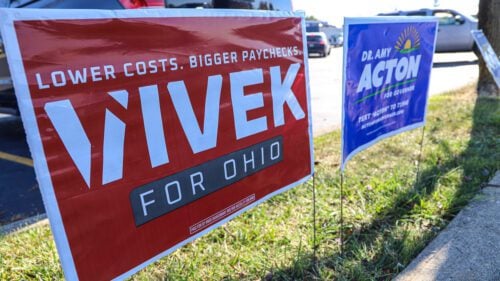
Early voting tops 1.19 million in Ohio as registered Democrats lead in ballots cast so far