Acton’s gubernatorial bid prompts questions about COVID orders, but no response to inquiry
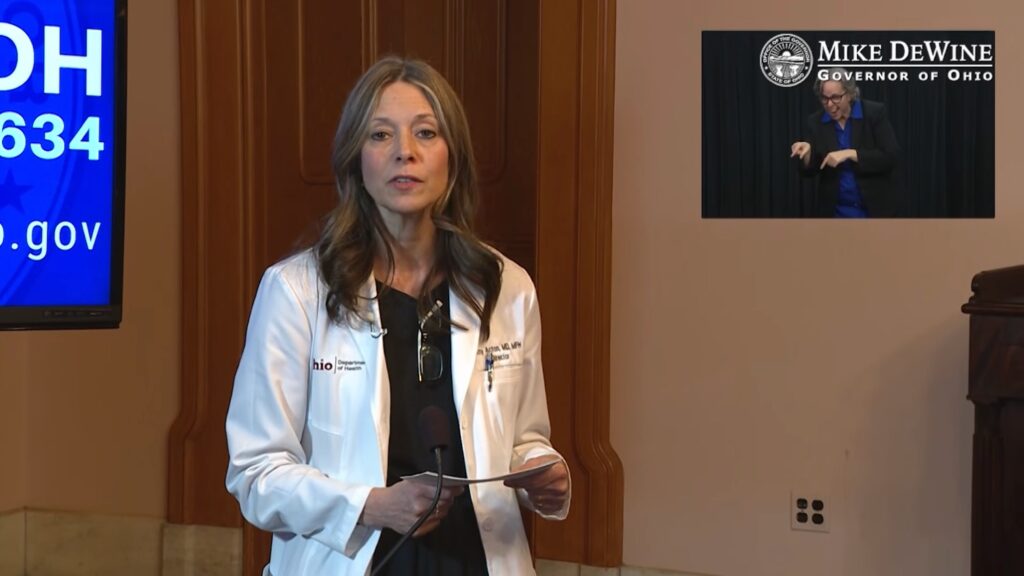
Amy Acton’s COVID policies are back in focus as the 2026 gubernatorial election approaches.
The Democratic candidate previously served as the director of public health under Republican Gov. Mike DeWine from early 2019 to June 2020 and was responsible for decisions about Ohio’s stay-at-home orders. That included a general stay-at-home order that Acton issued that limited both public activities and private gatherings, and signed orders for specific businesses to remain closed.
Ohio was the first state to close schools in March 2020 under DeWine and Acton, according to Education Week, and some school districts did not resume in-person classes until after March 2021, according to a report by The Columbus Dispatch.
Ohio had a mortality rate of 14.1 deaths per 100,000 people, while some states that opened earlier had lower rates, according to data from the Centers for Disease Control and Prevention.
Acton stepped down from her post as Health Director in June 2020 following opposition to her lockdown policies and lawsuits filed by business owners, according to a report by The Center Square. She continued to act as an advisor to DeWine.
Business owners in the state had been outspoken about how they were affected by Acton’s policies in the month leading up to her resignation.
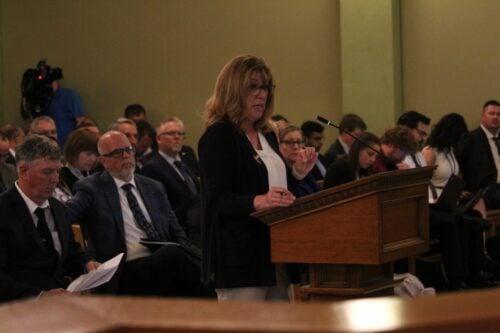
“Frankly, we view the government as our primary obstacle based on the fact that Gov. DeWine and Amy Acton are acting with complete authority,” Salon owner Jeff Smith told the House 2020 Economic Recovery Task Force.
Acton’s campaign did not reply to questions from Ohio.News about how the candidate would respond to criticisms of her policies, and if there are any decisions or policies she would approach differently if faced with a similar public health crisis today.
In a recent letter to the editor published in The Columbus Dispatch, Reynoldsburg resident Gary James said that Acton should answer potential voters’ questions about her policies as the state health director.
“Her response to the COVID-19 pandemic was severe: learning loss, mental health struggles, workforce disruption and small-business failures,” James wrote. “She was an unelected bureaucrat yet acted like an authoritarian dictator.
“Before asking voters to make her governor, Acton should answer for the economic harm and government overreach that defined her tenure,” James added. “And it sure would be nice if the mainstream media would actually press her on it.”
James said that Acton’s policies as the Health Director affected the livelihoods of Ohio residents by ordering small businesses to remain closed while allowing large corporations to remain open by classifying them as essential businesses.
“Working families lost paychecks,” James said. “Students lost critical classroom time. Seniors were isolated from loved ones. Places of worship were forced to turn people away.”
“The economic and social damage Amy Acton inflicted on all of us was unmatched and its effects are still felt to this day.”
The Ohio Republican Party also recently commented on how Acton’s lockdown policies affected schools, businesses, and nursing home residents in a series of Facebook posts, according to a report by The Blaze.
“Amy Acton shut down our society,” Senate President Rob McColley, R-Napoleon, who is seeking to be the next lieutenant governor, said in a post to X. “Then she walked away when Ohioans pleaded for help in getting back to normal. She quit on Ohio once and we won’t give her a chance to do it again.”
Amy Acton shut down our society. Then she walked away when Ohioans pleaded for help in getting back to normal. She quit on Ohio once and we won’t give her a chance to do it again. https://t.co/siGfiWQpbT
— Senator Rob McColley (@Rob_McColley) March 19, 2026
It’s not just the politicians. Some Ohio residents also opposed Acton’s policies during her time as health director.
Ohio small business owners expressed opposition to lockdown measures that shut down small local businesses while keeping large franchises that were classified as “essential businesses” open, according to a report from The Center Square. Others filed lawsuits against Acton and the state Health Department over orders to remain closed.
One of the lawsuits was filed by 35 gyms in Lake County. A county judge ruled that orders for gyms and fitness centers to close were “arbitrary, unreasonable and oppressive,” in May 2020, according to reports at the time.
A group of bars and restaurants in northeastern Ohio also filed a lawsuit against Acton and DeWine over “unconstitutionally vague regulations” that could lead to businesses being penalized for the actions of customers in May 2020.
The Finney Law Firm and the 1851 Center for Constitutional Law filed a lawsuit against Acton on behalf of bridal shop owner Tanya Rutner Hartman in April 2020. The lawsuit alleged that the former Acton’s lockdown policies lacked due process protections by not providing a fair hearing to determine what businesses were “essential.”