Additional property tax reforms will have to wait until at least the fall

Ohioans hoping that lawmakers would override additional vetoes of the state’s biennial budget that Republican Gov. Mike DeWine issued are in for some bad news.
While there has been considerable discussion about repealing or lowering property taxes, the effort has been short on action.
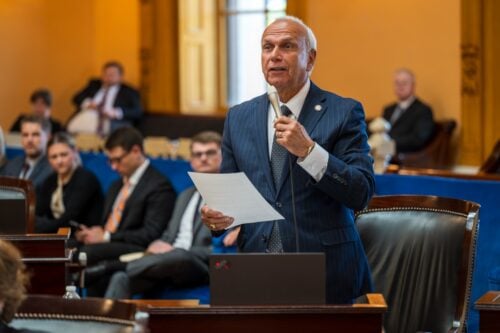
Cleveland.com reported that the Ohio Senate is not likely to return from its summer break to weigh property tax changes. Senate President Rob McColley, R-Napoleon, told the publication that veto overrides will “likely wait until the fall.”
That seems to be a shift from an X post McColley made in July, after Republicans in the Ohio House overrode one of DeWine’s budget vetoes.
“We also have the votes to override any other property tax veto the House is able to send us,” he said at the time.
Thanks to the members of the @OHRGOPCaucus who voted to override the Governor’s veto and provide much needed property tax reform. The Ohio Senate has the votes to override the same veto. We also have the votes to override any other property tax veto the House is able to send us.
— Senator Rob McColley (@Rob_McColley) July 21, 2025
The House promised to override additional vetoes but fell short of its intended goal. However, they may not be done and could consider additional overrides when they return to Columbus.
“We’re still planning to hold the votes when we get back,” state Rep. David Thomas, R-Jefferson, told Cleveland.com. “Still having conversations, but it’s going well.”
Lawmakers have until the end of the current session, in December 2026, to override the governor’s vetoes.
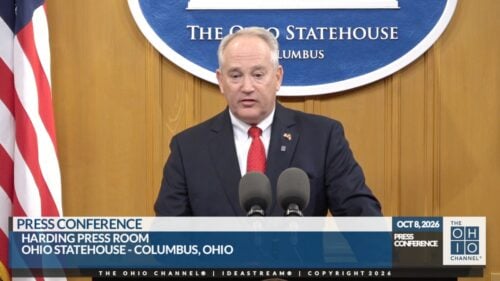
The governor has previously signaled a willingness to consider changes, including the ideas he previously nixed, particularly if a working group he appointed proposes them.
The governor informally announced the Property Tax Reform Working Group as he signed the budget and issued vetoes. He subsequently appointed the group’s members, including county commissioners, school superintendents, and other county officials.
DeWine named former Republican state Reps. Bill Seitz and Pat Tiberi to co-chair the working group. The governor wants the group to file its report with “concrete proposals” by Sept. 30.
In an op-ed in The Columbus Dispatch, Gene Krebs, a former Republican member of the Ohio House, noted that the Buckeye State has the fifth-highest number of local governments and ranks 11th in property tax costs. Part of the problem, he said, is that Ohioans no longer live, work, and or shop in the same place and often cross county lines — and therefore tax jurisdictions — in the process.
“We need to go back to the DeRolf decision and disconnect local property value and school funding; in short, have the state pay for all education in the classroom,” the former lawmaker wrote.
“This is not a new idea; I first proposed this 25 years ago with House Bill 718,” Krebs added. “The bill figured out how much it would cost to educate a child in a classroom in Ohio, and then the state would cut that check.”
Mahoning County Auditor Ralph Meacham told WKBN-TV that abolishing property taxes and increasing income or sales taxes is the right approach.
“It’s unrealistic. You think about it, there are three taxes — property, sales and income tax, right? There are only three ways to get money, really,” Meacham told the Youngstown station. “Would they have to increase income tax? And right now, the law doesn’t permit a lot of entities, like townships, can’t put on income taxes. So, where’s the money going to come from? It’s unrealistic.”
Rather, he told the station that a more efficient government is the best way to lower property taxes.
“We need 14 school districts in Mahoning County? Maybe not. Could we have more cooperation with fire, water and EMS? Yeah, we probably could,” Meacham told the station.
“What levies are you passing? What are you supporting? How well are people using tax funds? That’s what I’d like them to look at,” Meacham added. “I don’t like property tax at all, but I will say that the system we have in assessing property values is pretty good. I mean, it’s fair, it’s equitable.”