Bill would allow voters to repeal municipal income tax reciprocity credits

Buckeye State voters would have the chance to repeal “municipal income tax reciprocity credits” under legislation the state House passed.
Proponents said House Bill 503 would strengthen taxpayer protections by requiring municipalities that offer such reciprocity credits to obtain voter approval during a general election before repealing or changing the amount or percentage of the credit.
Municipal income taxes might apply where a taxpayer lives and where they work, creating the potential for double taxation. While many jurisdictions address this via “reciprocity credits” that offset what taxpayers have paid to other jurisdictions, state law has not previously mandated that voters approve any changes or the elimination of those credits.
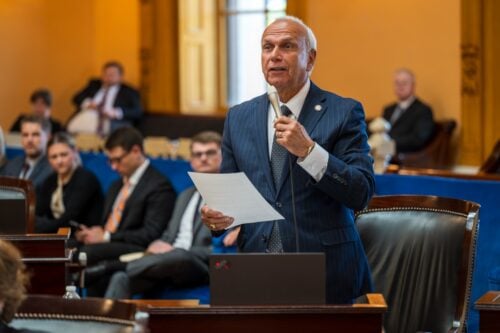
“Municipal income tax reciprocity credits have real consequences for working Ohioans,” state Rep. Heidi Workman, R-Rootstown, said in a release. “This bill puts genuine control back in the hands of the people for tax decisions that directly impact their paychecks.”
Taxation has become a flashpoint in the Buckeye State. Much of the conversation has centred on property taxes, which The Buckeye Institute, a Columbus think tank, previously called an “over-complicated, byzantine patchwork” of taxing authorities.
“Ohio’s municipal income tax system is unique and places Ohio at a competitive disadvantage when compared to almost every other state,” Brian Perera, on behalf of the Ohio Taxpayer Protection Coalition, said in prepared testimony to the House Ways and Means Committee. “No other state, except Pennsylvania, permits municipalities to impose such a broad income tax on individuals.”
Keary McCarthy, the executive director of the Ohio Mayors Alliance, told lawmakers that the municipal income taxes represent the largest revenue source for most cities, and that “it is critical to funding the largest budgetary expense for cities, which are police and fire services.”
Citing the “uncertainty that local governments are facing right now with rising public safety costs and the possibly decreasing property tax revenues,” McCarthy asked lawmakers to hold off on advancing the measure.
“The basis for this proposed change is the assertion that there is a ‘growing number’ of municipalities that are scaling back reciprocity credits,” McCarthy said in prepared testimony. “However, an anecdotal example does not make a trend, and we are not aware of any communities in our membership that are making such changes.
“We know the municipal income tax system in Ohio isn’t perfect and that there are opportunities for improved efficiency,” McCarthy added. “However, we approach these conversations with caution because previous reform efforts have resulted in lost funding for critical local services.”
Perera said the Ohio Taxpayer Protection Coalition recognizes municipalities may have concerns about how the measure would impact their budgets.
“However, municipal officials will still have the ability to go to citizens and explain the need for a less than 100% credit, or to request a rate increase,” Perera said. “We believe empowering citizens with the authority to approve or disapprove local taxes is an historic principle for Ohio local taxation.”
While the group supported HB 503 “as an interim step,” the coalition wants lawmakers to “impose a mandatory 100% credit for all municipalities and authorize voters to approve a lower credit.”
The measure, which Workman sponsored with state Rep. Bill Roemer, R-Richfield, could also have ramifications for businesses.
“For small businesses, unpredictable changes to reciprocity tax credits create an administrative headache and increase compliance costs, especially those that have employees residing in multiple different cities,” Jared K. Weiser, Ohio state director for the National Federation of Independent Business, said in prepared testimony.
“Requiring a small employer to spend time and resources navigating Ohio’s complex municipal tax system takes away from their ability to own, operate, and grow their business,” Weiser added. “This legislation is one small step towards a more unified, and simple municipal tax system in Ohio.”