Bill would bar publicly funded media from advocating for tax increases ahead of elections
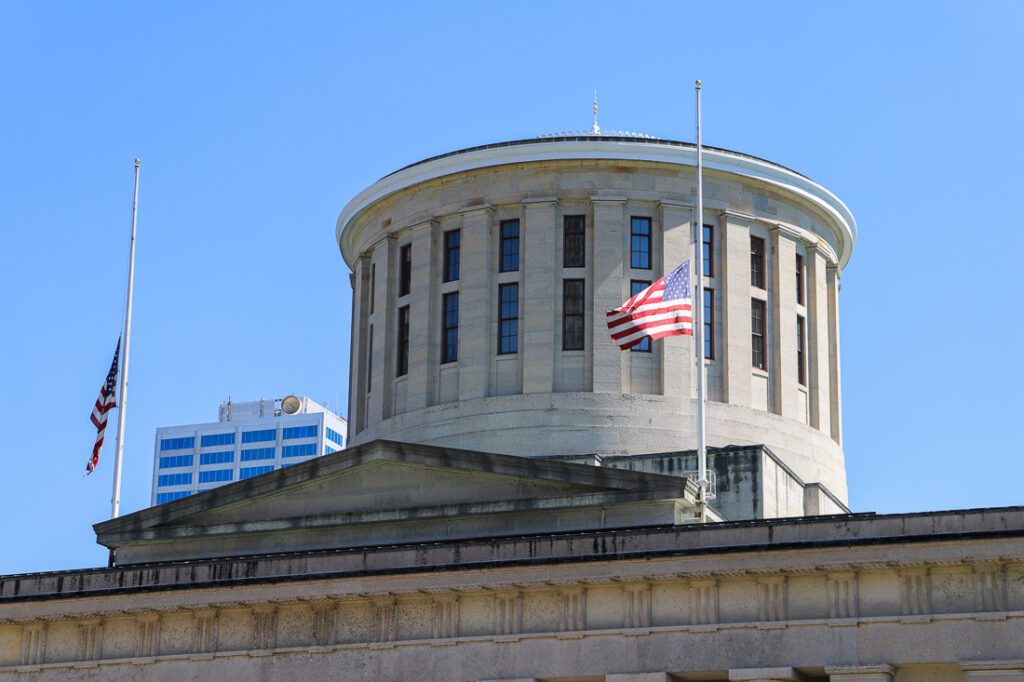
An April 2026 view of the Ohio Statehouse. (Photo by T.A. DeFeo)
Ohio lawmakers continued debate on House Bill 264 this week, a measure that would build on existing laws prohibiting publicly funded government publications from advocating for tax increases by adding a 30-day blackout period before an election.
Sponsored by Reps. Tex Fischer, R-Canfield and Adam Mathews, R-Lebanon, the bill seeks to amend Ohio Revised Code § 9.03 by prohibiting political subdivisions from distributing unsolicited government publications advocating for or referencing levies, bonds, or finances during that 30-day pre-election window.
“The concept behind this bill is simple: taxpayer dollars should go to informing the public, not campaigning,” the sponsors said in prepared testimony. “Just as we have clear rules delineating how we operate in the Statehouse, we should not have blurred lines for others that appear on the ballot.” “We, as House members, impose this same ban on ourselves in the time leading up to an election, and it is our belief that all government entities should play by the same rules.”
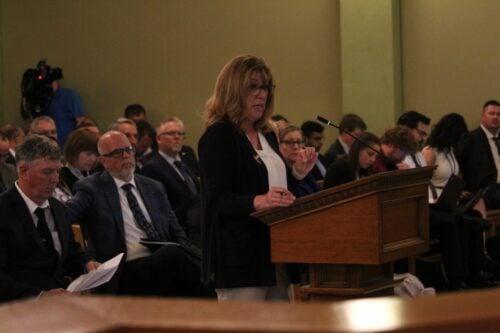
During the second hearing before the House General Government Committee on June 2, supporters delivered testimony emphasizing the need for the 30-day blackout provision.
Citing a $33,044.51 taxpayer-funded informational mailer, Medina County Commissioner Steve Hambley testified that lines may have been blurred just four days before a heated May 2026 Auditor’s race.
“I agree with the bill sponsors when they testified that there are certainly many benefits that naturally come with incumbency, but one that should absolutely NOT be tolerated under any circumstances is the ability to use tax dollars to campaign,” Hambley testified. “As a Medina County Commissioner since 2021, I have seen this privilege of communicating with the public by elected officials at taxpayer expense be abused for blatant political campaigning purposes.”
HB 264 also received support from Americans for Prosperity Ohio, which sees the bill as part of a broader affordability agenda, arguing it reduces pressure for higher taxes and government debts that burden Ohio families.
AFP-Ohio’s Legislative Director, Hannah Kubbins, reinforced that message in her proponent testimony.
“Ohio law already prohibits political subdivisions from using public funds to support or oppose candidates in the 30 days before an election. HB 264 extends that same logic to levy and bond issue elections,” Kubbins said. “This is a straightforward principle: government should not be in the business of campaigning for its own ballot measures using taxpayer money. A private citizen or advocacy group that wants to weigh in on a levy must raise private funds and follow disclosure requirements. Government agencies face no such constraints under current law, and that asymmetry is worth correcting.”
While supporters view the 30-day blackout as restricting taxpayer-funded propaganda that tilts elections toward incumbents, higher taxes and spending, opponents argue they shouldn’t have to raise private funds to communicate with voters.
In an interview with the Ohio Capital Journal, Superintendent Charles Smialek said that under this bill, he would not be able to email families to acknowledge the existence of a levy or even address school finances.
“We know that we can’t campaign, but we should absolutely be allowed to inform,” Smialek said. “At some point, it’s infringing upon freedom of speech.”
During her testimony, Kubbins contended that the bill is targeted and preserves necessary communications.
“HB 264 does not prohibit government from communicating with the public,” Kubbins noted. “Official notices required by law, direct correspondence with constituents, and government websites that have referenced a levy prior to the 30-day window are all preserved.”
“AFP believes voters are best served when they can make decisions about taxes and public debt on the merits, without publicly funded communications designed to move the needle,” Kubbins added. “HB 264 brings levy and bond issue elections in line with the candidate election standard Ohio already upholds. It is a modest, targeted reform that protects the integrity of the ballot process.”
While sponsors contended that school districts and government officials can still campaign with their own time and money, an amendment was ultimately passed that allows a narrow exception for school districts to communicate about factual content.
The bill, now amended, remains in committee awaiting further consideration.