Bill would mandate warning labels for ‘addictive’ social media platforms, could face legal challenge
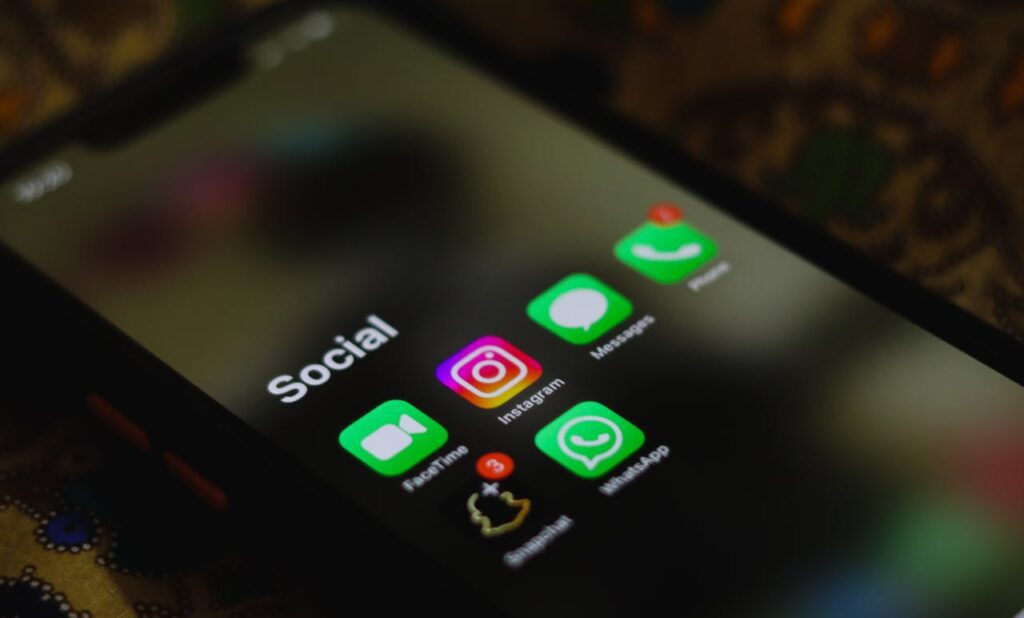
Ohio lawmakers introduced a bipartisan bill that would require “addictive” social media platforms to display a government warning label, which could easily result in a legal challenge over potential First Amendment violations.
State Reps. Christine Cockley, D-Columbus, and Jodi Salvo, R-Bolivar, the sponsors of House Bill 808, defined an addictive social media platform as one that relies heavily on push notifications, autoplay, constant feed scrolling, and other features that encourage continued use, according to NBC 4.
“When it is absolutely designed to keep us scrolling is what we’re looking for,” Salvo said, according to the news source. “As long as they continue to feed us information that we’re already curious about, you know as well as I, five minutes can turn into 25 minutes, which can turn into a lot longer than that once you start.”
Cockley then explained how he sees the warning label being implemented, the news source reported.
“I actually see it more as a nudge,” she said. “While the user is on the platform — potentially doomscrolling — it would be a pop-up that says, ‘Hey, this platform can be addictive, now’s a good time to put your phone down and do something else.’”
Dr. Kristen Lindquist, a psychology professor and expert in emotional development at Ohio State University, told NBC 4 that she doesn’t find it surprising that some social media platforms can be addictive, given that they are designed to deliver the information people want. Lindquist also alleged that social media platforms exploit the natural human desire to interact with others.
“Across our evolutionary history as humans, other people are really important for our survival, and we care a lot about other people,” she said. “Social media, unlike normal face-to-face social behavior, is omnipresent.”
Cockley said that the reason why children are now more likely to be depressed and anxious, as well as lacking sleep and struggling in school, is that they constantly have access to the lives of celebrities and influencers.
“If they are not feeling like they can learn and grow and they’re safe and they’re confident in who they are, it makes it much more difficult to show up fully as a student,” she told the Columbus outlet. “I think this bill will help remind students and remind youth that it’s okay to put your phone down, it’s OK to stop comparing yourself to your peers and to these influencers and go explore and figure out who you are.”
Lindquist, however, alleged that not every child is automatically negatively affected by social media.
“Kids who are otherwise doing well, who can control it, seem fine, but the same goes for substance use,” she said. “People engage in various substances, and as long as they can control it and they’re not abusing it, it’s fine. It’s for the subset of people who are not doing well, who maybe have lower self-esteem or depressive symptoms, who are engaging with certain content online. It’s this sort of subset that ends up having the worst mental health outcomes.”
Lindquist also pointed out that even if the warning labels are implemented, children could simply ignore the lawmakers’ advice out of spite, as they want to go against the grain because of the establishment’s opposition to the platforms.
“I think it’s important that something is done to control adolescents’ use of social media,” she said. “Whether warning labels themselves are gonna be the right answer, [they] might be better than nothing, but there’s some nuance there.”
The American Enterprise Institute, a public policy think tank, previously wrote that implementing social media warning labels is a clear violation of the First Amendment and could easily result in social media platforms suing the state.
NetChoice, a tech industry group that represents Meta, TikTok, YouTube, Google, and Reddit, previously sued the states of Colorado and Minnesota for attempting to require warning labels.
Related Stories
New poll shows tight Senate, governor’s races

The slow walk to socialism: Undercover video lifts lid on Ohio Democrats’ plan for state