
Columbus bags Flock cameras after mayor pauses program
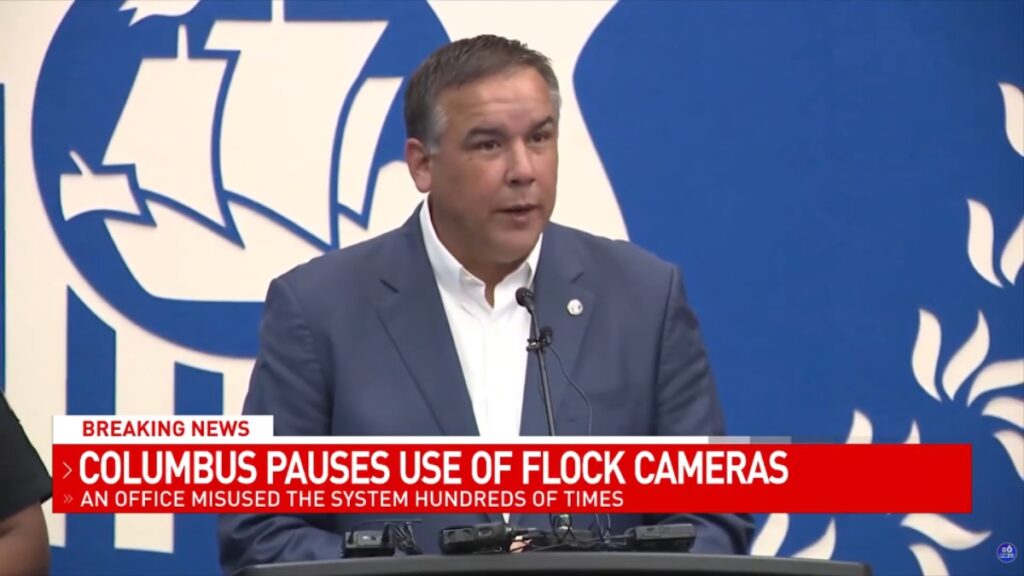
Columbus officials have begun covering the city’s 65 Flock license plate reader cameras after Mayor Andrew Ginther paused police use of the system.
As previously reported, an audit found more than 15,000 searches potentially tied to immigration enforcement, prompting police and city officials to disable nationwide and statewide data sharing.
Ginther ordered the pause on Sept. 3 after learning Officer Melvin Tellis allegedly searched one license plate more than 270 times between late 2023 and 2024, WBNS/10TV reported. Police said the searches were not connected to any investigation, and Tellis, assigned to City Council’s executive protection unit, was relieved of duty pending an internal review, WOSU reported.
A day later, officers began placing plastic bags over the cameras to stop them from collecting new images, according to reports.
A police spokesperson confirmed all 65 city-owned cameras will be covered. The work does not include cameras operated by Ohio State University, the Ohio Department of Transportation, or neighboring jurisdictions.
Ginther called the alleged misuse “deeply troubling” and said it shook his trust in the technology, according to reports. He directed a third-party audit of all Columbus police Flock searches to determine whether the problem went beyond one officer.
The city’s contract with Flock Safety expires in December, according to WOSU. Several City Council members have already said they want to end the agreement, The Columbus Dispatch reported, and the council is also drafting new rules for any future use of license plate readers.
However, the July audit that first drew attention reportedly found that the 15,000 possible immigration-related searches represented less than 1 percent of nearly 20 million total queries since 2023.
Following the audit’s release, Deputy Chief Tim Myers briefed the media and handed out a one-page executive summary describing those flagged searches as “relatively infrequent” nationally and “nearly nonexistent” locally. In response, the city immediately halted data sharing with outside agencies.
Flock cameras photograph passing vehicles and store data in a searchable system by plate number or vehicle description. While the police department has suspended data sharing with outside agencies, it has maintained a Flock transparency site.
According to that web portal, it stores data for seven days before deleting it. Over the last 30 days, the Columbus Police Department received 11,431 AMBER Alert hotlist alerts and conducted 3,699 search sessions, averaging around 124 searches per day.
The portal notes that those searches have resulted in police finding 283 sex offenders, 219 vehicles with stolen plates, 195 stolen cars, 49 suspected gang members or terrorists, and 11 missing persons.
Related Stories
No news stories found.