Cooke says the governor did respond to fraud allegations report, governor disputes assertion
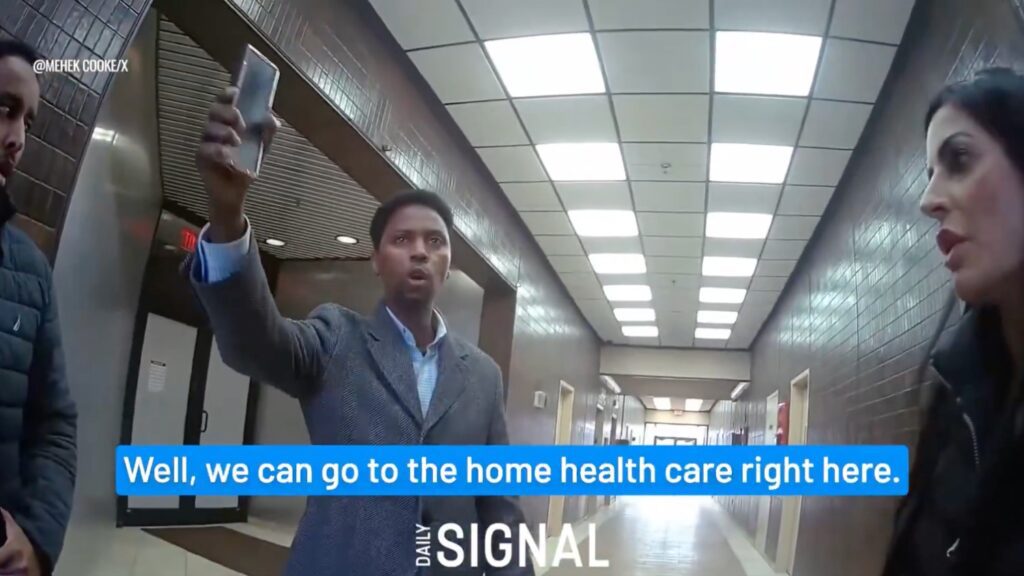
An Ohio attorney said she tried to report “massive Medicaid home healthcare fraud” to Gov. Mike DeWine and Attorney General Dave Yost, but effectively received no response from either.
However, the governor’s office is pushing back on the claim, saying they actually met with the attorney, Mehek Cooke.
The allegations of fraud in Ohio emerged late last year, following those in Minnesota. Cooke said the whistleblowers approached her in December after they received the cold shoulder from state officials.
“The whistleblowers told me much of the pressure that they were seeing was actually coming through individuals and businesses operating within the Somali, Bhutanese, and Nepalese community here in Ohio,” Cooke said in a video posted to X.
“These whistleblowers actually tried to sound the alarm long before the public even knew anything about this,” Cooke added. “These whistleblowers went to legislators in the state of Ohio, state office holders; they even went to the Attorney General’s office. They repeatedly were ignored at the highest levels in Ohio.”
🚨I called the Ohio Attorney General’s office in January about a $1.2 billion fraud scandal. They threatened to subpoena me.
Then I called the Governor. Never even heard back.
So I'm telling you instead. pic.twitter.com/6Nfz5ju8Nd
— Mehek Cooke🇺🇸 (@MehekCooke) May 20, 2026
Cooke said the attorney general’s office asked her to provide the whistleblowers’ names, which she refused to do. She claims the office threatened to subpoena her.
“One elderly or older recipient can actually gain $75-90,000 a year of personal care billing through high daily hours that are authorized,” Cooke said in the video. “So, a family member can come in and take care of a parent, two parents; you can push that number to 180,000, and then you add your in-laws. In one household, you can start making $250,000-plus for Medicaid billing.
“This is the financial incentive,” Cooke said. “This is the vulnerability, and this is what the whistleblowers were trying to warn the state about months and months ago. This could have been stopped a year ago.”
The precise scope of the fraud allegations in Ohio is murky, but some estimates suggest it could exceed $1 billion.
“Regarding the claim she called the Governor and never received a response, Ms. Cooke was repeatedly contacted by the DeWine Administration to schedule a time to discuss her concerns and receive her tips,” Dan Tierney, a DeWine spokesman, told Ohio.News via email. “I can confirm such a conversation ended up occurring. We disagree with any claim that Ms. Cook never heard back from the DeWine Administration.”
Amid growing concerns about Medicaid fraud in Ohio, following a string of reports by The Daily Wire, Republican Gov. Mike DeWine announced new fraud-prevention initiatives. The governor signed an executive order allowing the Ohio Department of Medicaid to enforce emergency rules.
The new rules, which were not announced during Fraud Prevention Month in April, require more frequent revalidation of providers identified as higher risk of fraud.
While DeWine is stepping up fraud prevention measures, critics say the governor is not entirely without blame. Last week, Senate President Rob McColley, R-Napoleon, expressed frustration that DeWine has vetoed measures to increase oversight of Medicaid, saying the latest changes are a “little bit late, quite frankly.”
“You had whistleblowers come forward, then I come forward with allegations to Ohio officials in December,” Cooke said. “The state failed to act with urgency.”
Rather, Cooke said Ohio officials only decided to act once federal lawmakers started “demanding answers and documentation.”
“There’s no leadership, there’s no accountability until there’s actually a scandal brewing, and it was impossible to ignore, and that’s why the state of Ohio is stepping up,” Cooke said. She added that state officials need to go further, including mandating full audits, re-verifying high-dollar home health care providers and recipients, and conducting site visits to providers clustered at suspicious addresses.
Of course, Yost could also help set the record straight, but they did not respond to requests for comment from Ohio.News.
“And when they finally found someone willing to fight for them, the state’s first instinct wasn’t to protect the whistleblowers, it was to get their names,” Cooke said. “And here’s what makes this even more maddening: This is the same DeWine administration whose office, when … pressed earlier about these fraud allegations, said it’s the cost of doing business, and they’ve said Ohio has a robust anti-fraud measure.
“That’s unfortunate, and that’s not true,” Cooke added. “And they didn’t take these allegations seriously. Fraud is not the cost of doing business. Fraud is the cost of government failure.”