‘Cruel’ Sen. Tim Schaffer vindicated after decade-long fight to protect benefits for needy families
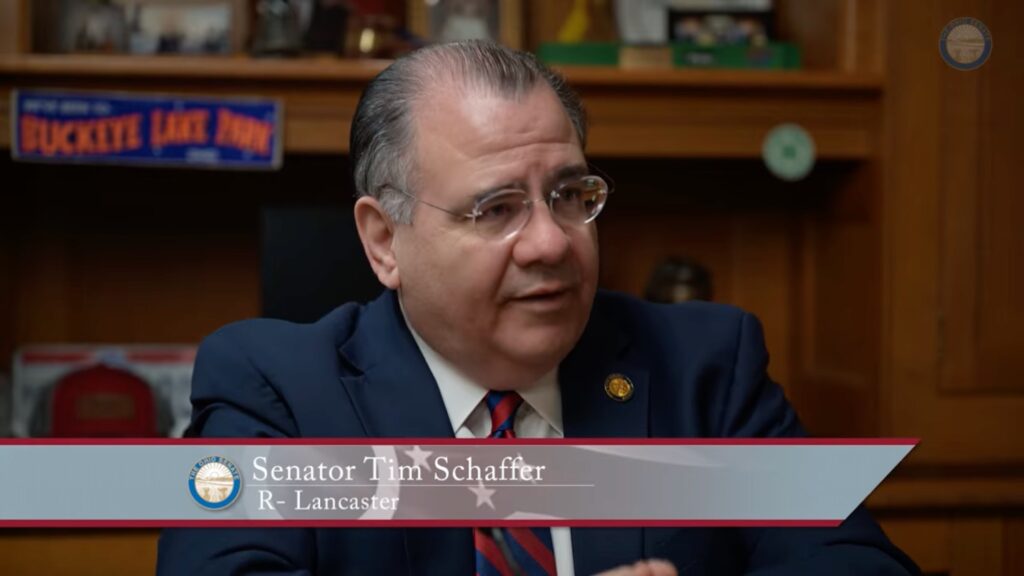
Ohio Sen. Tim Schaffer, R-Lancaster, who has long pushed for legislative efforts to combat fraud and protect public assistance programs, celebrated a recent legislative win while reflecting on media attacks that characterized those efforts as a “ludicrous” and “cruel” attempt at “stingier” guidelines.
In an interview released this week by The Views, The News Excludes — a podcast of the Ohio Senate Republican Caucus hosted by John Fortney, the Ohio Senate Majority Caucus’s director of communication — Schaffer discussed new legislative efforts aimed at solving long-known issues of fraud and systemic abuse.
Highlighting the timeline, Schaffer referenced Auditor reports dating back to 2016, when more than $28.7 million in out-of-state SNAP/EBT transactions by 118,316 recipients were flagged by then State Auditor Dave Yost for fraud.
“I’m looking forward to working with Auditor Yost to address inefficiencies in the SNAP program while also ensuring that benefits are getting to those who need them,” Schaffer said in a 2017 release while announcing legislative efforts to “create a common sense, simple solution to protect the benefits of Ohio’s neediest families.”
As audits continued to flag fraud in the Medicaid and food assistance programs, Schaffer continued to introduce legislation, such as Senate Bill 17, requiring photo ID for EBT cards and Medicaid payments.
The bill's sponsor, Sen. Tim Schaffer, claimed there's a lot of fraud in Ohio's program, and that 1 in 5 SNAP recipients are worth more than $100,000.
His source there is a dark money group that pushes these bills state-by-state https://t.co/tRCeCfbgPW Their source: (???) pic.twitter.com/pS0rzhJruW
— Jake Zuckerman (@jake_zuckerman) February 4, 2021
Those efforts were blocked, however, as Ohio’s media ran headlines like “Ludicrous and unhelpful,” which omitted any mention of the Auditor’s reports or findings. Instead, the article framed Schaffer as grasping at unfounded straws to implement “stingier” guidelines.
“Under the bill, the state government would use a stingier set of considerations when deciding whether to administer benefits,” Jake Zuckerman of the Ohio Capital Journal wrote.
Sharing Zuckerman’s article to Facebook groups, the Cuyahoga Women’s Democratic Caucus encouraged Ohio families to call Schaffer’s office about his “absolutely ludicrous,” “cruel, destructive and expensive” legislative efforts.
“GOP actions define cruelty,” the group continued, characterizing Republican efforts as attempts to “combat a nonexistent problem of widespread benefits fraud.”
Congressman Brandon Gill says “The Ohio Medicaid scheme that we're uncovering on the House Oversight Committee — we believe stretches into the billions of dollars”
I’ll go over the worst fraud found so far in Ohio
– A Massive Shell Company Network for Fake Billing
– 288… pic.twitter.com/szADoBqM6t— Wall Street Apes (@WallStreetApes) May 24, 2026
In the wake of heightened national attention on Ohio welfare fraud — including recent press conferences announcing federal probes into Ohio Medicaid fraud — Fortney asked if Schaffer felt vindicated.
Yet, rather than gloat over an “I told you so” moment, Schaffer expressed gratitude for the recent prosecution of fraudsters while emphasizing the urgency of passing reforms.
🚨The Ohio Investigative Unit identified at least $600,000 in STOLEN SNAP benefits
Three people have been indicted following a nearly year-long investigation into the use of card skimmers to steal Supplemental Nutrition Assistance Program benefits across Ohio. pic.twitter.com/H8EQaKJAs8
— Ohio.news (@RealOhioNews) June 2, 2025
That sense of urgency comes amid Congressional mandates to crack down on fraudulent payments being allocated by state agencies.
As previously reported by Ohio.News, unless Ohio lawmakers act now, the new Congressional mandates could soon cost Ohio’s taxpayers up to an additional $321 million per year in penalties.
Ohio could face a $321 million federal penalty if state leaders fail to reduce SNAP fraud and payment errors, according to a new policy memo from The Buckeye Institute.
The warning comes after officials identified nearly 56,000 suspicious out-of-state transactions totaling more… pic.twitter.com/zvEVn1B8TA
— Ohio.news (@RealOhioNews) May 14, 2026
However, with at least a decade of knowledge, Schaffer and his colleagues introduced a provision in the 2025 budget to begin tackling fraud before it became national news.
In this session, Schaffer has also introduced three legislative reform proposals, including Senate Bill 194 on public assistance reforms and Senate Bill 372 for greater NGO transparency.
Full Article: https://t.co/ZvixV2zHLR
— Ohio.news (@RealOhioNews) December 1, 2025
Recently passed by the Senate in a unanimous vote, SB 351 requires replacing vulnerable magnetic-stripe SNAP EBT cards with chip-enabled versions to thwart skimmers and organized crime.
“This is to really get a handle on a lot of the organized crime and some of the more sophisticated skimmers you see out there,” Schaffer said. “Senate Bill 315 will make sure that we’re elevating to the next level of technology with the chip cards, and we’re going to get them out [to] these families so that they are more secure in getting their food benefits.”
Not everyone shares GOP enthusiasm for combating taxpayer waste, however.
During the podcast, Schaffer addressed resistance from the bureaucracy and political opponents while addressing the NGO fraud pipeline.
“The bureaucracy can be your friend, or it can be less than that. It can be your enemy,” he said. Adding that reforming billion-dollar programs often draws opposition from those wanting “to perpetuate the giveaways,” Schaffer highlighted current loopholes in NGO grant reporting requirements.
“By and large, especially with capital budget grants and general fund grants, we don’t ask for those NGOs to come back and report to us,” Schaffer said.
🔊Scott Walter, President of Capital Research Center: “It’s wonderful that so many nonprofits are as dependent on government cash as meth addicts are on methamphetamine.”
These NGOs are more effective at lobbying their own government than they are helping the American people. pic.twitter.com/gbKT8ELz6i
— DOGE Subcommittee (@DOGECommittee) June 4, 2025
As exposed by recent congressional oversight hearings on NGOs funneling taxpayer grants back to political campaigns, Schaffer said he’s concerned Ohio could find that billions of dollars have ultimately been stolen from taxpayers and needy families.
Senate Bill 372, which would require NGOs to report to the state on the use of grant money, recently received testimony, passing the first step in the legislative process.
As the podcast wrapped, Schaffer said he’s hopeful — whether his bills pass or others like them do — that Ohio will finally enact long-sought solutions to bureaucratic inefficiencies, fraud, waste, and abuse as Ohio nears its lame-duck session.
Related Stories
Guatemalan pleads guilty to making false statements as part of unaccompanied minor smuggling scheme in Ohio

Migrants who flooded border under Biden dispersed across nation’s heartland, including Ohio