Policy memo: Ohio policymakers need to act on SNAP fraud now to avoid huge penalty from the feds
Ohio policymakers must reform how the state manages the Supplemental Nutrition Assistance Program to prevent the feds from sending a $321 million bill for high rates of fraud, waste, and abuse, a leading Ohio think tank said.
The recommendation comes as changes take effect this week that officials said should help stem fraud in the system after admitting the ODJFS SNAP fraud analytics team found nearly 56,000 suspicious out‑of‑state transactions totaling more than $6.3 million. Officials said that most of the sketchy transactions, which affected 12,900 Ohio Electronic Benefits Transfer accounts, occurred online after midnight.
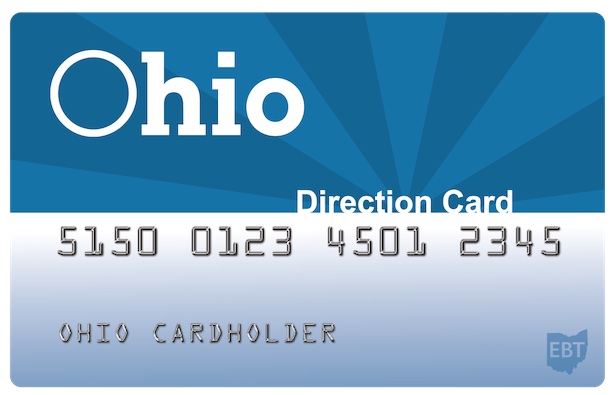
Starting today, Ohio SNAP recipients will have to unlock their EBT cards before they use them online or for out‑of‑state purchases.
“Criminals from other states and online continue to prey on vulnerable Ohioans who rely on food assistance to feed their families,” Matthew Damschroder, director of the Ohio Department of Job and Family Services, said in a release. “The new automatic card-lock feature will require customers to unlock their card when making an out-of-state or online purchase. It’s a simple step that still allows for out-of-state and online purchases while dramatically reducing the risk of theft.”
Damschroder said users will experience minimal impacts stemming from the new security enhancements.
“A vast majority of cardholders do not use their benefits online or out-of-state. And even if they might need to, manually unlocking your card is fast and straightforward,” Damschroder said. “What these security enhancements will do, however, is block the highest-risk transactions, deter criminals, and reduce fraud — ultimately safeguarding taxpayer dollars.”
In a new policy memo, Rea S. Hederman Jr., vice president of policy at The Buckeye Institute, recommended that policymakers improve Ohio Benefits, Ohio’s integrated data system, to make it more efficient; streamline information sharing between county and state caseworkers to reduce improper payments without harming eligible recipients; and allow for the gradual reduction of benefits to protect recipients from a “benefits cliff.”
In the memo, Hederman noted that the One Big Beautiful Bill Act now requires states with error rates of 6% or higher to pay between 5% and 15% of benefit costs. Instead of splitting administrative costs, the federal government will now only pick 25%; states must cover the remaining 75%.
Ohio lawmakers have already acted to try to reduce error rates.
Ohio House Bill 434 appropriated $21 million to implement a technical system to identify and reduce payment error rates. Ohio House Bill 730 earmarks $12.5 million for ODJFS at the county level to offset administrative costs associated with reducing the error rate.
Additionally, a new law now requires ODJFS to report quarterly to the Ohio Senate and House finance committees concerning payment error rates.
Hederman also pointed to the Upward Mobility Act, introduced by U.S. Sen. Jon Husted, R-Ohio, at the federal level. The measure would authorize a five-year pilot program that allows states to consolidate funding streams across multiple anti-poverty programs, in a bid to eliminate sharp drops in benefits that occur when recipients receive small wage increases, leaving some families financially worse off after earning a raise.
“Together, these provisions emphasize transparency and program accountability,” Hederman wrote in the memo.
“Federal law requires Ohio to better supervise SNAP payments and reduce programmatic fraud, waste, and abuse,” Hederman concluded. “Failure to do so will mean paying stiff federal penalties. Adopting a more integrated, collaborative data-sharing infrastructure will help meet federal standards, protect taxpayer resources, and ensure fiscal responsibility.”