DeWine issues reprieves instead of anticipated opinion on death penalty
Republican Gov. Mike DeWine’s repeated postponement of executions has solidified what many view as a de facto moratorium on capital punishment after failing to formally announce his personal stance on the death penalty last month.
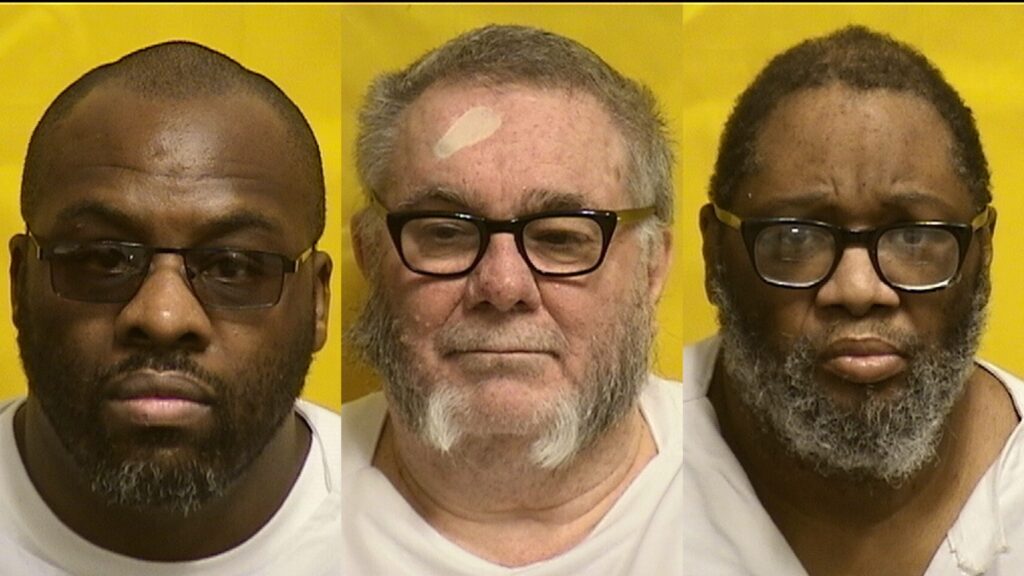
In lieu of clarifying his opinion, DeWine has instead issued reprieves that will now delay the scheduled executions of three long-serving death row inmates to 2029: Danny Lee Hill, convicted in 1986; Gerald Hand, in 2003; and Cleveland Jackson, in 2002.
The reprieves pit moral and ethical dilemmas presented by death penalty opponents against demands for victim accountability.
Hill, on death row since 1986, was convicted in the 1985 abduction, rape, torture, and murder of 12-year-old Boy Scout Raymond Fife, abducted while riding his bike in Warren. The boy was beaten, sexually assaulted, and strangled before Hill set his genitals on fire. Found hours later by his father, Fife died two days later from his injuries.
Hand, sentenced in 2003, was found guilty of the aggravated murders of his fourth wife, Jill Hand, and accomplice Walter “Lonnie” Welch. In a 2002 scheme that prosecutors said involved staging a home invasion to collect life insurance proceeds, Hand shot and killed Jill, later killing Welch to cover it up. Authorities also linked Hand to the suspicious deaths of two prior wives, though he faced no charges in those cases.
Jackson, convicted in 2002, received death sentences for the murders of 17-year-old Leneshia Williams and 3-year-old Jayla Grant during a violent home invasion robbery in Lima. Eight people were shot in the attack, which escalated to a double homicide.
Over the last two decades, the case has gone through multiple appeals, even reaching the Supreme Court. Each appeal was unsuccessful, as courts have upheld that the evidence in the case, including eyewitness accounts, is overwhelming.
The executions, scheduled for this summer, have been delayed early by DeWine, who cited “ongoing problems involving the willingness of pharmaceutical suppliers to provide drugs to the Ohio Department of Rehabilitation and Correction … without endangering other Ohioans.”
While pharmaceutical suppliers have been reluctant to provide the lethal compound following the sunset of Ohio’s Shield Act, critics argue that DeWine’s repeated postponements and unwillingness to work with Ohio lawmakers on alternatives obstruct justice.
No executions have occurred during DeWine’s tenure as governor, despite efforts from the legislature to overcome supply issues.
DeWine, a Republican in his final term ending in early 2027, had indicated late in 2025 that he would reveal his personal views on capital punishment in January 2026. However, the governor hasn’t made a formal announcement.
Masking Deeper Opposition?
Victim advocates, such as Attorney General Dave Yost, argue the drug shortage rationale masks deeper opposition, allowing the governor to maintain the status quo without legislative change or outright commutations.
“There must be accountability for offenders convicted of the most heinous crimes,” Yost testified last month in a hearing on HB 36. “It’s time to break the impasse with a law that ensures accountability for offenders convicted of the most heinous crimes, while allowing the families of victims to finally have closure.”
HB 36, if passed, would allow the state to use an alternative method to lethal injection using nitrogen hypoxia.
The reprieves push any potential executions beyond DeWine’s tenure, reinforcing the practical halt on Ohio’s death sentence enforcement amid debates over alternatives—leaving victims’ families and advocates frustrated over delayed justice and a double standard for those who commit such brutal crimes.