Erika Donalds: Ohio could be at the forefront of transformation with federal Department of Education elimination
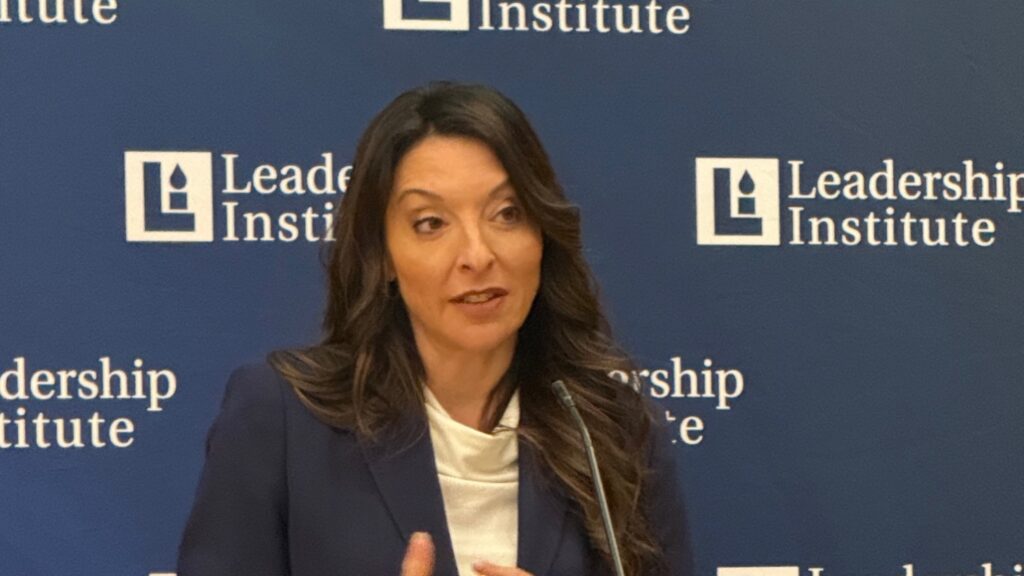
Ohio could be at the forefront of an education transformation by advancing a resolution urging Congress to eliminate the U.S. Department of Education.
And, by advancing Senate Concurrent Resolution 16, which is pending before the Senate Education Committee, Ohio leaders could also address one of the most perplexing issues facing lawmakers: property tax reform and school funding.
State Sen. Andrew Brenner, R-Delaware, introduced the resolution earlier this month, joining efforts in other states, including Michigan and Tennessee. President Donald Trump has urged the elimination of the federal education department, and U.S. Secretary of Education Linda McMahon has backed the push.
“It was a mistake for the federal government to say we’re going to make sure that students are performing in the states,” Erika Donalds, CEO of the Education Freedom Foundation, told Ohio.News. “Obviously, they have done a terrible job at doing that. States need to be those pockets of innovation, and Ohio has definitely taken that on.”
Donalds referenced changes lawmakers have made in recent years to prioritize students’ college, career, workforce, and military readiness.
“I think Ohio is at the forefront in terms of taking responsibility for student performance and not relying on the federal government to hold them accountable for doing so,” she added.
The resolution charges that the “creation of the United States Department of Education expanded federal involvement in education significantly, while academic achievement stagnated or declined.”
As the Thomas B. Fordham Institute noted, while state officials love to tout that test scores for the 2024–25 school year are at five-year highs, that horn-blowing negates the fact that student achievement “remains well below pre-pandemic marks, and achievement gaps remain unacceptably large.”
While Donalds acknowledged that some might be hesitant to eliminate the Department of Education, any hesitation might stem from a misunderstanding of the agency’s role.
“I think when people are not informed about what the federal Department of Education does, they do buy into this hype [that] dismantling the Department of Education is going to be a disaster for public schools,” Donalds said. “When you do explain to them what the Department of Education actually does, and especially what the performance has been, and the outcomes have been since the department has been in existence, they definitely are on board with having more power at the state and local level.
“They know that this is where they have more influence on the outcomes, on the accountability, on the transparency,” Donalds added. “It really is an uninformed position in many cases, when people say they don’t want the Department of Education to go away because they think that it has more responsibility for outcomes than it actually does.”
Ohio has become a battleground over rising property taxes. However, every idea proposed seems to raise additional concerns, and the major issue of funding Ohio’s schools remains a persistent one.
A working group appointed by Republican Gov. Mike DeWine has floated various ideas to address skyrocketing property taxes in the Buckeye State. While lawmakers have acted on some legislation, they have seemingly not coalesced around one single idea to tackle ballooning property taxes.
Concurrently, school officials across the Buckeye State have objected to some measures proposed by lawmakers, saying they won’t have the funding they need.
In fiscal 2024, Ohio received nearly $3.2 billion in federal tax dollars, which accounted for 11.6% of public school revenue, according to an informational brief prepared by the Ohio Legislative Service Commission for state lawmakers and their staff. That doesn’t include the more than $1.8 billion the feds doled out in COVID-19 relief money that same year.
However, Donalds said that eliminating some of the federal Department of Education’s bureaucratic requirements would free up resources to ensure schools can do what they are tasked with accomplishing: educating students.
“It doesn’t even necessarily have to be savings, but more money can be actually put to use for the benefit of students and for teachers, as opposed to compliance, which doesn’t help anyone,” Donalds said. “It doesn’t help increase scores when you have more people checking boxes and pushing papers around. And so that’s really the goal — to ensure that either you have cost savings or more funds can go towards the actual provision of services for students.”
Donalds is speaking Friday evening at the University of Cincinnati as part of a campus speaking tour.