Following Ohio’s third year of clean air compliance, lawmakers eye outdated E-Check program
Federal emission mandates for new vehicles that began in 1968, along with initiatives like Cash For Clunkers, have taken older, heavy-emission vehicles off Ohio’s roads. Now, as the EPA proposes designating Northeast Ohio for clean air attainment, state lawmakers say it’s time to reassess a costly state air quality program that’s outlived its original justification.
The U.S. Environmental Protection Agency on April 8 proposed redesignating the seven-county Cleveland region — Cuyahoga, Geauga, Lake, Lorain, Medina, Portage and Summit — to attainment status after three consecutive years of monitoring data showed the area meets the 2015 ozone national ambient air quality standard.
“Today’s proposal reflects our commitment to clean air for every community while making it easier for responsible projects to move forward,” said EPA Regional Administrator Anne Vogel. “Working with Ohio EPA, local leaders, and employers, we cut ozone emissions. That means healthier summers for families across Northeast Ohio and greater certainty for businesses investing and creating jobs.”
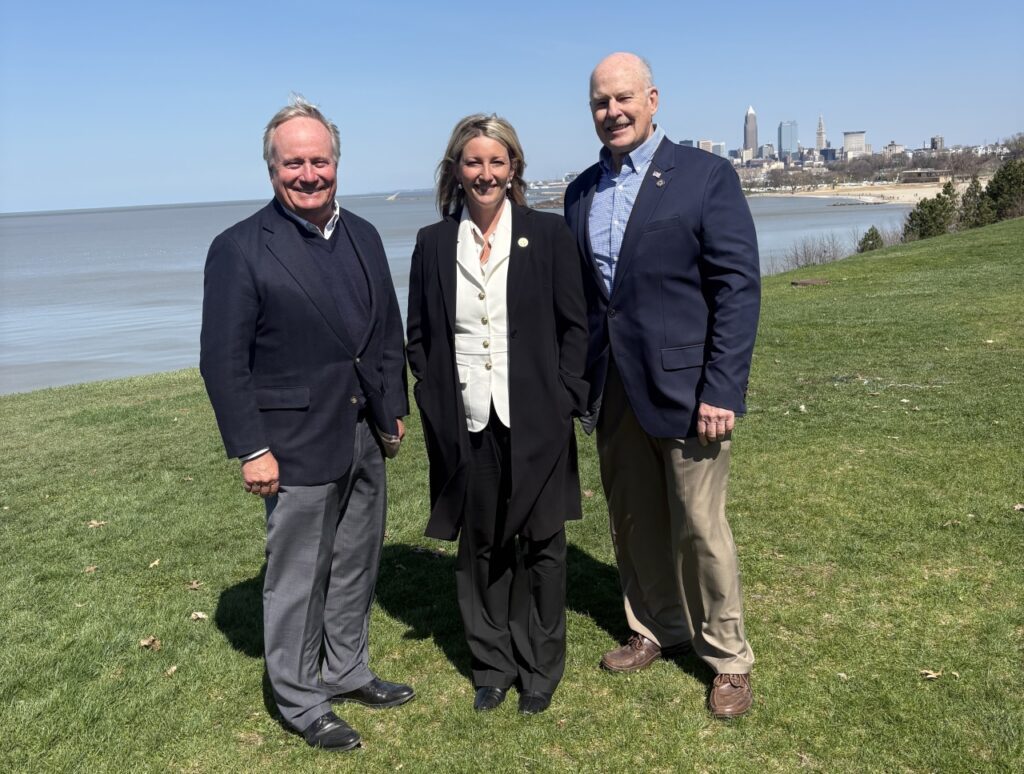
The proposal, announced at a Cleveland press conference with Republican Gov. Mike DeWine and other leaders, would ease certain federal permitting requirements if approved, following a public comment period. Officials credited broad emission reductions — including from vehicles, industry and other sources — for the improvement.
DeWine, calling the proposed designation “a big win for public health, our environment, and for Ohio’s future,” said the progress to reduce ground-level ozone sends a clear signal that Ohio is a place where businesses can grow and create jobs while also meeting important environmental standards.
State lawmakers, calling the proposal a step in the right direction, have recently introduced a trigger law aimed at E-Check that would take effect once the EPA’s designation is finalized.
E-Check, required since the 1990s in Cleveland’s designated counties, was originally designed to combat smog-forming pollutants under the federal Clean Air Act.
Since then, however, federal standards have phased out older cars, while new cars have resulted in shifts to on-board diagnostic scans. Critics, pointing out that scans merely ensure that emission control systems function properly, say the original goalposts have moved, adding unnecessary taxpayer costs and driver burdens.
The E-Check program, which is conducted by privately operated testing stations and kiosks, costs Ohio taxpayers an estimated $12 million annually.
Moreover, state reporting from 2023 and 2024 shows that failed E-Check tests are primarily due to on-board computer issues such as check engine lights or faulty sensors.
That’s because the state shifted to On-Board Diagnostics testing around 2004, with an estimated 99.7% of all tests now run through OBDII. Since the shift, E-Check sites are no longer required to routinely measure actual tailpipe emissions for most vehicles made after 1996. Instead, the system relies on the vehicle’s onboard computer, resulting in automatic failures for anything from a loose gas cap to a check engine light illuminated.
While unrelated to actual tailpipe emissions, these on-board computer failures have resulted in drivers forking over an average of $450 in unexpected repair costs.
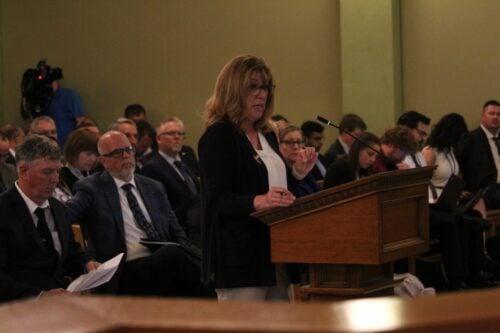
State Rep. Heidi Workman, R-Rootstown, a co-sponsor of the E-Check Ease Act, hailed the EPA’s proposal as a win for the region while signaling further support for ending the E-Check program.
“This is a significant win for Northeast Ohio and for the residents of Portage County. Achieving attainment reflects years of progress in improving our air quality while supporting responsible economic growth,” Workman said. “This redesignation will help streamline the permitting process, giving our local businesses more certainty while maintaining strong protections for public health.”
Critics, pointing out that E-Check disproportionately burdens Ohio’s elderly and lowest-income earners, say the program amounts to an unfunded mandate on those who cannot afford new vehicles or the funds to cover unexpected repair costs.
State Rep. Bill Roemer, R-Richfield, calling E-Check testing an unfair penalty on residents despite decades of air quality gains, has announced a trigger bill that would direct the Ohio EPA to formally request the end of E-Check within 90 days—should the EPA finalize Ohio’s redesignated status.
“For too long, Northeast Ohio has been unfairly penalized by the E-Check program. We’ve seen significant air quality improvement over the past 30 years,” Roemer said. “It’s time to end E-Check, and my legislation will do exactly that if the U.S. EPA determines we’ve reached air quality attainment.”
According to lawmakers, the EPA’s redesignation marks progress that should signal the end of the now-outdated program.
While the EPA proposal remains subject to a final approval period, Roemer’s trigger bill awaits committee assignment and faces the standard legislative process.
While some opponents have argued the program’s elimination could cost local mechanics, supporters hope for action by year’s end, arguing the program’s original justifications are now as outdated and unnecessary as an AMC Gremlin.