Governor-elect Amy Acton’s campaign promise to buy medical debt leaves many unanswered questions
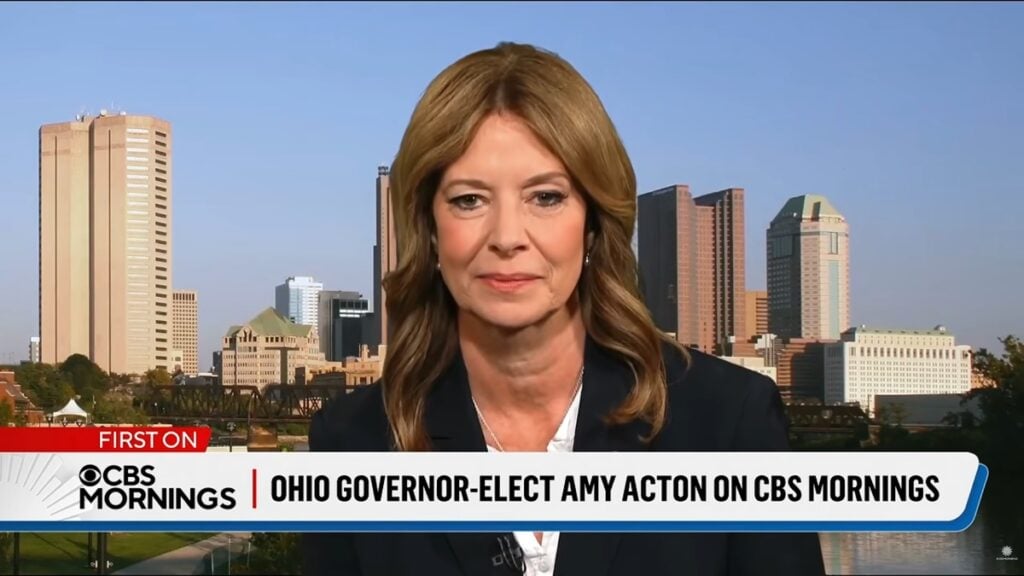
Ohio Gov.-elect Amy Acton has made medical debt relief a centerpiece of her affordability agenda, pledging to purchase qualifying balances statewide through an intermediary like Undue Medical Debt, the non-governmental organization behind debt relief programs in Illinois and Cincinnati.
“Groups like Undue Medical Debt operate by stepping into this secondary market and buying bundled debt at wholesale prices,” Acton said in an interview with MedPage Today.
“Historically, UMD abolishes $100 of medical debt for every $1 spent,” Acton added. “My administration would work with a nonprofit like UMD to do a one-time payment to eliminate medical debt for all Ohioans at or below 400% of the federal poverty level or whose debt exceeds 5% of their household income.”
The Cost to Ohioans?
The Acton campaign has not released a cost estimate of the plan, and without a comprehensive or official statewide total of outstanding medical debt in Ohio from state agencies, available estimates rely on national surveys of prevalence rather than audited Ohio balances, leaving the precise face value of debt that would meet Acton’s eligibility criteria unclear.
Acton’s team did not respond to a request to clarify the expected cost in Ohio, nor did they clarify the types of debt it would cover. However, the state likely would not know what debt it is funding.
The city of Toledo, which partners with Undue Medical Debt, “does not have control over the selection of the debt portfolio and cannot choose whose medical debt is abolished,” according to its website. The group said on its website that it acquires “large portfolios of debt to help thousands of people at once.”
Toledo, a Democratic-run city, is laying off 89 employees amid a tenuous financial situation.
According to an Urban Institute and Healthcare Value Hub survey, only about 20% of Ohio residents reported having medical debt of at least $1,000. Of those who reported debt, only 26% were adults with current health insurance. The same survey noted that non-citizens made up about 30–32% of the uninsured population.
The Campaign Promises
On the campaign trail, Acton framed her plan to buy debt with taxpayer dollars as fighting “special interests,” while stating that medical debt is one of the largest reasons that Americans file for bankruptcy.
While the exact dollar amount of Ohio’s medical debt is unknown, Acton has said the plan would target households earning up to roughly $128,600 for a family of four or those whose medical bills exceed 5% of income.
While some critics argue the program is essentially a bailout for special interests that does not address the underlying issues, similar NGO proposals have faced scrutiny over long-term incentives and the lack of mechanisms to prevent new debt from accumulating.
We’re fighting to make life better for Ohio’s working families. Whether that’s lowering drug costs, my tax cut for working families, or forgiving the medical debt that is crushing families, our ActOn costs agenda puts everyday people ahead of billionaires and special interests. pic.twitter.com/8bqtViNfrF
— Dr. Amy Acton (@amyactonoh) April 30, 2026
Debt Elimination in Practice
Before changing its name to Undue Medical Debt, RIP Medical Debt partnered with researchers to analyze its debt relief program. In a 2024 randomized study released by the National Bureau of Economic Research, researchers found the program produced only modest improvements in credit scores and little measurable effect on health care utilization or broader financial outcomes.
The study also noted that the debt relief program created what’s known as a moral hazard – a negative outcome – for patients.
In the hospital-debt experiment, debt relief increased the likelihood that another unpaid bill would go to collections. Debt relief “causes a moderate but statistically significant reduction in payments of existing medical bills,” the authors noted.
The NGO, which has partnered with the Democratic Socialists of America party, was also at the center of Cincinnati’s medical debt relief program. In 2024, the city of Cincinnati gave $1.45 million in city funds to Undue Medical Debt and UC Health to buy more than $219 million in medical debt for over 100,000 Cincinnati residents.
Residents need not apply, according to the nonprofit, which says it identifies the eligible accounts from portfolios offered by hospitals and collectors and then notifies recipients after cancellation.
Acton, who has pointed to Illinois as the model, described the proposal as being modest, relative to the state budget.
Prior efforts in Illinois relied on one-time federal funds rather than state funding. Illinois, using one-time federal ARPA funds, allocated about $10 million through Undue Medical Debt. Undue Medical Debt, or RIP Medical Debt at the time, then purchased more than $1 billion in old debts, largely written off by hospitals.
Newly elected Ohio governor @amyactonoh campaigned on forgiving medical debt with taxpayer money. It’s a one-time buy of old debt, not a fix for what care actually costs going forward.
She has talked about cracking down on surprise billing, more price transparency, and using the… https://t.co/EoKBTNuabj pic.twitter.com/qv2A9inetR
— ✌🏼Honey Bomb 🌻 (@honeyybomb) November 5, 2026