House committee passes bill to cap property tax inflation

Screenshot
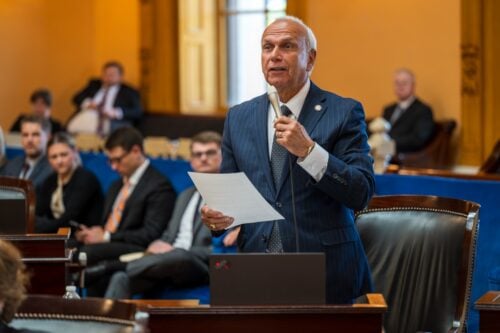
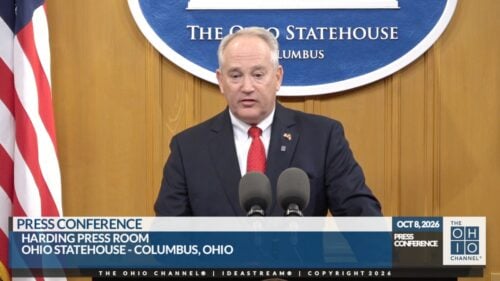
The state House Ways and Means Committee on Tuesday advanced two measures that aim to give property taxpayers some relief amid ongoing concerns about Ohio’s ballooning property taxes, setting up a possible vote today in the full House.
However, the head of the committee acknowledged that the measures are not “silver bullets.”
The committee voted in favor of House Bill 186 and House Bill 335, which cap how much property taxes can increase. Proponents argue the measures could save taxpayers roughly $2 billion over the next three years.
House Bill 186 limits property tax revenue increases; a working group appointed by Republican Gov. Mike DeWine recommended that lawmakers approve the measure. These revenues come from voter-approved levies following a property valuation reappraisal or update to the three-year rate of inflation in school districts that are on property tax floors, whether the 2-mill or the 20-mill floor.
Qualifying property owners would receive a credit for the extra taxes paid. State officials estimate the credits would total $41.9 million in the 2025 tax year and $64.4 million in the 2026 tax year.
It also provides for aid from state taxpayers to districts that report lower revenues because of the change.
House Bill 335, The Property Tax Relief NOW Act, would restrict growth in property tax revenues from inside millage levies — the 10 mills that governments can levy without voter approval — by the gross domestic product deflator over the previous three years.
“I think we still have a heck of a lot of work to do on property tax reform, because both 186 and 335 don’t get a lot of relief to a lot of our population,” state Rep. Daniel P. Troy, D-Willowick, said toward the end of the committee meeting. “We’ve got several bills on the committee. …I think we need to continue to start looking at getting targeted tax relief where it’s needed the most.”
State Rep. Bill Roemer, R-Richfield, agreed.
“None of the bills that we’ve passed are silver bullets, but they all accretively lead to greater tax reform in Ohio,” Roemer said in response. “I would say that what we have done over the last two weeks here in committee is as transformational as anything that’s been done in the last 50 years.”
Separately, state Rep. Angie King, R-Celina, introduced House Bill 504, the Calculated Adjustments for Property Surges, to give local jurisdictions the choice to phase in property tax assessment increases over three years. During the phase-in period, property owners receive tax credits, and local governments experience some growth in their revenues, which helps offset inflationary costs and population growth.
“The CAPS Act will provide local governments another solution to directly address rising property taxes by offering communities a way to protect residents from sudden spikes,” King said in a release.