House committee poised to send bill to crack down on Medicaid fraud to full House for review
(Photo by T.A. DeFeo)
A House committee is poised to advance a measure to crack down on Medicaid fraud and send it to the full House for consideration after removing a controversial provision that drew significant community backlash.
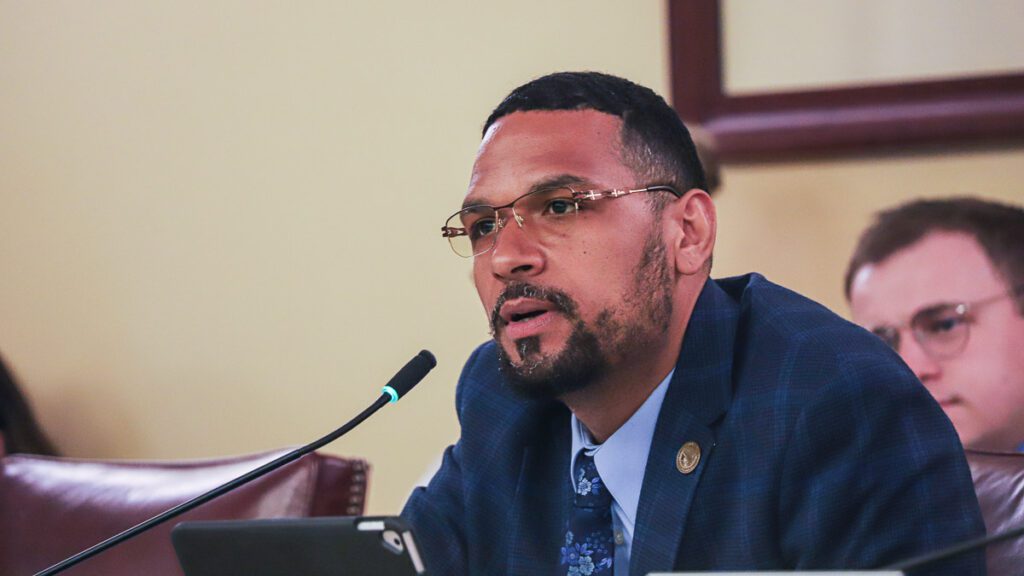
During a lengthy, at times emotional hearing on House Bill 795 before the House Medicaid Committee, many witnesses agreed that the state should root out fraud, waste and abuse. However, they questioned other aspects of the measure.
Lawmakers removed a provision from a Medicaid fraud-prevention measure that would have barred caregivers from receiving Medicaid payments for caring for family members. The change was included in a late change shortly before Monday’s hearing, which drew the ire of Democrats on the Republican-led committee.
After the hearing, state Rep. Josh Williams, R-Sylvania Twp., acknowledged lawmakers “overshot our goal with the language.” He acknowledged it was removed as a direct result of constituent feedback, but doubled down on the need for targeting fraud in the state.
“The fraud that we have in the state of Ohio is extensive, and it’s through the soft oversight, the soft rulemaking, and a lot of these federal waivers that we’ve adopted here in the state of Ohio, but with little oversight,” Williams said. “I believe the oversight that we’re providing in this bill will provide tangible solutions that, in the long run — I don’t even think decades, I think in a very short amount of time, you’re going to see the amount of fraud really cut down upon when there’s no financial incentive for you to commit fraud.
“Right now, you commit fraud, you’re not even looking at prison, you get caught, you’re told to pay money back, your LLC shuts down, and you get to reap the benefits of that,” Williams added. There are “more extensive conversations that we need to have about these programs, including programs like SNAP.”
Lawmakers have prioritized Medicaid fraud amid nationwide headlines of potentially more than $1.2 billion in Medicaid fraud in the state. The Daily Wire brought the issue to the forefront with a series of articles that suggested the fraud centers on the Somali community in Columbus, which is the second-largest Somali community in the country.
The family member prohibition that drew scrutiny “was mostly guided towards a personal services waiver, non-medical issues, individuals that are being paid for comfort care, companionship care,” Williams said. “That’s where a lot of the issues that we were starting to see in fraud came about, where particular communities were getting people approved for 16 hours of personal services, but there wasn’t any clear goals of what the personal services were supposed to be providing.
“So, we’ve had reports of individuals being paid … a daughter being paid just to go spend time with her mother, who was on a Medicaid waiver; that was the original concern,” Williams added. “It seems like the language that we got back just overshot that, so it was better just to remove the language entirely.”