How did the Ohio ‘house of horrors’ happen?
The story was perfectly framed for the tabloids: Sixteen children removed from a “house of horrors” in rural Vinton County.
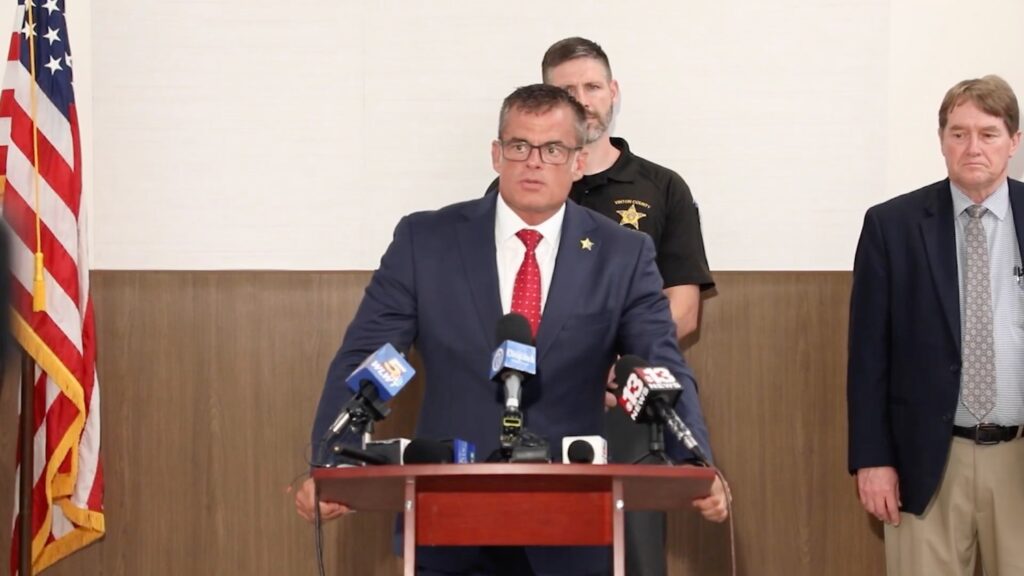
A Vinton County grand jury last week handed down new indictments against the parents — Gary Siders Jr., 36, and his wife, Elizabeth Siders, 33 — and grandparents — Gary Siders Sr., 73, and Christina Siders, 68 — of the 16 children.
Authorities said they opened an investigation into the parents in March, looking into allegations of unlawful sexual conduct with a minor. Authorities said that investigation led to a June 30 search warrant at a residence on Ohmer Street in Hamden, where the 16 kids were discovered.
Behind the accusations are serious questions, chiefly: How did this happen? Experts who weighed in with Ohio.News largely said the case could have been avoided.
“When a case involves a large number of children remaining in a home without intervention, it naturally raises questions about how systems designed to protect children function and where gaps may exist,” Rachel Levine, a licensed marriage and family therapist, told Ohio.News. “However, it is important to recognize that child welfare cases are rarely the result of one person or one system failing. Child protection is a shared responsibility involving child protective services, schools, healthcare providers, law enforcement, extended family members, and community members.
“One of the most important considerations is that child abuse and neglect often occur behind closed doors,” Levine added. “Families experiencing significant dysfunction may not always come to the attention of mandated reporters, particularly when children are isolated from schools, medical care, or other community supports. Even when concerns are reported, agencies must balance protecting children from harm with respecting constitutional protections around family integrity and avoiding unnecessary government intervention.”
Richard P. Barth, a professor at the University of Maryland School of Social Work, told Ohio.News that the state is “very decentralized.” In this case, that made it harder for the state to track kids who were effectively living off the grid.
It also doesn’t help in counties like Vinton, which is one of the state’s poorest and least populated.
The Buckeye State is home to the Child and Household Integrated Longitudinal Data, or CHILD, system, a Cuyahoga County-focused integrated database maintained by the Center on Poverty and Community Development at Case Western Reserve University. While it tracks children across several databases, including birth records, it is largely used for research.
“In Ohio, basically every county is a ship on its own,” Barth said. “They get a little bit of money from the state, but not very much, and then there’s not a lot of oversight to manage that, so a disadvantaged county in a state-administered system can stay very disadvantaged.”
One idea that could help, Barth said, is using data from social services, such as Medicaid and SNAP, to help the state identify children who receive some form of public benefits but aren’t enrolled in school. Such technology already exists, and Barth said states wouldn’t need to outlay significant funds — or even turn to technology like artificial intelligence — to make it happen.
“You could basically come to understand which child who’s ever received any public benefit [and] has not enrolled in school or is no longer enrolled in school,” Barth said. “That would be innovative, but it would be consistent with some of the other things that have been done” in many states, including universal home-nurse visiting programs.
“…We have wellness checks for adults. We need wellness checks for children who have dropped out of school and are disappearing,” Barth added. “I don’t know what happens with other kids — they’re certainly not the only kids who have dropped out of school and gone off the grid.”
However, Richard Wexler, executive director of the National Coalition for Child Protection Reform, cautioned against creating excessive government surveillance.
“We’ve already created a child welfare surveillance state in which one-third of all children and more than half of all Black children will face the enormous trauma inherent in a child abuse investigation,” Wexler told Ohio.News via email. “…The deluge of false reports, trivial cases and cases in which family poverty is confused with neglect overloads caseworkers, making it even less likely they will find the relatively few children in real danger — when they are notified.”
“They say bad cases make bad law. Horrible cases make horrible laws,” Wexler added. “If you try to respond by making the system even bigger and more intrusive, you’ll only increase the chances that the next case like this will be missed. These cases are needles in a haystack. You can’t find the needles by constantly making the haystack bigger.”