Lawmakers consider bill to make healthcare more accessible and affordable for Ohio communities

Photo by Pixabay: https://www.pexels.com/photo/close-up-photo-of-medicinal-drugs-159211/
Ohio lawmakers are considering a measure that would authorize pharmacists to screen, test, and treat common respiratory illnesses such as strep throat, influenza, COVID-19, and Respiratory Syncytial Virus under protocols established by the State Board of Pharmacy.
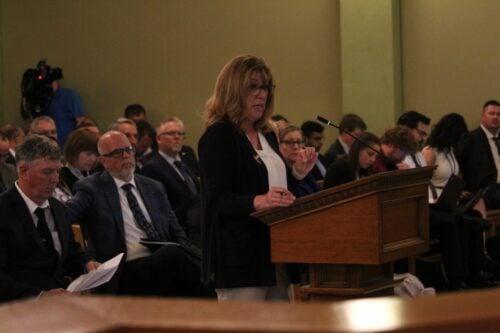
The Buckeye Institute, a free-market think tank, and the Dean of Pharmacy at the Ohio University Raabe College provided proponent testimony on Senate Bill 230, urging the Ohio Senate Health Committee to advance the measure.
Rea S. Hederman Jr., vice president of policy at the Buckeye Institute, testified that the bill would expand access to “low-risk, quality patient care at an affordable cost” amid a projected national physician shortage of 86,000. Ohio would join at least 16 other states with similar pharmacist-led models, he noted, citing Idaho’s implementation since 2019 with no reported safety issues from its pharmacy board.
Proponents, including pharmacy groups and health systems like the Cleveland Clinic, highlight how the legislation would address barriers in rural and underserved areas, where 57 of Ohio’s 88 counties are designated Health Professional Shortage Areas. Pharmacies, often more numerous and with extended hours than primary care offices, could offer same-day point-of-care testing and prescribe treatments like antibiotics or antivirals, reducing reliance on emergency rooms or urgent care.
The bill also ties into hot-button issues like chronic absenteeism and truancy, which affect about 25.1% of Ohio students statewide as of the 2024-2025 school year, according to Ohio Department of Education data. Respiratory infections rank among the leading causes of school absences and missed workdays, as noted in testimony from Stuart Beatty, Dean of Pharmacy at the Ohio Northern University Raabe College.
“Respiratory infections are a major cause of outpatient visits, school absences, and missed workdays,” Beatty testified. “Early diagnosis and timely treatment, especially for conditions like influenza, can reduce complications and improve outcomes. Senate Bill 230 is a measured, commonsense approach to improving access to care where
and when it is needed.”
As Republican Gov. DeWine has set ambitious 2029 goals to reduce chronic absenteeism by 50 percent, proponents contend SB 230 could help families afford the added costs of an excused medical absence. In addition, faster diagnosis and treatment at local pharmacies could shorten the duration of illness, enabling quicker student recovery and return to class—potentially easing pressures on families and schools under recent reforms like House Bill 96.
Under HB 96, schools are required to adopt attendance policies by Aug. 1, developed in consultation with their county juvenile court, parents/guardians, and community partners. These policies must outline strategies to prevent chronic absenteeism, procedures for notifying families, and tiered supports to address root causes of absences.
In rural communities, however, where physician access is limited and transportation challenges compound delays, SB 230 aligns with state initiatives like the Rural Health Transformation Program, which incorporates pharmacy-based services to improve essential care delivery.
RFK JR. "The US has worse health than any other developed nation. And we spend more on health care, at least double, and in some cases triple as other countries. Last year we spent $4.8 trillion, not counting the indirect costs of missed work."
We desperately need reform. pic.twitter.com/rbXMOz0l11
— Charlie Kirk (@charliekirk11) January 29, 2025
Yet the measure has drawn opposition from the usual suspects, such as the Ohio State Medical Association, whose members stand to lose billable services. While opponent lobbyists argued against pharmacists diagnosing and treating without equivalent medical training, proponents pointed to the pandemic, countering that protocols ensure safety and collaboration with physicians.
“During the COVID-19 pandemic, pharmacists across Ohio demonstrated their ability to meet urgent patient needs,” Beatty said. “In fact, the state and national outcomes would have been far more dire had our pharmacists not risen to the occasion.”
Hederman, pointing out that 16 states and the District of Columbia have enacted the model legislation, explained to lawmakers that pharmacists, with a collaborative practice agreement with a physician, are currently performing such functions without issue.
“Ohio should follow the Idaho model and improve access to care for its citizens,” Hederman testified. “Senate Bill 230 does not allow pharmacists to replace or even compete with physicians. Nor does it remove referrals or collaborations. Rather, much like House Bill 52, which wisely helped address worker shortages by authorizing broader practices for medical professionals, Senate Bill 230’s mutually beneficial design allows pharmacists and doctors to cooperate more fully, easing physician burdens, and delivering low-risk, quality patient care at an affordable cost.”
Sponsored by Sen. Mark Romanchuk, R-Ontario, the bill remains under consideration in the Senate Health Committee. If enacted, it could reduce the healthcare costs associated with predatory high-expense urgent care visits, while bolstering timely care for common childhood illnesses that drive absenteeism among working families.